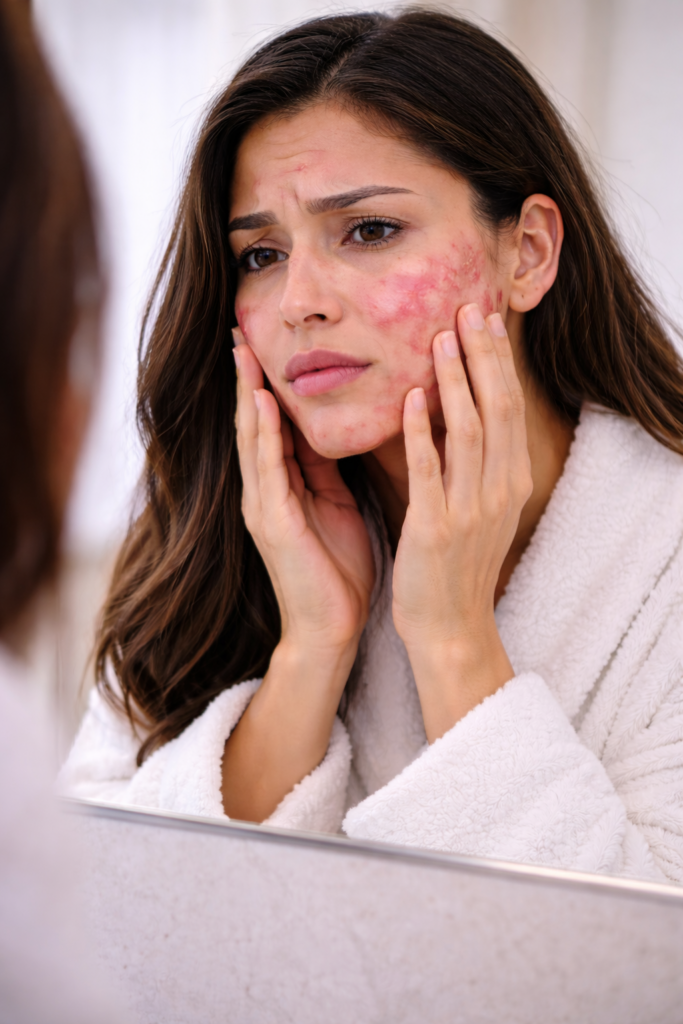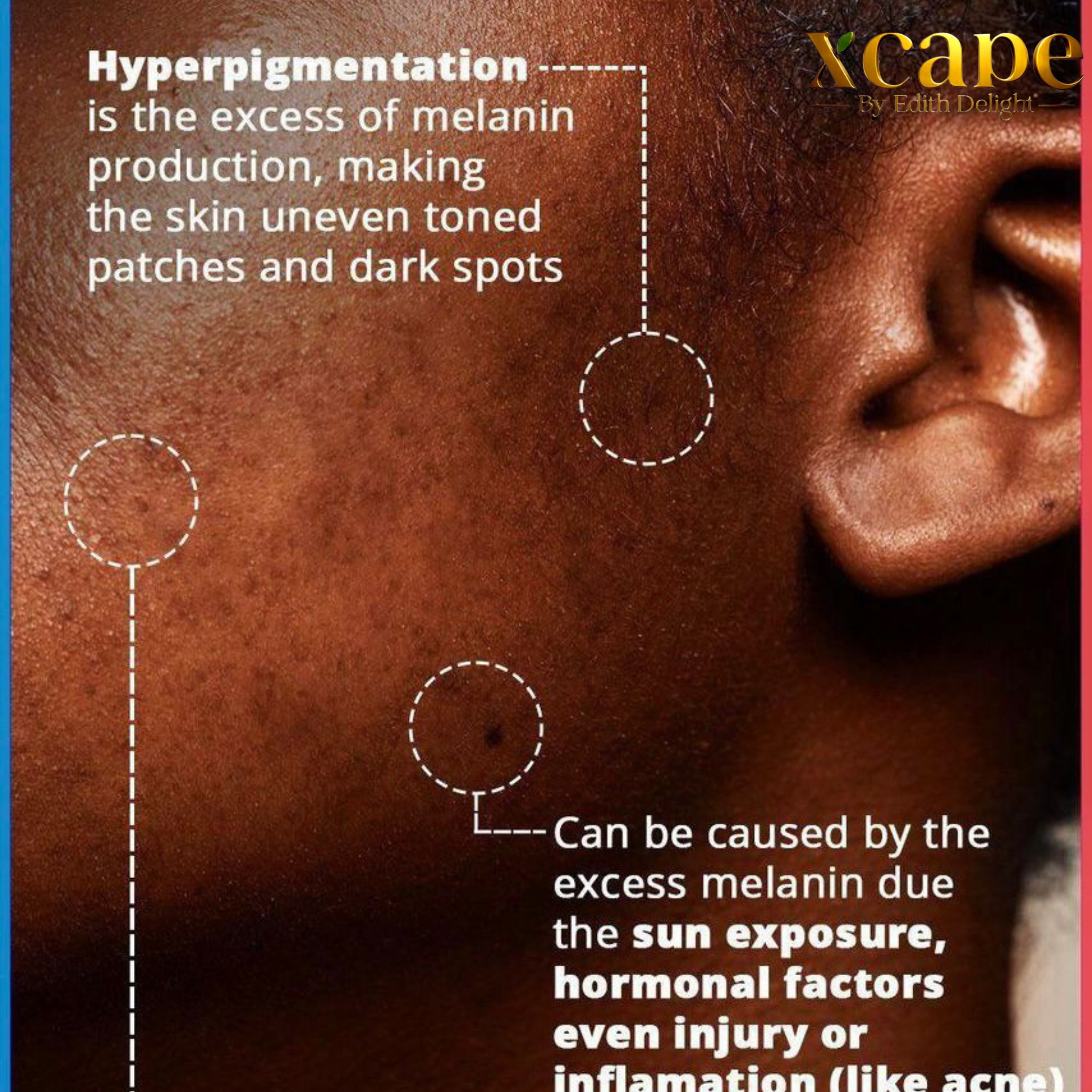
If you’ve browsed the skincare aisle or scrolled through SkinTok lately, chances are you’ve seen the word “ectoin” floating around. Ectoin is often described as a “hydrating shield,” “barrier strengthener,” or “extremolyte miracle ingredient.” Ectoin is having its moment as a star skincare ingredient right now. Researchers have been increasingly interested in ectoin skin benefits because of its ability to hydrate and protect skin cells under extreme environmental stress.
But it is hard to know what’s marketing hype, and what is backed by science…
In this article, we break down 10 of the most common marketing claims about ectoin skin benefits. Comparing brands’ messaging with real-world clinical and mechanistic evidence from peer-reviewed studies. Whether you’re a curious consumer, a skincare skeptic, or a professional looking for truth over trend, we’re separating the science from the spin, so you can make informed decisions.
1. Ectoin strengthens the skin barrier and reduces transepidermal water loss (TEWL)
✅ Partially true, but the evidence is early-stage
One of the most impressive marketing claims of ectoin skin benefits is its capacity to reduce transepidermal water loss, helping maintain a strong, resilient skin barrier. This is one of the most repeated claims, and it has some scientific merit. Ectoin is an osmolyte. This means it works by physically protecting your cells with a hydration shell. When this happens, it stabilizes their membranes and helps protect against dehydration. Lab studies show that ectoin restores barrier integrity in damaged skin cells.
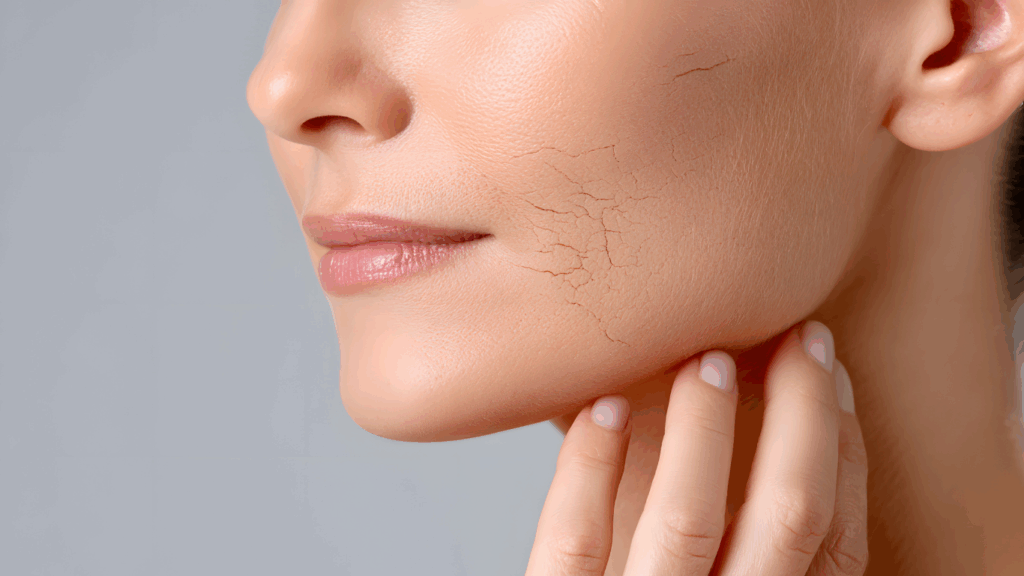
However, while these mechanisms are well documented in petri dishes of cells, large-scale clinical trials directly measuring TEWL reduction are still limited. Early data are promising, but more human trials are needed.
🧪 Verdict: The science supports the hypothetical mechanism, and it is somewhat supported in small studies, but overgeneralized in marketing.
2. Ectoin deeply hydrates and binds water
✅ Partially supported
Ectoin is indeed a strong water-binding molecule, and it helps retain hydration by stabilizing the skin’s outer layer. Some clinical trials showed increased skin moisture after using ectoin creams twice a day for several weeks, especially at 2–7% concentrations. The long-lasting hydration is often cited as the most noticeable ectoin skin benefits by users and dermatologists alike.
That said, claims about “deep hydration” are vague and unstandardized in the industry. There’s no universal definition of “deep,” and marketing often implies a dramatic effect that may only be mild to moderate or short-lived. Typically, in reference to skincare actives “hydrating deeply,” it means the ingredients can penetrate the skin barrier. There is no evidence that ectoin can penetrate the skin barrier. In fact, there are some new forms of ectoin emerging from ingredient suppliers to try to enhance its penetration.
🧪 Verdict: Scientifically supported in terms of hydration, but “deep” is a marketing stretch, and there is not any evidence to support that today in topical products.
3. Ectoin can soothe, calm, reduce inflammation, and redness
✅ Supported by early research, especially in inflammatory skin conditions
Clinical studies on ectoin skin benefits have shown significant reductions in redness, itching, and irritation among people with sensitive or compromised skin. One paper summarized several clinical studies that used ectoin-containing creams. In these studies, researchers saw reduced itch, dryness, and inflammation in people with atopic dermatitis and eczema who used the ectoin cream. And in some cases, it even lowered the need for steroid creams.
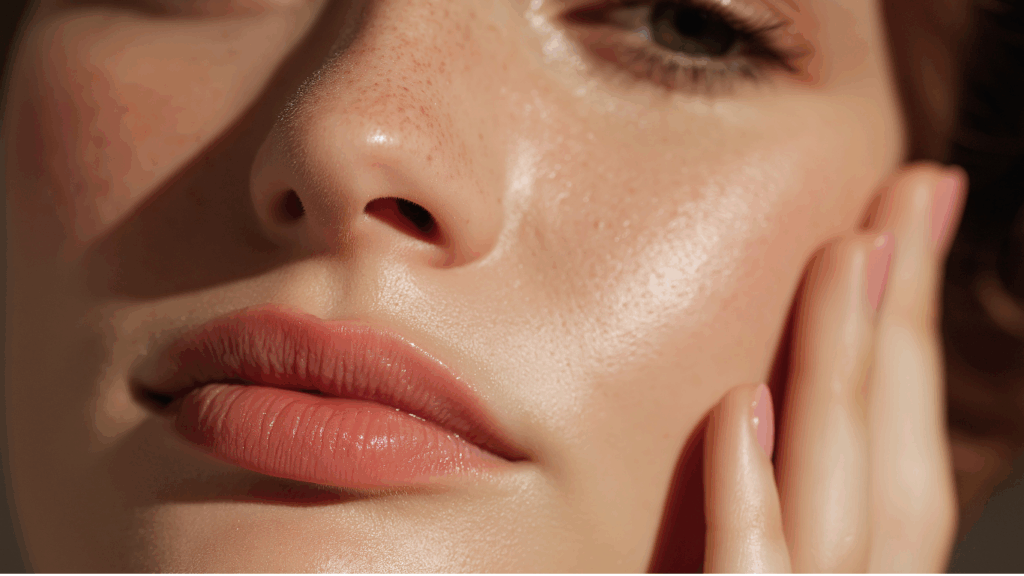
However, while benefits are clear in barrier-impaired or inflamed skin, results across healthy skin types aren’t as well documented.
🧪 Verdict: Credible in inflammation-prone skin, but “universal calming” claims are premature.
4. Ectoin protects against environmental stressors, pollution, UV, and oxidative damage
❓Mechanistically probable, but not proven
Ectoin does have powerful cell-protective effects, especially in the laboratory. Scientists showed, it reduces UV-induced oxidative stress, preserves key immune cells in the skin, and prevents DNA strand breaks caused by UVA exposure. Scientists attribute ectoin skin benefits to its unique ability to form a hydration shell that shields skin cells from UV radiation and pollution.
But here’s the catch, most of this evidence has only been proven in a laboratory. There’s limited clinical proof showing ectoin alone provides strong, real-world protection against sun or pollution exposure in daily skincare routines. So do not start substituting your sunscreen for an ectoin cream.
🧪 Verdict: A solid shield on paper, but not yet clinically proven as a solo defender in the real world.
5. Ectoin supports cellular repair, regeneration, anti-aging, reduces fine lines & wrinkles
✅ Some support, but mostly extrapolated
This claim taps into ectoin’s protective effects and hydrating abilities. By reducing stress and inflammation, it may slow the signs of aging over time. One clinical trial found that a 2% ectoine cream improved hydration, elasticity, and fine line texture in over 100 women. Additionally, the appearance of fine lines and wrinkles can be reduced when the skin is well hydrated.
But here’s the truth: most anti-aging claims are inferred rather than directly proven. Few studies specifically track long-term wrinkle reduction, collagen density, or age spot fading due to ectoin alone.
🧪 Verdict: Possibly beneficial, but “anti-aging” results are indirect and not fully established.
6. Ectoin is safe, gentle, non-irritating, and suitable for sensitive skin
✅ Strongly supported
This is one of the few claims where the marketing is actually cautious and mostly accurate. Ectoin has a standout safety and tolerability profile. It’s been tested in infants, children, and adults with inflammatory skin conditions, often for up to 6 months, and showed no major side effects.
Even in highly sensitive populations (like those on isotretinoin), ectoine-based creams were well tolerated and effective.
🧪 Verdict: Backed by clinical evidence. A genuinely gentle ingredient.
7. Ectoine enhances and synergizes with other actives (e.g. retinoids, ceramides, hyaluronic acid)
❓ Unconfirmed
Some clinical studies used ectoin in combination with other ingredients, like hyaluronic acid. In one pediatric trial, a cream containing 1% ectoin + 0.1% hyaluronic acid improved eczema symptoms more than placebo. In formulations, ectoin skin benefits are enhanced when combined with humectants or antioxidants, amplifying its protective and soothing effects.
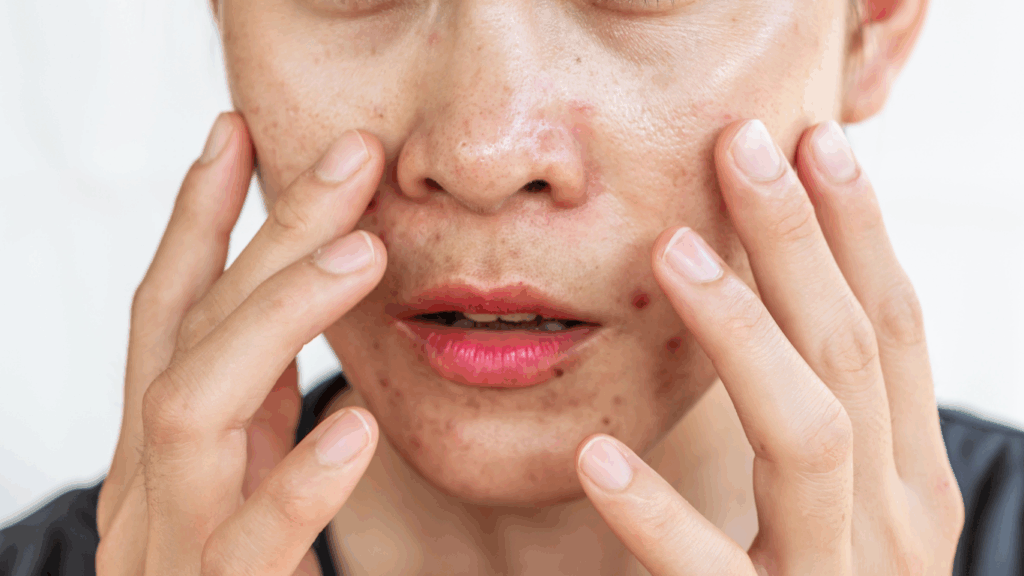
However, it’s difficult to pinpoint whether the effect came from ectoin, the other active, or both together. Marketing often exaggerates the synergy as if it’s guaranteed.
🧪 Verdict: Possible additive effects, but more research is needed to confirm synergy.
8. Ectoin provides long-lasting and sustained effects (even after stopping use)
❓ Unconfirmed
Some supplier data and small-scale trials hint that hydration effects from ectoin may persist for a few days after discontinuation. But these claims haven’t been tested in independent, long-term, placebo-controlled studies.
Real-world skin varies. There are so many factors that can affect your skin. From hydration loss, pollution, and UV exposure, all of these factors can reverse effects quickly. So while ectoin may help while you use it, the idea that it provides “sustained benefits” after stopping is still speculative at best.
🧪 Verdict: Possible short-term persistence, but “long-lasting” is a stretch.
9. Ectoin is a natural, vegan, and clean ingredient.
✅ Technically true, but doesn’t guarantee efficacy or really mean anything
Ectoin is indeed a naturally derived molecule produced by extremophile bacteria in harsh environments. Many skincare products now use biotech fermentation methods to produce ectoin sustainably. This is what technically makes it a natural and vegan skincare ingredient by many consumer standards.

Still, “natural” and “biotech” are feel-good marketing terms. They don’t speak to performance or concentration in the formula. It’s always best to look for evidence-based formulations, not just origin stories.
🧪 Verdict: Factually accurate, but not automatically meaningful for skincare outcomes.
Bottom Line: Is the Hype Justified?
Ectoin’s marketing paints it as a miracle multitasker, and in many ways, it lives up to the promise. When exploring ectoin skin benefits, it becomes clear that this ingredient acts both as a physical protector and a biological regulator within the skin.
It hydrates, protects, and calms skin with a solid foundation in cellular science and promising clinical data. But like most skincare actives, some of the claims go a bit too far or oversimplify complex science.
If you’re building a skincare routine rooted in science, ectoin deserves a place, especially if you have sensitive, dry, or inflamed skin. Whether you’re dealing with dryness, irritation, or early signs of aging, ectoin skin benefits offer a multi-dimensional approach to restoring skin health.
References
Alexopoulos, A., Eberlein, B., Kompatscher, P., Läuchli, S., Reimann, K., & Staubach-Renz, P. (2022). A randomized, observer-blind, vehicle-controlled multicenter trial of an ectoine and hyaluronic acid-containing cream for atopic dermatitis in children. Journal of Dermatological Treatment, 33(7), 3300–3307. https://doi.org/10.1080/09546634.2021.2000172
Fontbonne, D., Becquart, F., & Kurzen, H. (2024). Positive and ecobiological contribution in skin photoprotection of ectoine and mannitol combined in vivo with UV filters. Photodermatology, Photoimmunology & Photomedicine, 40(1), 19–29. 10.1111/jocd.15893
Heinrich, U., Garbe, B., Tronnier, H., & Wiegand, C. (2007). In vivo assessment of ectoine: A randomized, vehicle-controlled clinical trial. Skin Pharmacology and Physiology, 20(4), 211–218. 10.1159/000103204
Jeong, D., Lee, J., Jeong, H., Kim, B., & Kim, Y. (2019). The skin-whitening effects of ectoine via the suppression of α-MSH-stimulated melanogenesis and the activation of antioxidant Nrf2 pathways in UVA-irradiated keratinocytes. International Journal of Molecular Sciences, 20(19), 4941. https://doi.org/10.3390/ijms20194941
Kudryavtseva, A., & Migaliev, D. (2017). Topical ectoine application in children and adults to treat inflammatory diseases associated with an impaired skin barrier: A systematic review. Clinical, Cosmetic and Investigational Dermatology, 10, 517–531.10.1007/s13555-021-00676-9
Lefort, R., Durbec, F., & Lhomme, C. (2019). Genotoxicity of visible light (400–800 nm) and photoprotection assessment of ectoin, L-ergothioneine and mannitol and four sunscreens. Journal of Photochemistry and Photobiology B: Biology, 198, 111573. 10.1016/j.jphotobiol.2008.01.008
Reuter, S., Schiller, M., & Bauer, G. (2010). Ectoines as novel anti-inflammatory and tissue protective lead compounds with special focus on inflammatory bowel disease and lung inflammation. Inflammation Research, 59(12), 573–581. doi: 10.1016/j.phrs.2020.105389.
Wolnicka-Glubisz, A., Stachurska, A., & Zaleska, K. (2019). The influence of ectoine on the skin parameters damaged by a CO₂ laser. Applied Sciences, 9(23), 4998. https://doi.org/10.3390/app923499