(Photo: Alexy Almond | Pexels)
Published December 4, 2025 09:47AM
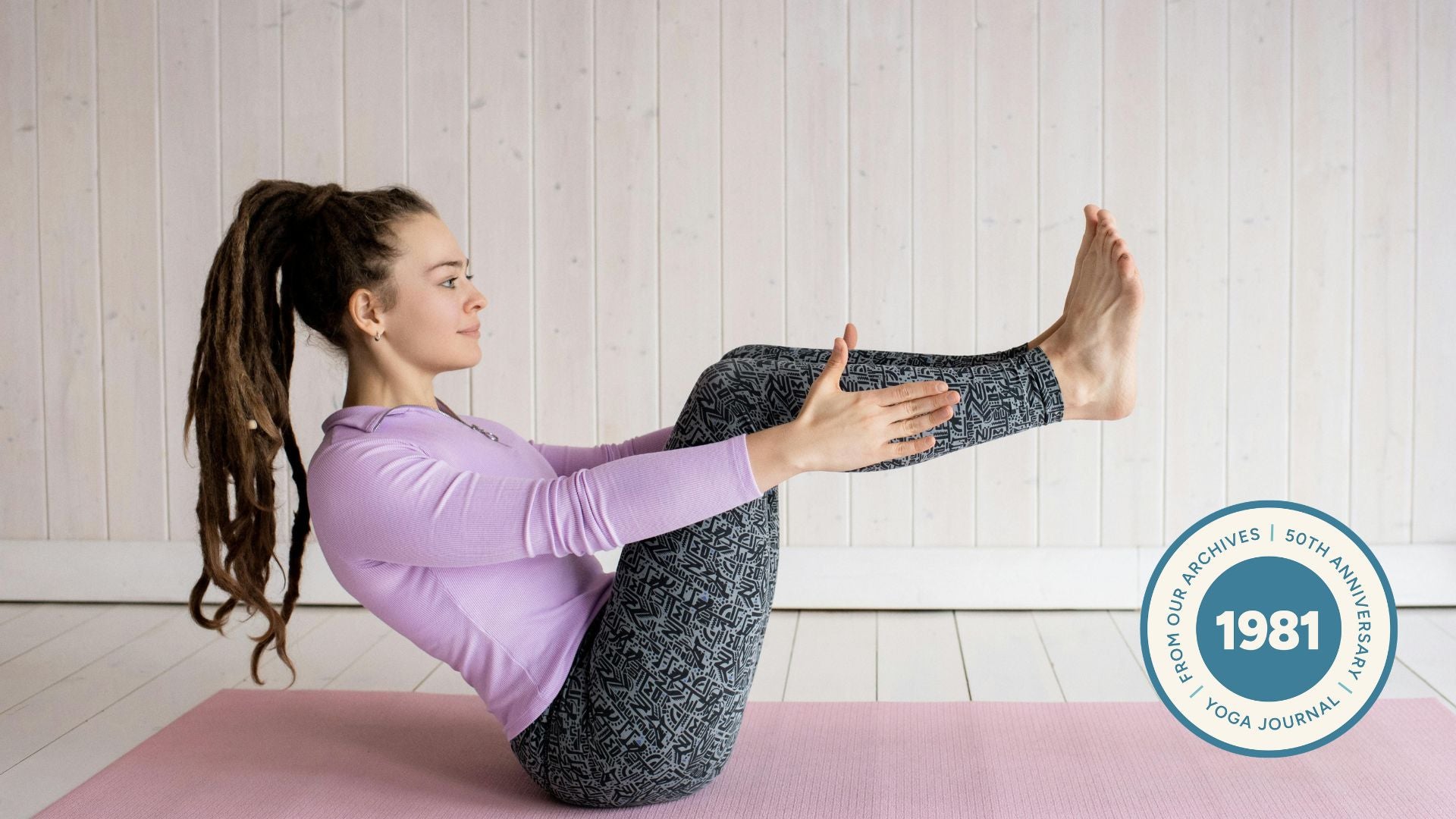
Navasana, Boat Pose, is an excellent pose for beginners as well as a challenging one for experienced students. It was introduced to me as an abdominal strengthener, but I soon learned that much of the work is accomplished by the legs and back. Also, I found it a challenge to balance and keep breathing at the same time, and I learned from this how a difficult task can cause breath holding.
Boat Pose requires physical effort and mental dedication in a yoga practice, although its lessons of strength, surrender, and balance influence every aspect of a student’s life.
Essential Elements of Boat Pose
Balance is apparently necessary for maintaining stillness, but there is a less obvious balance being maintained between the action of the abdominal muscles on the front of the body and the extensor muscles on the back of the body that keeps us from falling over. The abdominal muscles function to bring the thorax and pelvis closer together, as in the action of a sit-up. The extensor muscles of the back allow it to arch. When these two muscle groups are working in harmony, the back will be held straight, neither arched nor collapsed.
The muscles of the anterior (front) hip are also active, as are the quadriceps which keep the knee straight against the downward pull of gravity. The muscles in the front of the neck must also work hard to maintain the upright position of the head. In addition to the action of the muscles, the abdominal organs are stimulated by the pose.

Remember to Breathe
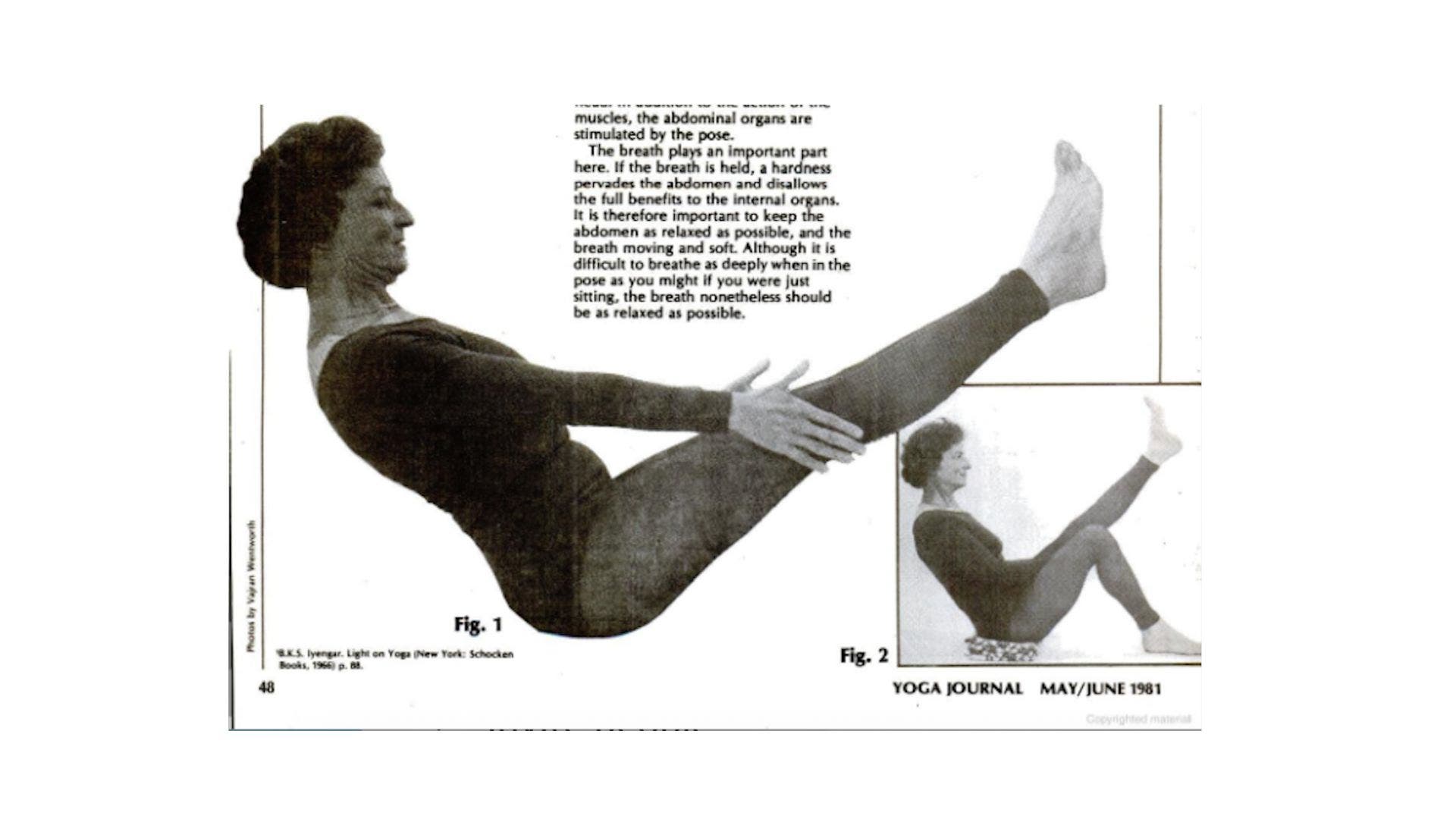
The breath plays an important part here. If the breath is held, a hardness pervades the abdomen and disallows what Iyengar considers the full benefits to the internal organs. It is therefore important to keep the abdomen as relaxed as possible, and the breath moving and soft. Although it is difficult to breathe as deeply when in the pose as you might if you were just sitting, the breath nonetheless should be as relaxed as possible.
Balance, Strength, and Surrender
First, this pose expresses several of the aspects of the wider philosophy of yoga. It is a strength pose: the legs, abdomen and back must all be strong. Psychological strength is also necessary to practice yoga. This is the strength of discipline: to practice regularly until every moment becomes a practice. Strength is also necessary to surrender one’s attachment to success in yoga; and to surrender the very idea of what yoga is. When one is unclear about the essence of yoga and is in a state of questioning and exploring, then true progress is being made. When one is sure of one’s knowledge, stagnation sets in.
Secondly, this is a balancing pose: the muscles must be in balance to hold the student up, but the stillness of the body and the movement of the breath must be in balance as well. Balance is the key to the practice of yoga. Without balance, the practice may have strength and endurance, but it will lack beauty. Balance is an art. To live a well-balanced life is difficult at best, but if done, both calmness and energy will permeate your yoga practice, relationships, and day to day tasks.
How to Practice Boat Pose Variations
There are two basic variations of Navasana: Paripurna and Ardha, Full Boat and Half Boat, respectively. In the Full Boat, the arms and legs are closer together and the arms parallel to the floor (picture 1). In Half Boat the fingers are interlocked behind the head and the arms and legs are further apart (picture 5).
There are several aids for the beginning student of Navasana. The wall can be used until balance improves (picture 6). Another beginning series can be done in the center of the room (pictures 2, 3, and 4). The student stretches one leg which is supported by the hands, then slowly bends the knees, and attempts to extend both legs with the hands behind the knees. It may be more comfortable to sit on a folded mat if the coccyx (tailbone) is prominent. A belt may also be used to help open the pose (picture 7).
How to Practice Boat Pose
Sit on the floor with the legs straight in front. If desired, place a firm mat under the buttocks for padding. With an exhalation, swing the legs up using the hands on the floor to facilitate balance.
Keep the legs straight. As you feel the balance, release the arms and place them parallel to the floor palms turned inward.
Balance for a few seconds, gradually increasing the time to 20 seconds.
Keep the breath moving. After proficiency has been developed in Full Boat, move into Half Boat by widening the distance from the shoulders and the feet, and clasping the hands behind the head as seen in picture 5. Exhale and lower the legs. Lie back and rest, taking a few breaths before releasing.
In Yoga Journal’s Archives series, we share a curated collection of articles originally published in past issues beginning in 1975. These stories offer a glimpse into how yoga was interpreted, written about, and practiced throughout the years. This article first appeared in the May-June 1981 issue of Yoga Journal. Find more of our Archives here.