Published December 11, 2025 02:29PM
Have you ever struggled to feel warm in cold weather, even when bundled up? Maybe you’ve wondered how that’s even possible—after all, how can you be cold when you’re wearing seven layers? But when temperatures drop, it’s not just the world around you that cools down. During the winter, your circulation slows down and blood flow diverts from your extremities to protect your core. That’s why your hands and feet often feel icy even when you’re wearing cozy clothes.
On top of that, shorter winter days with reduced sunlight can disrupt your sleep until you’re feeling anywhere from low-energy to low-spirited. And moving can feel like the last thing you want to do (even when it’s what you need the most).
Whether it’s winter or a blustery day any time of year, yoga provides a practical way to respond to the chill by stoking your inner fire with movement, breath, and attention.
How Yoga Keeps You Warm
According to Ayurveda, the ancient sister science of yoga, winter is considered a kapha-building time. Kapha is a dosha defined by its cold, heavy, and often damp qualities. It’s believed that practicing warming activities help prevent these same qualities from manifesting as sluggishness in the body. But that doesn’t mean you need to blast yourself into overdrive. Instead you can create a steady, sustainable movement practice that supports your mood, energy levels, and sense of well-being from the inside out.
A warming yoga practice involves dynamic poses that engage your legs, hips, and back—large muscle groups that act like your body’s furnaces. This helps increase circulation and “unstick” cold, stiff areas. Static poses also intensify this inner heat by asking the muscles to sustain effort. Think of it as insulation, letting the warmth build up in your body rather than letting it dissipate.
Incorporate breathwork that warms the air as you inhale, and you have a steady practice to challenge kapha season’s heaviness and lethargy—and give your nervous system a chance to reset.
15-Minute Heat-Building Yoga Practice
The poses below draws on haṭha yoga’s roots of long pauses while working in vinyasa yoga’s dynamic movements. Some days you might want to move through all the dynamic and static poses plus breathwork; other days a few poses or a calming breath will be enough. Either way, you’re practicing the deeper teachings of Ayurveda and yoga texts by tending the inner fire with care so warmth becomes not a fleeting sensation, but a steady, lived experience.
Before Sun Salutations, take a few warm-up postures including Child’s Pose, Cat–Cow, Low Lunge or Downward-Facing Dog. To warm up your spine before Sun Salutations, practice a mild backbend such as Bridge Pose or a reclined twist.
1. Sun Salutation B (Surya Namaskar B)
In this classic vinyasa flow, the repeated transitions activate your largest muscle groups and quickly generate inner warmth—especially when you’re moving through Chair Pose (Utkatasana) and Warrior 1 (Virabhadrasana I).
How to:
- Come into Mountain Pose.
- As you inhale, bend your knees and lift your arms overhead in Chair Pose.
- As you exhale, fold forward and lower your hands to the mat or blocks in Standing Forward Bend.
- As you inhale, press your fingertips against the mat or blocks and lift your chest away from your legs. Keep your gaze at the mat in Standing Half Forward Bend.
- Release back down into Standing Forward Bend. Exhale as you plant your hands on the mat and step your feet back into Plank, move through Chaturanga, and lower onto your belly.
- Inhale and press your hands into the mat as you lift your chest in Cobra or Upward-Facing Dog.
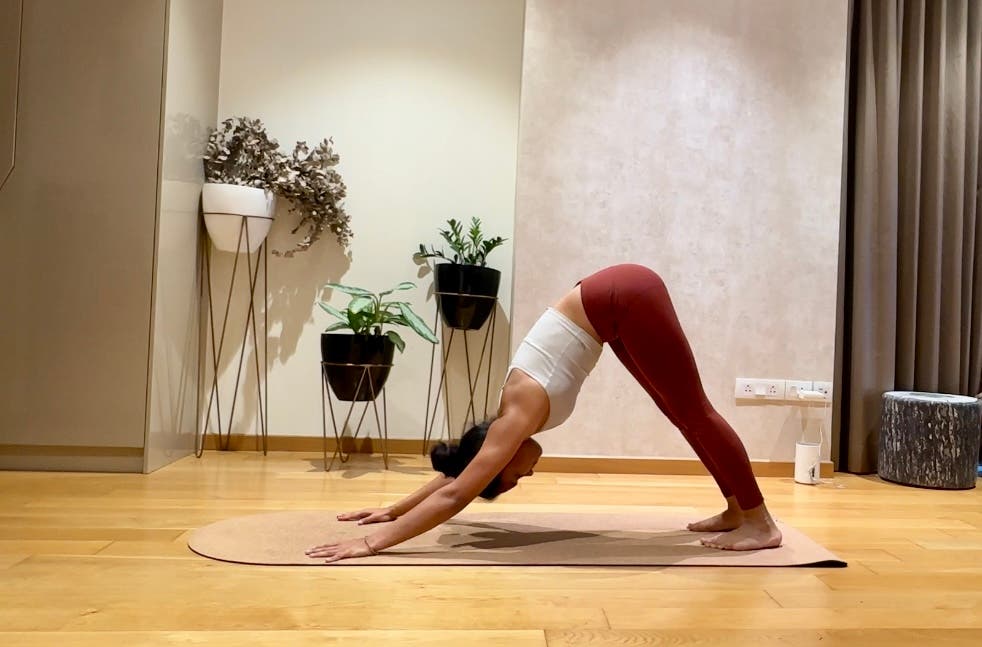
- Exhale and press back into Downward Facing Dog. Inhale and step your right foot forward into Warrior 1.
- Exhale as you step back to Plank and move through Chaturanga, Cobra or Upward-Facing Dog, and back into Down Dog. Step or jump to the top of your mat in Standing Forward Bend. Return to Mountain Pose and repeat the sequence 3-4 times, ending in Downward Facing Dog.
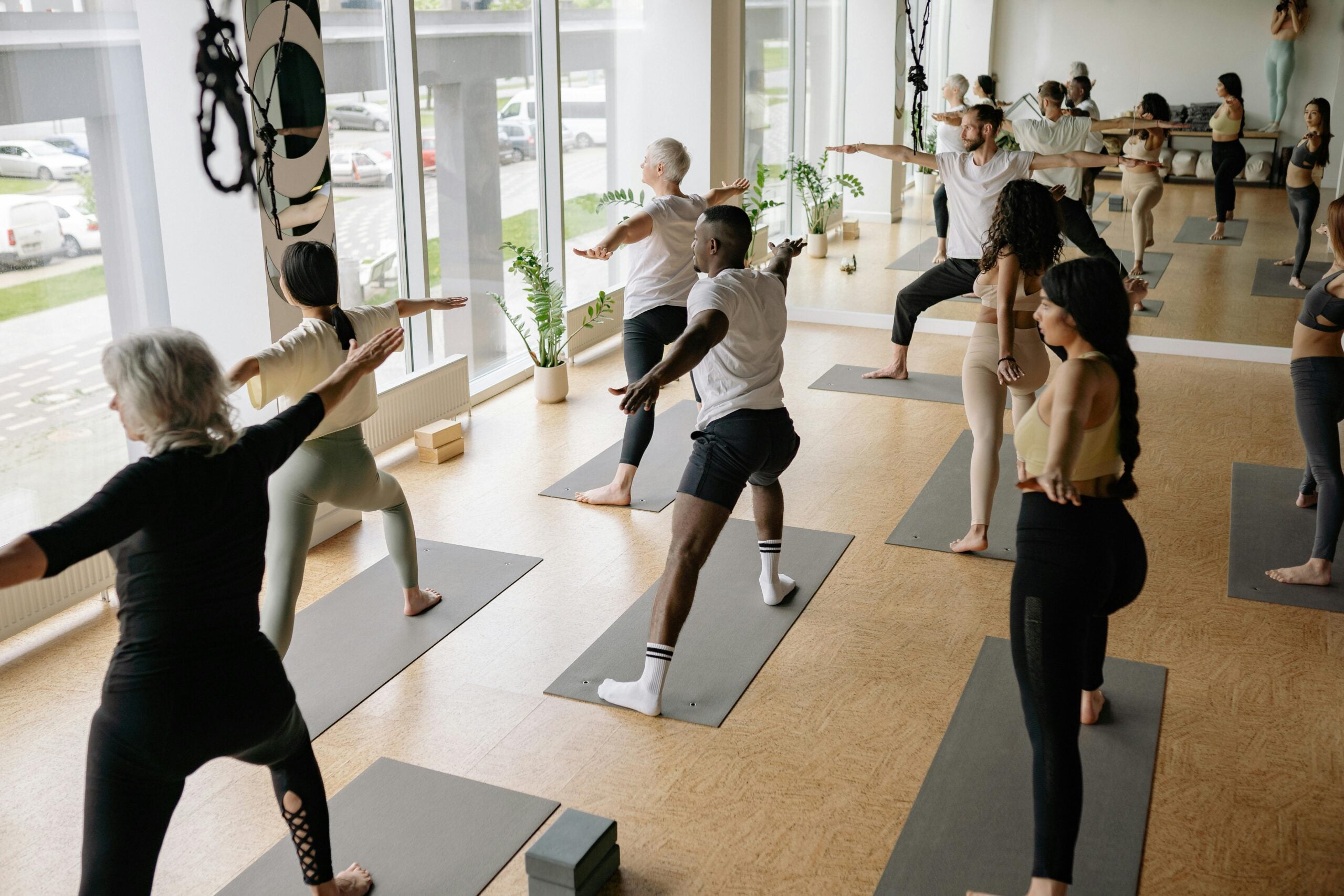
2. Warrior 2 (Virabhadrasana II)
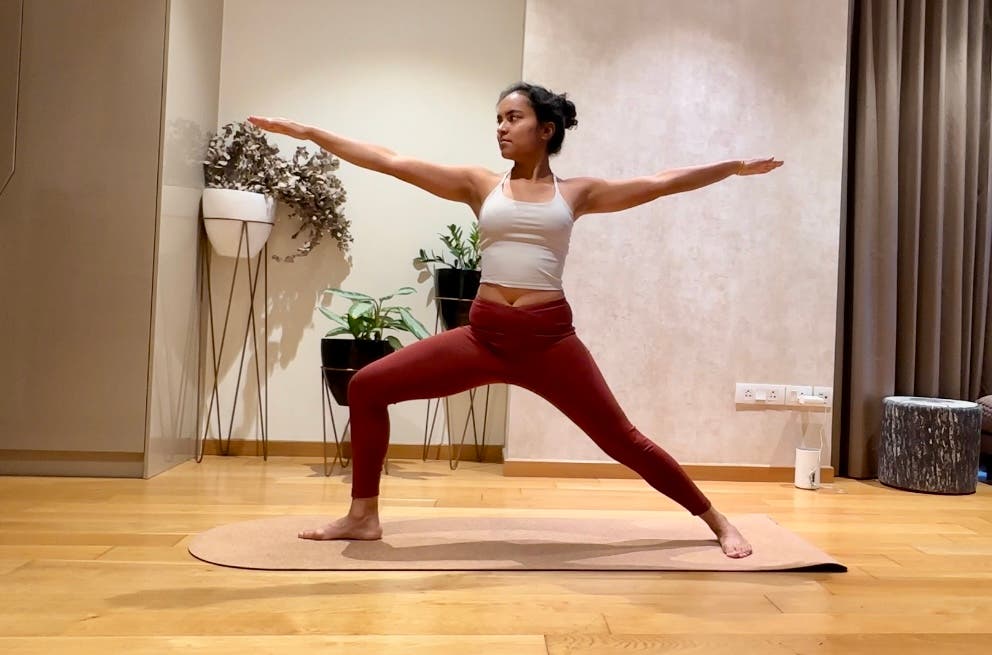
The wide stance and deep bend in your front knee activate your quadriceps and hip muscles, encouraging blood flow in your lower body and building heat. It’s like standing next to a campfire you’ve just lit.
How to:
- From Down Dog, step your right foot forward and lower your back heel down with your foot turned out slightly.
- Rise to stand with your arms in a T position. Bend your front knee and press the outer edge of your back foot into the mat in Warrior 2. For an added challenge, gently bend your front knee two or three times before settling into the pose. Gaze over your front fingertips. Stay here for 5-8 breaths, then switch sides.
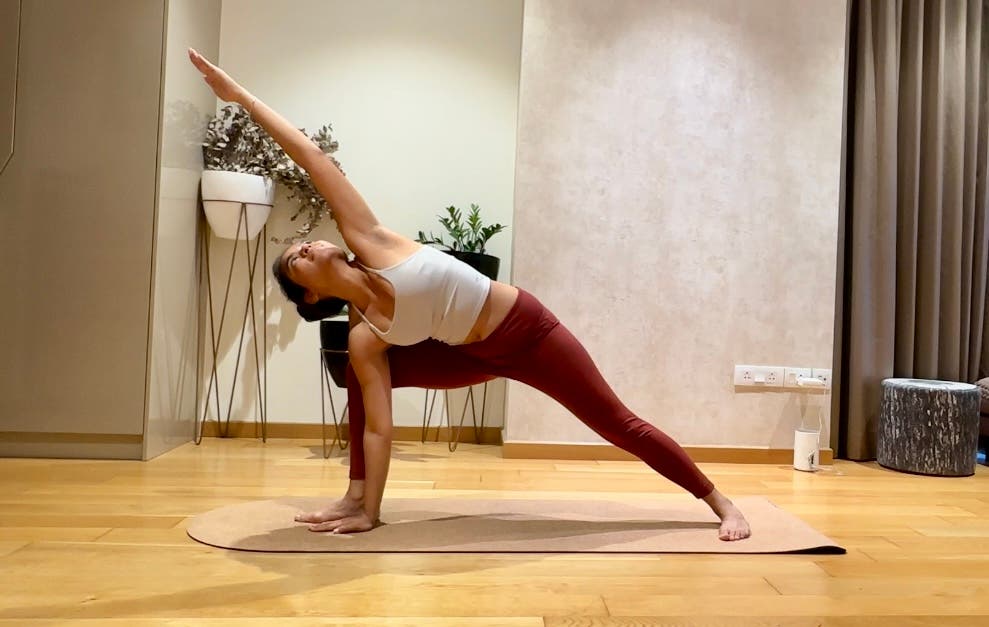
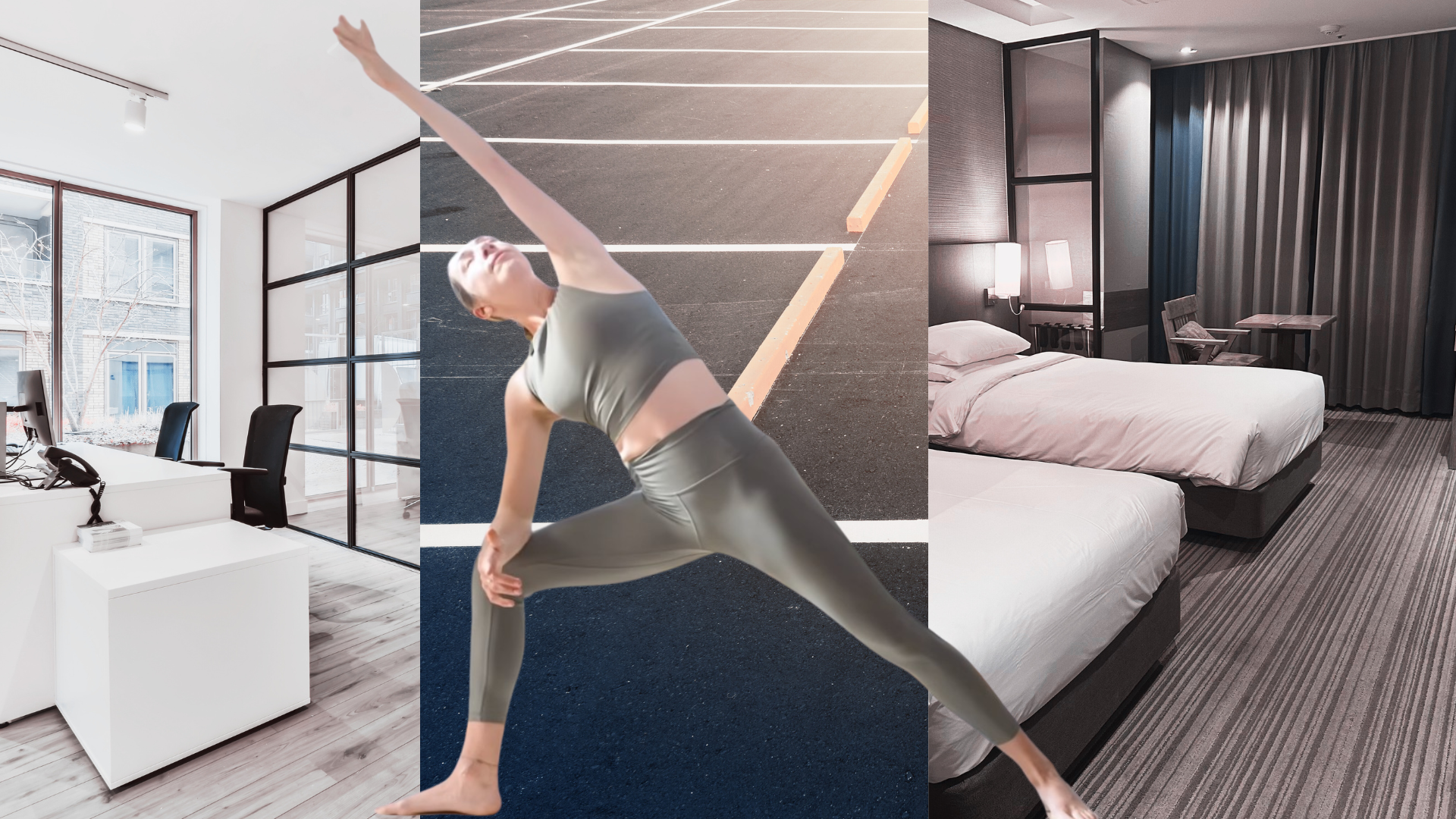
3. Extended Side Angle Pose (Parsvakonasana)
Cold tends to make us hunch and compress the ribs. This side-body stretch counteracts that position, allowing the muscles around your ribs (intercostals) to relax and expand. In turn, you can comfortably take deeper breaths, which boost warmth and circulation.
How to:
- From Warrior 2, lean your torso over your front leg.
- Place the same side forearm lightly on your thigh or lower your hand to a block outside your front foot. Sweep your opposite arm overhead, creating one long line from your outer heel to your fingertips.
- Turn your chest slightly toward the ceiling in Extended Side Angle Pose. Stay here for 5-8 breaths or flow between Warrior 2 and Extended Side Angle with your breath for 4-6 rounds before finding stillness. Switch sides.
4. Wide-Legged Forward Bend (Prasarita Padottanasana)
This pose stretches the back of your body and creates a gentle inversion effect, which encourages blood flow. The strong engagement of your legs generates heat even as the forward fold shape brings a grounding, quieting energy.
How to:
- Face the long edge of the mat with your feet wide and parallel. Place your hands on your hips.
- Inhale to lengthen your spine. Exhale and hinge forward, lowering your chest toward the space between your legs. Lower your fingertips to the floor or blocks underneath your shoulders. Keep your legs slightly bent and press the outer edges of your feet into the mat in Wide-Legged Standing Forward Bend. For extra warmth, inhale and add a half-lift; then exhale and fold forward for a few cycles before settling into stillness. Stay here for 5-10 breaths, then slowly roll up to standing.
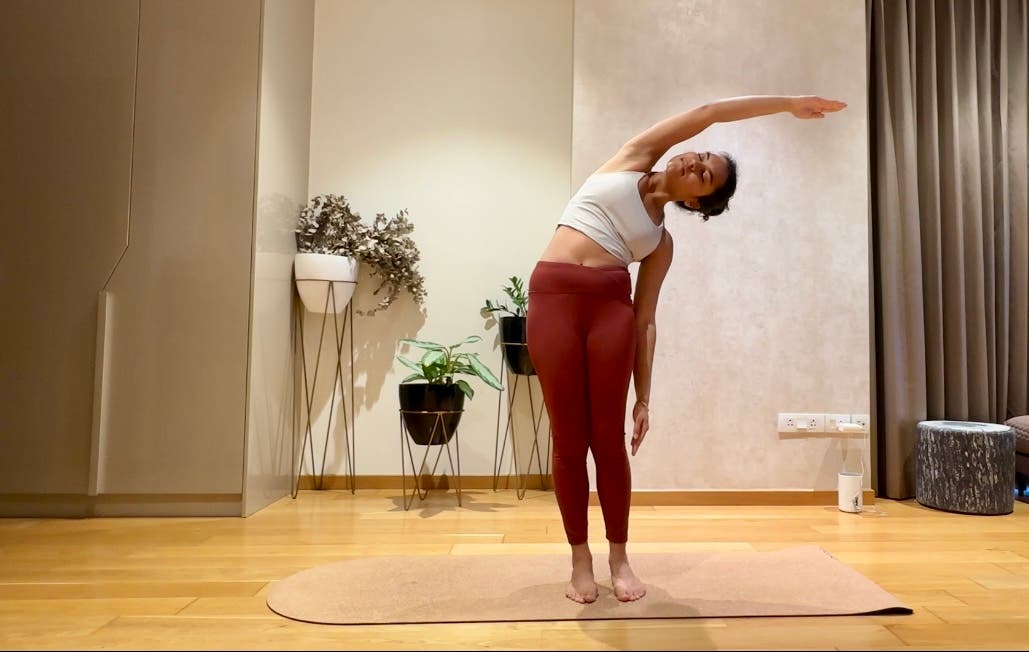
5. Standing Side Bend
This pose is a quick way to warm up the muscles around your waist, ribcage, and shoulders. You can also practice this pose on its own first thing in the morning.
How to:
- Stand in Mountain Pose with your feet hip-width apart.
- Inhale and raise your right arm overhead with your palm facing in.
- Exhale and slowly lean toward the left, keeping both sides of your torso long.
- Keep your weight evenly distributed between your feet as you breathe deeply. Stay here for 5-8 breaths, then switch sides. For an added challenge, move dynamically between sides (exhale to the right, inhale to center, and exhale to the left) for 4-6 rounds.
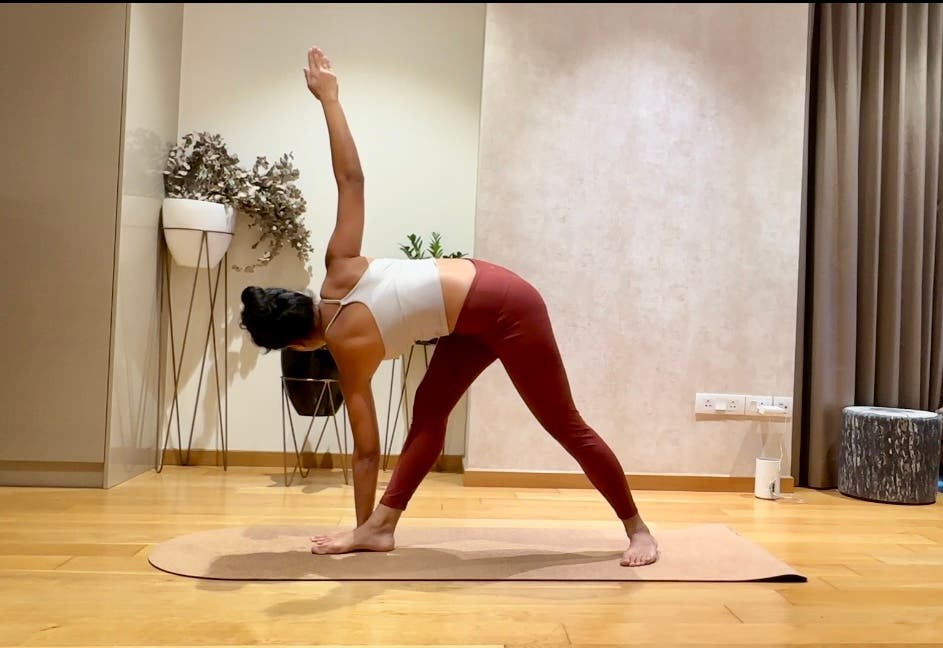
6. Revolved Triangle Pose (Parivrtta Trikonasana)
A strong standing twist like Revolved Triangle combines static leg work with core engagement, making it an effective heat-builder.
How to:
- From Mountain, step your left foot back into Warrior 2 stance.
- Inhale and lengthen your spine. Exhale as you twist your chest toward the right and lower your left hand to a block inside or outside your right foot. (Or, to help with balance, you can place your bottom hand on the seat of a chair.) Turn your chest toward the right wall. Reach your right arm toward the ceiling or place your hand on your hip in Revolved Triangle Pose. Keep both knees slightly bent. Stay here for 3-5 breaths, then gently release and switch sides.
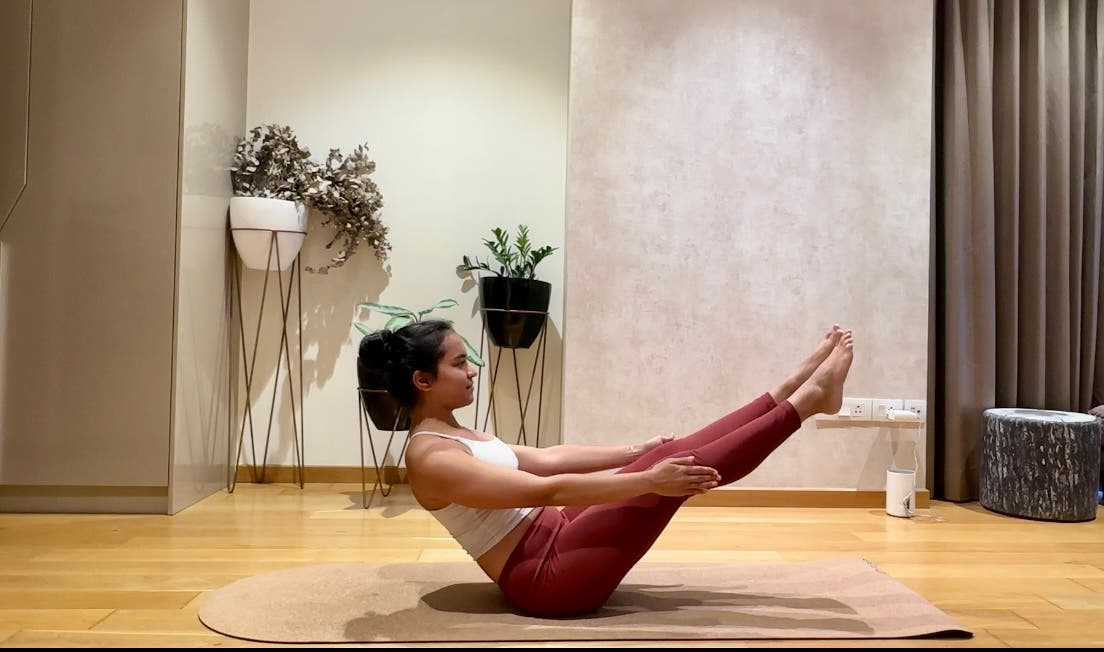
7. Boat Pose (Navasana)
Think of your innermost core muscles like your body’s central radiator. When you activate them, you feel a steady inner warmth, which is exactly what happens in Boat Pose.
How to:
- Sit with your knees bent and your feet flat on the mat. Place your hands on the backs of your thighs.
- Lengthen your spine and lift your chest. Keep that length as you inhale and lean back slightly (and avoid rounding forward). Lift your feet so your shins are parallel to the floor in bent-knee Boat Pose. For an added challenge, straighten your legs to a V shape. (If your lower back rounds, bend your knees.) Reach your arms forward alongside your legs, palms facing each other, or keep your hands on your thighs for support. Stay here for 3-5 breaths, then release.
8. Savasana
Practice one or all of the breathwork techniques (below) before finishing this sequence by letting the heat settle in Savasana. Even two or three minutes of stillness tells your nervous system that the “work” part of your day is done, helping that inner fire support rest instead of stress.
How to:
- Lie down in Savasana or with your calves resting against an elevated surface, such as the wall, a chair seat, or a bolster or stacked cushions. Let your breath return to normal. Feel the warmth you’ve built in your legs, belly, and chest, and imagine it radiating steadily like embers in a fireplace.
Breathwork
Those who experience anxiety disorders, panic, or strong insomnia may find intense breath practices overstimulating; favor slower, longer exhalations and gentle alternate-nostril work instead.
Skull-shining breath and bellows breath are not recommended if you are pregnant, experience blood pressure issues, eye conditions, or heart disease, or if you have a history of stroke or epilepsy, active ulcers or hernias, or have had recent abdominal or thoracic surgery.
Skull-Shining Breath (Kapalabhati)
This traditional breath technique uses sharp exhalations to move the abdominal wall and stimulate the diaphragm. It’s as if you’re activating your body’s furnace.
How to:
- Sit tall in a comfortable position with your hands on your thighs. Take a few normal breaths.
- Inhale gently through your nose.
- Begin short, active exhalations by pulling your low belly in toward your spine; then inhale normally. Start with 20 pulses, then take a break and breathe normally for 30-60 seconds. You can repeat 2-3 rounds as long as you feel stable and energized, not agitated.
Bellows Breath (Bhastrika)
Often described as a bellows stoking a fire, this technique uses strong inhalations and exhalations of equal length. It can feel like pumping warmth through the chest and belly, especially on cold mornings.
How to:
- Take one or two normal breaths.
- Begin slowly inhaling and exhaling through the nose with equal force—like brisk sniffing in and out (but from the diaphragm, not the nose alone).
- Start with 10-15 breaths and then rest.
Right-Nostril Breathing (Surya Nadi Surya Bhedana Pranayama)
Right-nostril (surya) breathing is traditionally said to activate what is known as the body’s solar channel (piṅgala nadi) to increase body heat. Ayurvedic sources describe it as helpful for Kapha-type sluggishness and winter stiffness.
How to:
- Rest your index and middle fingers at your brow with your thumb and ring finger free (visnu mudra).
- Gently close your left nostril with your ring finger.
- Inhale through your right nostril for a count of 4. Pause for a count of 2. (You can skip the breath retention if it’s not comfortable.)
- Exhale through your right nostril for 6-8 counts. Repeat for 8-12 rounds, then relax both hands and breathe normally.