Published January 14, 2026 11:29AM
Yoga Journal’s archives series is a curated collection of articles originally published in past issues beginning in 1975. This article first appeared in the March-April 1983 issue of Yoga Journal.
Pranayama is the yogic art of breathing. Consider it one of the inspirations for the breath work techniques that help keep you grounded throughout the day. By mastering the three stages of the breath, inhalation, exhalation and retention, you can learn to quiet the nervous system and gain control over the emotions and constant demands of the senses.
Pranayama can be difficult art to practice, one that requires years of persistence and patience. The student may begin at a simple level, cultivating the intelligence of the breath in a step by step manner; but because the practice of pranayama brings about profound physiological and psychological transformations, it should not be approached casually or carelessly.
Pranayama and Your Yoga
A regular asana practice is important for several reasons. Pranayama is very demanding on the nervous system, and the asanas help to “rewire” the body, enabling it to safely handle the increased voltage (prana). Secondly, the attention to postural detail and the concentration required in asana practice prepare the mind to stay quietly alert to changes in the musculoskeletal system. Pranayama involves continued subtle adjustments in posture to maintain correct alignment and allow complete freedom of the breath. Thirdly, regular asana work develops a strong, flexible spine, an open chest and loose hip joints are indispensable attributes for seated pranayama.
The serious student of yoga should also understand the importance of abhyasa and vairagya before beginning pranayama. Patanjali, in the twelfth sutra of the Samadhi Pada, introduces these two most essential means for calming the mind. Abhyasa is constant practice. It will take years of steady, often boring work to advance beyond the beginning stages of pranayama. While contemporary society often expects immediate results from any investment of time or energy, pranayama requires day-to-day diligence without expectations. The mind must slow down. This attitude of dedicated persistence secures a steadiness of the mind that allows the pranayama practice to flourish.
Vairagya is the absence of desire, the surrender of the ego. It allows the universal Self, the atman, to become manifest. This creates a receptive mental state in which the mind is passive yet alert, free of actively created thoughts, fantasies or daydreams. This silent state allows the more subtle stages of pranayama to be observed and experienced. The ego-less innocence of vairagya is of crucial importance for another reason. Pranayama magnifies and amplifies the mindset of the practitioner. Greed and desire for enlightenment or spiritual powers while practicing pranayama can entrap the yoga student in a nightmarish world of subconscious creations. All images and ideas that appear on the mental screen are illusions and should be observed and dismissed as such. To cultivate silence of the mind, one must let go of all mental activity and draw consciousness inward.
The Best Pranayama Poses
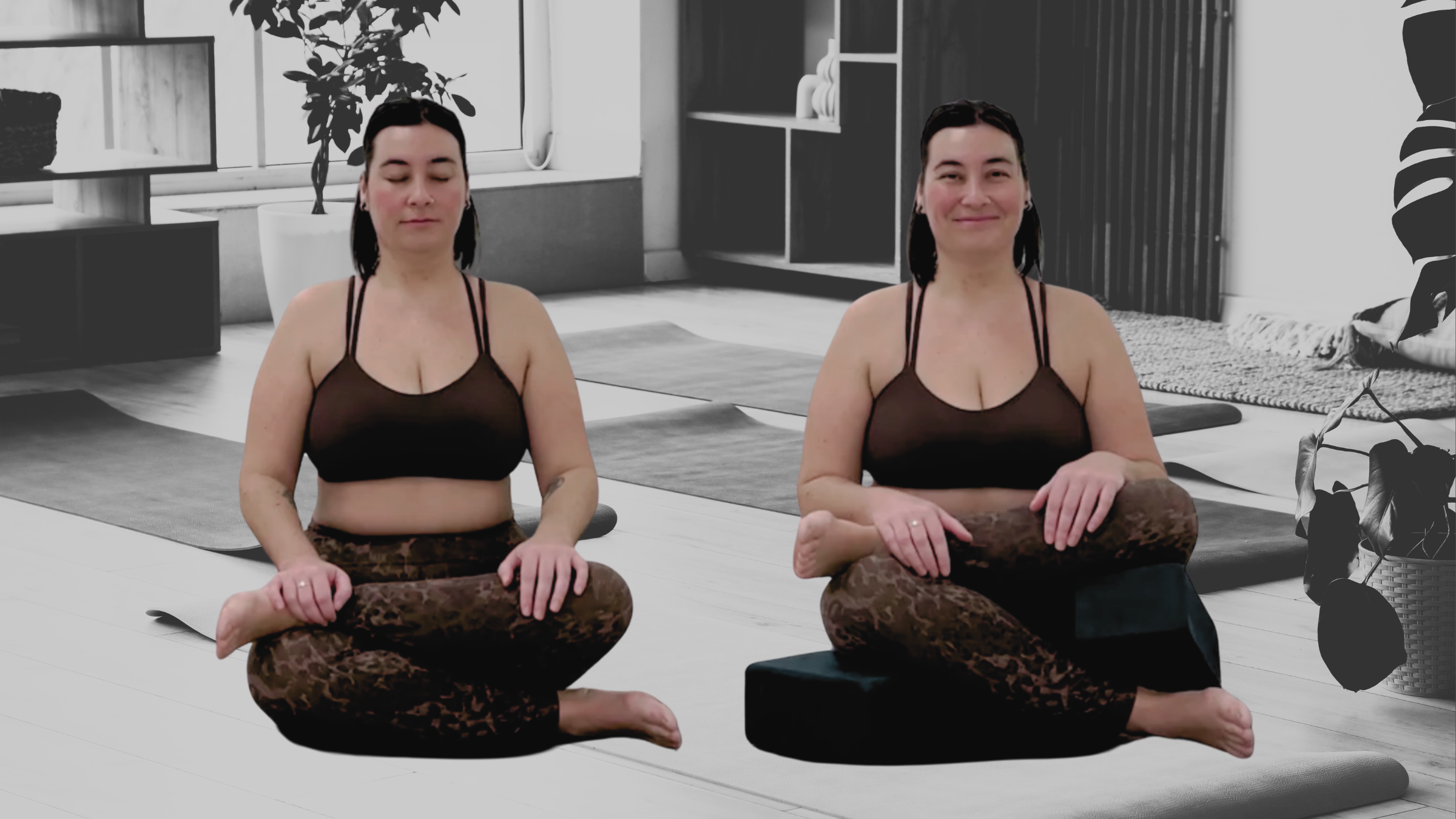
Pranayama is usually done in the sitting position; Bound Angle Pose and Lotus Pose are possible postures. Either Half Lotus or a simple cross-legged pose is also suitable, as tight hip joints may make the Lotus difficult to hold for any length of time. Whatever the position, do not allow the knees to be above the hip joints.
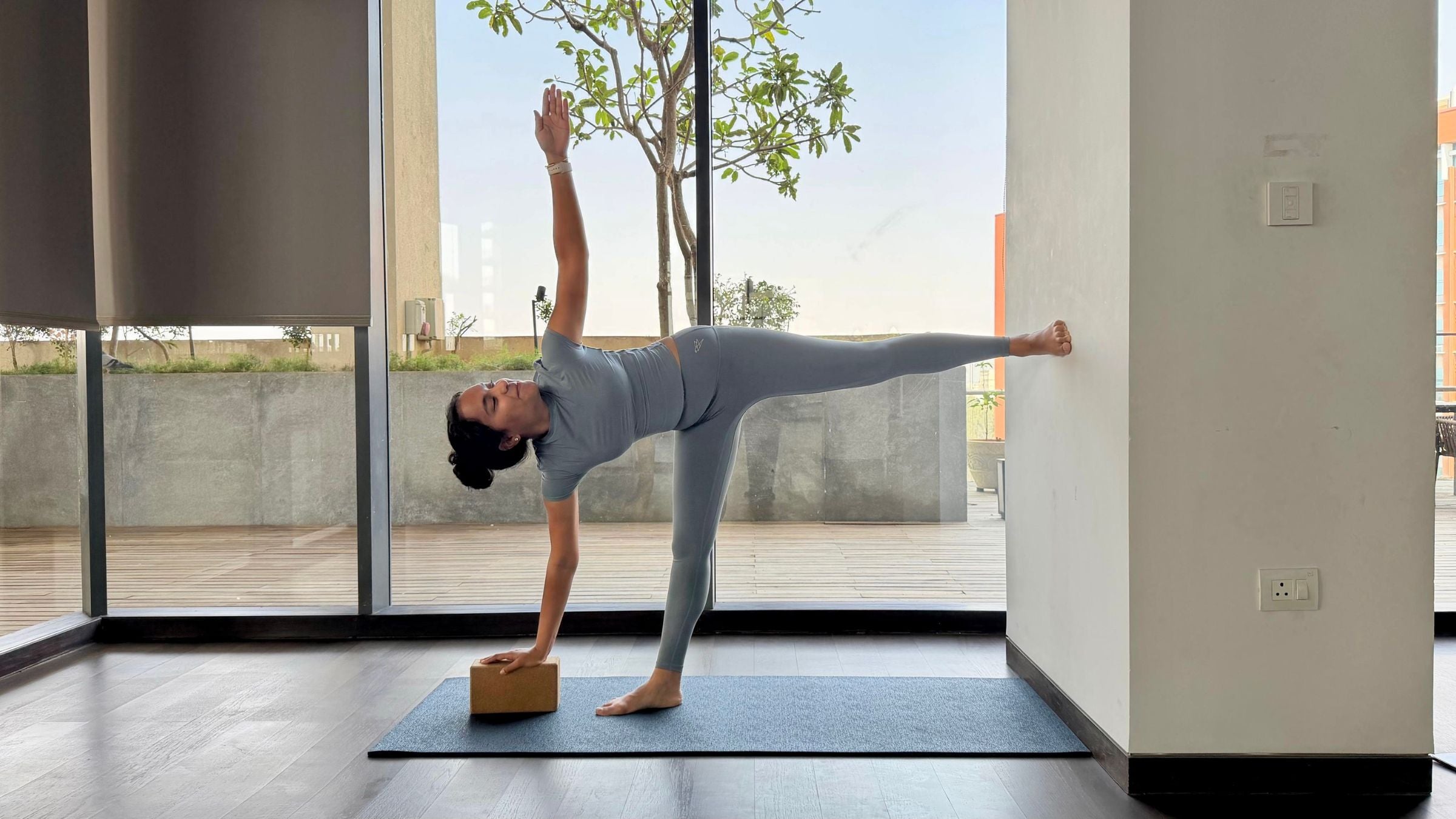
Keep the pelvis perpendicular to the floor, release the spine upward, maintaining the normal spinal curves, and distribute the weight evenly across the two sitting bones. The spine should not collapse or waver. Practice sitting against a wall or an outside corner to learn to sit with an erect spine.
All sitting pranayama requires the use of Jalandhara Bandha, a chinlock that regulates the flow of prana between the heart and the brain. The head hangs down from the base of the neck and the sternum is lifted up (not from the diaphragm!) and pressed toward the chin. Do not press the chin to the chest, or push the lower ribs forward. When doing Jalandhara Bandha in pranayama, be sure not to collapse the spine when the head drops. Maintain the lift of the ribcage. The head will tend to lift during inhalations.
Observe this and learn to keep the head down in all stages of the breath. No food should be eaten for at least six hours before beginning pranayama practice. The bowels and bladder should be empty. Do not eat for at least one-half hour after practice. The best time to practice is in the early morning when the mind is fresh and outside disturbances are at a minimum. Warm up the body with asanas that open the chest and pelvis. Downward-Facing Dog, Bridge Pose (passively supported if possible), and Reclining Warrior are excellent preparatory poses.
How to Practice Pranayama
Generally, pranayama may be practiced 15-20 minutes after a mild asana practice, although it is preferable not to practice the two together. Wait at least one hour after pranayama before doing asanas. It is too strenuous a transition for the nervous system to move directly from pranayama to asana.
Begin a pranayama practice at a simple level. 5-10 minutes a day are enough. Gradually, over a period of one to two years, one may increase to 20 to 25 minutes per session, but there is no hard and fast rule on how long to practice. Use the quality of the breath as a guide. There should never be strain or forcing of the breath. When the breath loses its soft rhythm and becomes harsh and irregular, the practice should end.
Because in the beginning sitting upright is often a challenge to one’s attention, pranayama can be practiced in Savasana. A folded blanket placed length-wise under the spine helps open the rib cage and awaken the spinal intelligence. Here, one may focus totally on the breathing process, and sitting can be practiced separately. Later, as breathing and sitting both become more natural, they may be combined.
Until sufficient softness and control are developed, advanced techniques such as alternate nostril breathing and long retentions will strain the diaphragm and the brain. The process of refining the breath should begin with an awareness of normal breathing patterns. Most people breathe unevenly and alternate from one lung to another during each breath. In Savasana, learn to observe your own peculiarities. Become sensitive to the movement of the abdomen, the diaphragm and the ribcage. Train the ears to monitor the sound of the breath. Notice the natural pauses between inhalations and exhalations. From this passive observation, you can see what areas require more attention. See how the conscious mind interferes with the breath. Just as in asana practice, pranayama involves letting go of habits. Learn to release blockages that prevent the spontaneous flow of the breath.
When you begin pranayama, you must be committed to practicing every day. This is an absolute. Irregular asana practice can be harmful if you are not aware of the decrease in flexibility and strength that inactivity can bring. However, the pain receptors of the nervous system usually alert the mind before soft tissue damage becomes serious. There is no such warning in pranayama.
The delicately elastic lung tissue has no pain receptors, so serious damage from stretching the lungs beyond their capacity can occur without the practitioner’s knowledge. Also, because of the quality of lung tissue, the progress of months of stretching and expanding the lungs can be lost in a few days of inactivity. However, pranayama should not be done if you have a fever or if your lungs are congested. If you are sick, use common sense and listen to the body—it will tell you when to resume your practice. If you miss several days or more, take at least a few weeks to work back to your normal daily practice time. This will ensure the health of the lung tissue. Don’t be in a hurry.
Get Curious with Your Breath Work
Within a few weeks, as you start to develop a sensitivity to the breath, you may begin active experimentation. See your pranayama practice as an investigation of the breath and its effects on the mind and body. Explore different parts of the torso in isolation. Practice breathing into and filling the pelvis.
Work with the lower right ribs, or the upper left ribs, or the back ribs. Be creative in discovering how to awaken the intelligence in all the respiratory muscles. Tune in to the diaphragm and learn to move the sides rather than the center of this important muscle. Try holding the rib cage open during exhalations by maintaining the grip of the intercostal muscles. This will help increase the elasticity of the diaphragm. Because the control centers of the brain will respond more readily to images than intellectual concepts, visualizations can be useful in exploring and opening the thoracic cavity.
Feel the body growing longer (from the sitting bones to the collar bones) as the breath flows parallel to the spine. Feel the breath moving laterally, widening the body at the pelvis, diaphragm and upper chest. Feel the space between the front and back ribs increasing as the breath deepens the chest cavity. Imagine the breath expanding radially from points in the center of the pelvis, diaphragm and rib cage. Let the inhalations and exhalations flow through the back ribs. This is a difficult but important part of the body to get in touch with. Feel the elasticity of the skin as the body expands and contracts.
You will also want to explore inhalations and exhalations. They can be studied independently in a simple deep breathing exercise. After a normal exhalation, take a slow deep inhalation. Repeat the cycle… normal exhalation and slow, deep inhalation.
Reverse the process and observe the differences. Learning to control the flow of air through the glottal opening in the throat will allow you to slow the breath down smoothly. In Sama Vrtti (same vibration) pranayama, the length and quality of the inhalations and exhalations are equalized in a sine wave pattern, and the two phases flow into each other smoothly.
Practice this by adjusting the phase you are most comfortable with (either inhalation or exhalation depending upon the individual) to match the other. Develop a softness and consistency to the breath. Short fluid cycles are better than longer, rougher ones. Active breathing is not aggressive breathing!
Liberate the Breath
The practice of Viloma pranayama can be added after experience with Sama Vrtti is developed. In this form (meaning literally “against the hair”) the inhalations or exhalations do not proceed continuously, but are broken into several stages.
In Savasana, begin with a normal exhalation. Then divide the inhalation into three equal parts with a brief pause between each part. Follow this with a slow, deep ex-halation. Repeat the cycle of three part inhalation and slow, deep exhalation and continue for several minutes. Take several normal breaths and then reverse. After a slow, deep inhalation, break the exhalation into three equal parts with short pauses between steps. Repeat this cycle for several minutes. Observe the effects. There should be no strain at any time during the breathing. You may also use four or five steps instead of three in your Viloma practice if that feels more comfortable.
To maintain sufficient softness, do not go beyond your capacity. When the breathing becomes too harsh or difficult, stop. Be bold and cautious at the same time. Always lie in a totally passive Savasana for at least five to 10 minutes after pranayama to allow the mind and body to relax completely.
Theoretically, breathing should be a spontaneous process. What could be easier than inhaling and exhaling? However, interference of the mind induces tension and resistance. The practice of pranayama will help to liberate the breath, and with this freedom comes improved psychological and physiological well-being.