Published January 23, 2026 08:05AM
I have an unfortunate penchant for screens at night—they enable my hyperactive mind, allowing me to make progress on projects despite the darkness. Even more unfortunate are the results of this unnatural light-time: late-night alertness, ample tossing and turning, and many mornings welcomed with less than six hours of sleep.
Bright lights keep us buzzing late into the night because of our circadian rhythm, which is the body’s internal clock. It’s instrumental in the normal functioning of body and mind. It’s also intrinsically tied to light. Before the widespread availability of electricity, human activity was tightly synced with these natural light cycles, as it was for every other living being on the planet. Over time, though, experiencing light after dark shifted from a rare luxury to an everyday fixture.
I wondered what my life, mind, and body would feel like without the disruption of electric light. What if, instead of ending my night when I glance at the clock and realize how late it is, I gave myself the gift of darkness and let my body decide when it’s ready to wind down, rather than my LED-adled mind?
I gave myself one week to find out.
Hello Darkness: My No Light Experiment
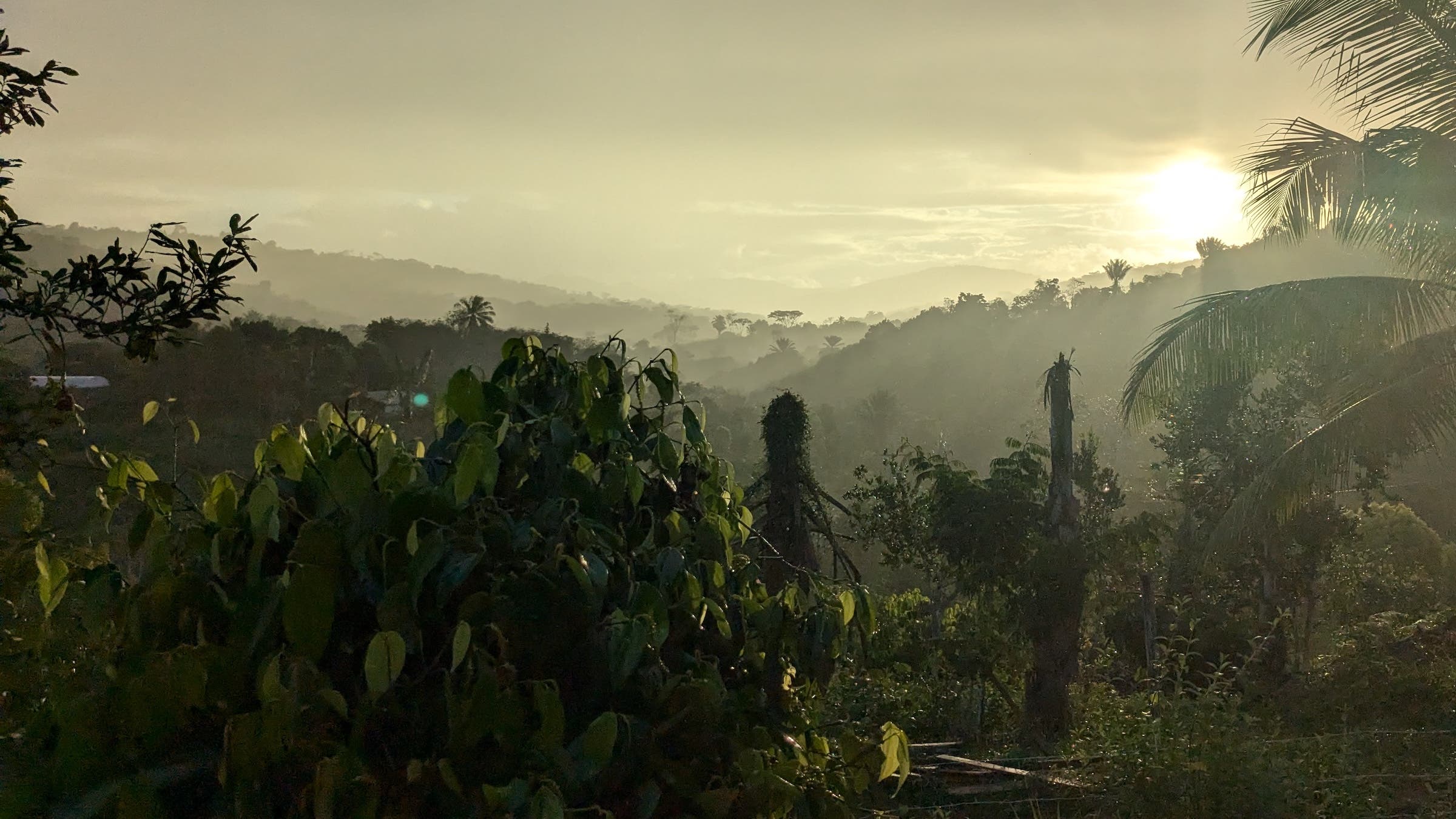
When my boyfriend, Franco, and I agreed to house-sit at a remote farm in the Atlantic Forest of Bahia, Brazil, I knew it was the ideal location for such an experiment. It was worlds away from our apartment in the chaotic heart of Buenos Aires, the South American “city that never sleeps.” And there was not a trace of light pollution to be found. On the farm, we could fall asleep to the forest’s symphony of life, and awake to flocks of toucans and troops of monkeys calling to each other as the sun rose.
It was settled: I’d spend my days working outside on the shaded porch. Once the sun set at 6 pm, I’d shut down my computer and phone and use only candles and a red-light headlamp for illumination. (Red light has been shown to minimally suppress melatonin, similar to fire, since it doesn’t have any blue wavelengths, so I figured its disruption to my circadian rhythm would be negligible.) I planned to wear my Fitbit to measure sleep duration and depth before and during the experiment.
The Benefits of Natural Light
The body has a mind all its own, and light input is one of the signals that instructs it when to wind down and when to ramp up. Darkness tells the brain to produce the sleep-inducing hormone melatonin, whereas light activates the waking hormone cortisol. This is why screens can keep you tired and wired for hours, while the glow of morning sunshine on your skin lifts your mood in seconds and helps you feel both physically and mentally sleepy come nighttime. In short, cortisol-boosting sunshine during daytime and melatonin-promoting darkness at night encourage energized days and restful nights.
In these biology-defying modern times, however, we’ve got these patterns almost reversed. Screens after dark may be the worst culprit. According to sleep psychologist Leah Kaylor, after-dark exposure to blue light, which is concentrated in screens and white LED bulbs, is basically the same as soaking up nighttime sunlight. That means you’re exposing yourself to the same wavelength as sunlight. “Essentially, it’s telling the brain to wake up, to be alert,” explains Kaylor.
In her book The Inner Clock: Living in Sync with Our Circadian Rhythms, author Lynn Peeples explains how a lack of darkness can wreak havoc on our biology. “Artificial light at night has been linked with depression, poor blood sugar control, obesity, reduced sperm quality, increased risk of preterm birth, greater susceptibility to infectious diseases, and further undesirable health issues,” she writes.
When I spoke to George Brainard, PhD, a biologist leading the Light Research Program at Thomas Jefferson University, he noted that my sleep experiment echoed those being conducted in space. His team helped NASA develop a lighting system to improve sleep onset and quality in astronauts based on circadian-optimized lighting that dims dramatically and shifts into red-appearing wavelengths. I felt reassured after hearing this.
The Night’s Own Illumination
Nights are long near the equator, and at first, the idea of living by candlelight each evening sounded crazy. But as soon as the sun set on the first night, I immediately felt the cool darkness quiet my mind and body.
It was a strange feeling—the soft light made me drowsy, but it was too early to go to sleep. So I settled into a peculiar waking rest, reading a book by candlelight and journaling. I wasn’t so tired that I’d fall asleep, but I enjoyed an overwhelming sense of calm. There was nothing to do, nothing to achieve, nothing to work on. It may be similar to what you’ve heard yoga teachers say before Savasana. That I found this to be such a jarring sensation speaks to how deeply ingrained all-hours productivity is within me.
Come bedtime, I crawled between the sheets with a lovely feeling of drowsiness that put me to sleep within minutes. The next day, I woke up with the 5 am sunrise with a renewed sense of energy and focus.
Throughout the week, I spent evenings enjoying all manner of non-electrified pastimes: meditating, yoga, journaling, and reading. I went to bed earlier, fell asleep faster, and consistently logged at least eight hours of sleep. According to my Fitbit, my average amount of deep and REM sleep jumped significantly, with fewer wakings throughout the night.
Getting rid of evening screen time also left space to perceive the night’s own brilliant illumination. I had almost forgotten how strong the full moon can cast a shadow as Franco and I took a nighttime walk down the silent country road carved into the forest, with trees casting inky silhouettes against the silver night. The lack of screen-enabled work left a blank space in which I could let my mind wander, which created more opportunities for conversation and insight.
One night, as the sun slipped below the jungle-smothered hills, Franco and I nursed a bonfire, letting it burn until we had enough embers to shovel under our makeshift grill. We used it to cook our dinner in the Argentine asado style. We sipped homemade caipirinhas and talked about things you only stop to ponder when you’re not wrapped up in endless busyness, including the probability of extraterrestrial life, whether time travel is theoretically possible, and the fact that those stars we were seeing likely died thousands of years ago.
Living in Union with the Light
In a world without electric light, I fell asleep faster, slept more soundly, woke up more energized, and generally felt more relaxed. But my favorite part about the experiment was the unexpected space it made for quiet contemplation and connection with the world and people around me.
A yoga practitioner as well as biologist, Brainard pointed out that at its core, yoga is union between you and the world, and between body, mind, and spirit. He noted that in this experiment, I chose to live in union with the natural environment, allowing it to guide my body toward instinctual energy cycles. It was a form of yoga.
The union Brainard described was tangible in those evening hours by candlelight, in conversations under the stars about the vastness of the universe, in the way my body instinctively knew when to rest. Living with the sun and moon grounded my awareness in the present moment, allowing me to discover, or maybe rediscover, the profound peace that comes from living in sync with biological rhythms. I plan on extending my experiment indefinitely.