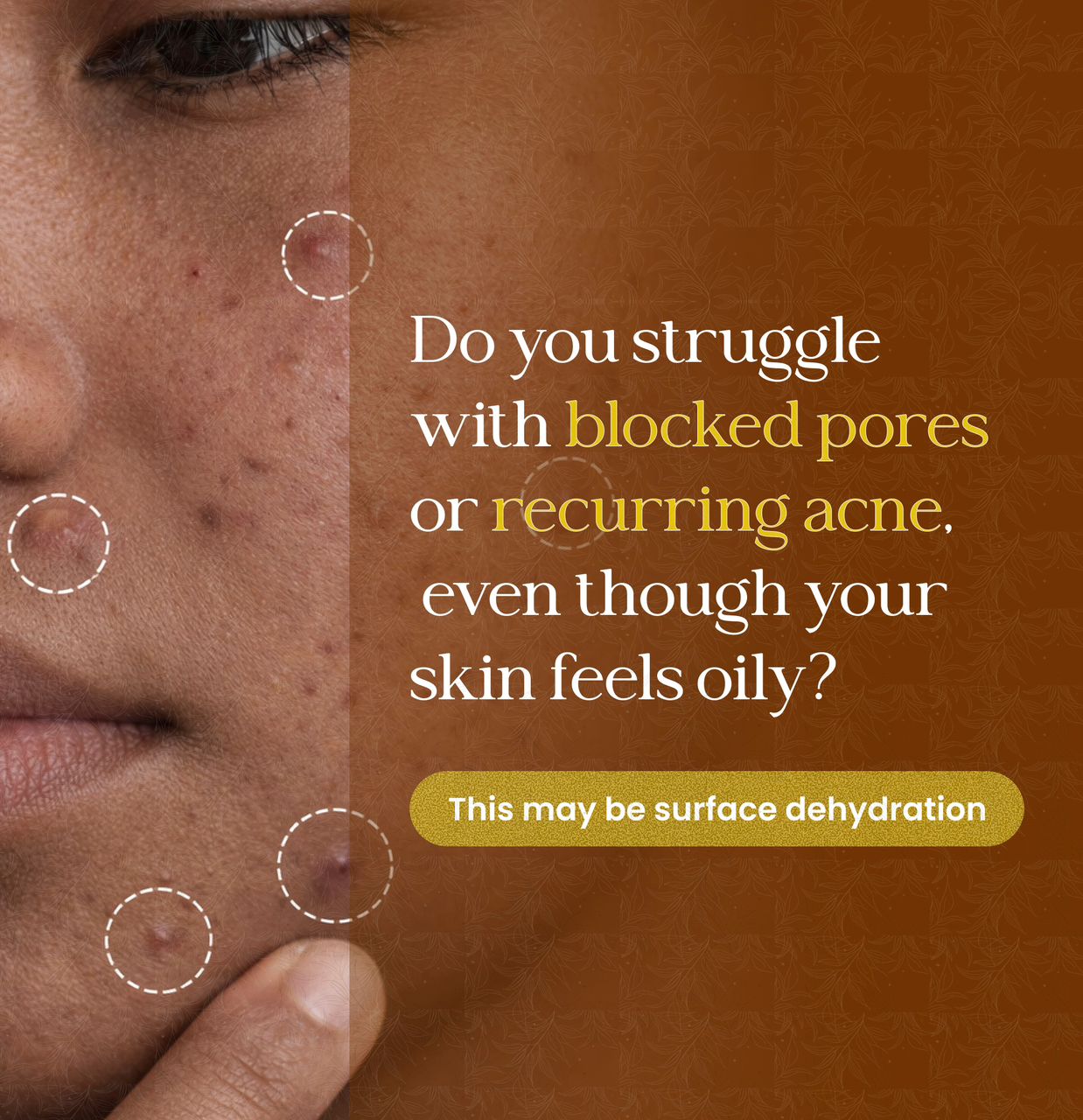
If you’re searching “do LED light therapy devices work,” you’ve probably seen two extremes: “This is basically an in-office treatment at home,” or “It’s all gimmicks and pretty lights.” However, the truth is in the middle. The LED light therapy skincare science is real, but it’s also easy to buy a device that’s too weak (or used too rarely) to match what studies actually tested. Below is a practical, evidence-based way to think about what at home LED light therapy devices can do, and how to judge whether the time and money make sense for your skincare goals.
What LED light therapy is (biological mechanism, simply explained)
LED therapy works through photobiomodulation. This big word just means that specific colors of light are absorbed by targets in the skin and nudge cells to behave differently (more energy production, different inflammatory signals, more repair). And scientists have found a way to harness this cell signaling to improve common skincare concerns.
The best-studied “colors” for skincare are:
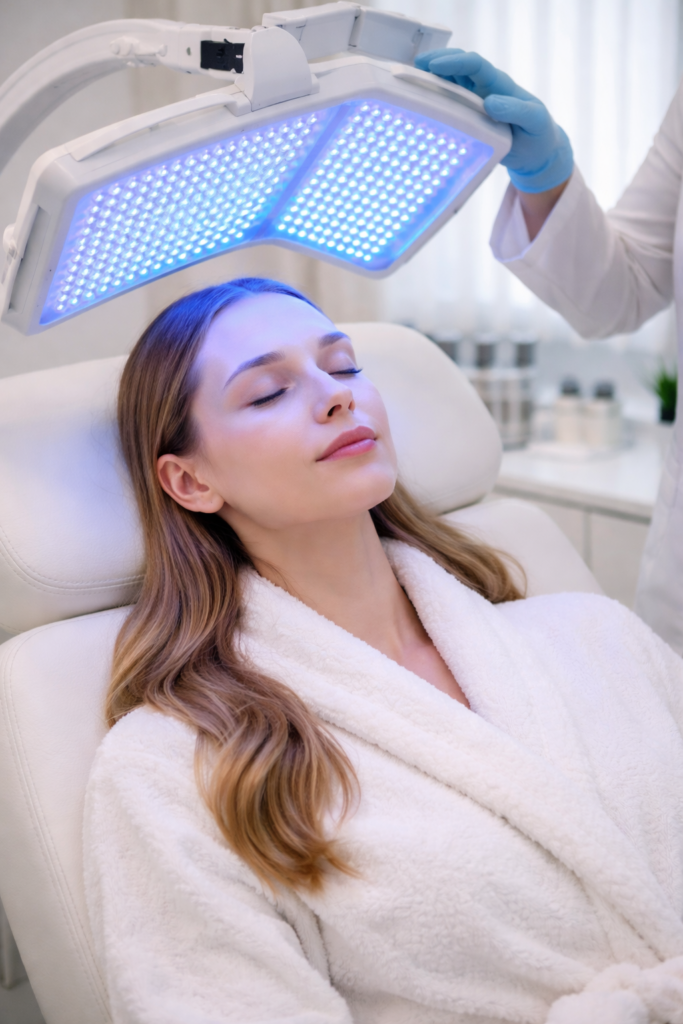
- Blue light (~415–460 nm): stays shallow (mostly epidermis) and targets acne by reacting with compounds made by Cutibacterium acnes, creating a reaction that damages the bacteria. There is also evidence it reduces inflammation signals.
- Red light (~630–660 nm): reaches deeper (into the dermis) and is linked with improved cellular energy (via mitochondrial targets like cytochrome c oxidase), plus signals that support collagen production and calming inflammation that damages collagen and other important structural proteins like elastin over time.
- Near-infrared (NIR, ~830–850 nm): penetrates deepest (beyond dermis), supports blood flow and repair signaling, and is often paired with red for “anti-aging” goals.
What “at-home” actually means (power, dose, limitations)
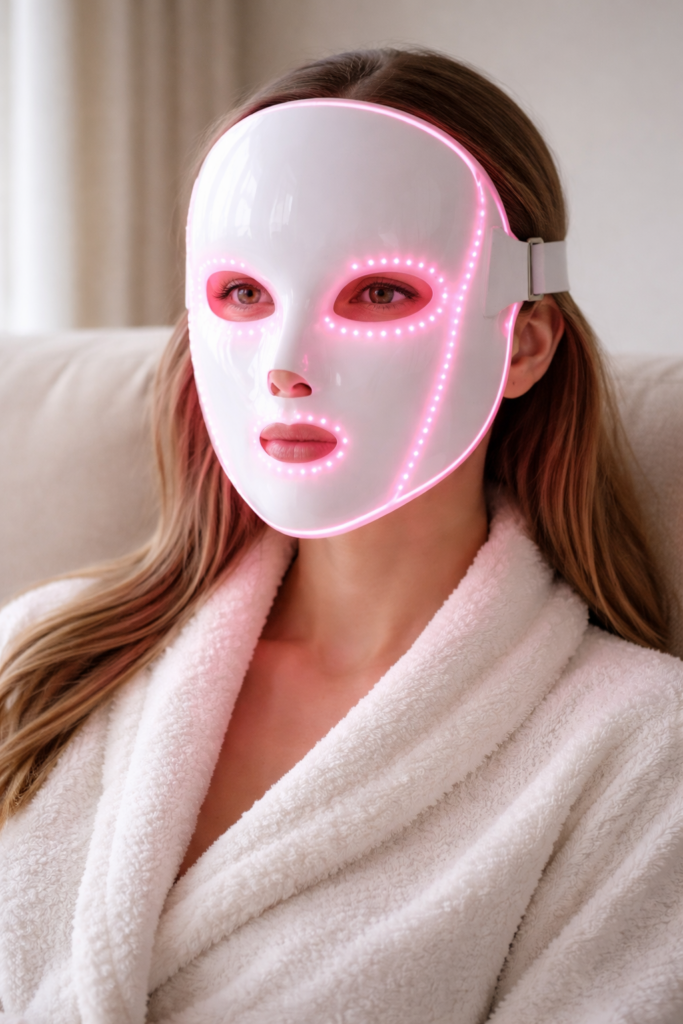
Here’s the key limitation most marketing skips, dose. In studies, results show up when people get enough total light energy repeatedly they can achieve great results. However, at home devices often have lower power than clinic panels, so they rely on repeat sessions to build up a meaningful weekly dose. So if you are considering an at-home device, let’s talk about what you need to keep in mind:
- Many trials using at-home devices used ~10–20 minutes per session, at least 3–4x per week.
- Typical home mask output is often described in the range of ~10–20 mW/cm², which is much lower than many in-office arrays.
If the device is very low power (or you only use it once in a while), it may never reach the kind of dose that produced results in research. This is one reason at home LED light therapy effectiveness looks “amazing” for some people and “nothing happened” for others. And this is a universal rule in skincare; to see improvement, you have to be consistent.
However, it is also important to know that with photobiomodulation more isn’t always better. In science, this is called a biphasic dose response. This means that the benefits will level off or even worsen if you overuse the at home LED light therapy devices. Devices often cap sessions (like 10–20 minutes) for this reason.
What skin concerns at home LED light therapy devices can address, based on evidence
Acne (best evidence for at-home devices)
The most scientifically established use for at home LED light therapy devices is combating acne. Specifically, for mild-to-moderate acne. Studies of at-home masks using blue and red light showed meaningful improvement with regular use:
- One home-use study (7 weeks, 4x/week) reported 86% of participants improved by at least one acne severity grade.
- A sham-controlled trial (handheld, twice daily for 4 weeks) showed inflammatory lesions dropped 77% in the active group (with no change in placebo).
- A 2025 systematic review/meta-analysis described at-home red and blue devices as a promising supplement with traditional acne treatments. Combined red and blue light therapy performs best overall.
However, because the LEDs work by disrupting acne-causing bacteria, this means LED masks can help inflammatory acne (red, tender pimples). But it will not be as effective on blackheads/closed comedones.
Fine lines and early texture changes (moderate evidence)
For “anti-aging” claims, the data support modest improvement with red and red plus near infrared light, especially with consistent use over months:
- A sham-controlled 2025 trial using 630 nm (red) and 850 nm (near IR) reported visible improvement in crow’s feet starting around 8 weeks, improving further at 12–16 weeks; about 86% of treated subjects had noticeable improvement by the end.
The white paper emphasizes the scale of change: usually mild to moderate (softening fine lines, not erasing deep wrinkles). This is an important distinction, as it helps you level-set on the results you can expect from your at-home LED light therapy device.
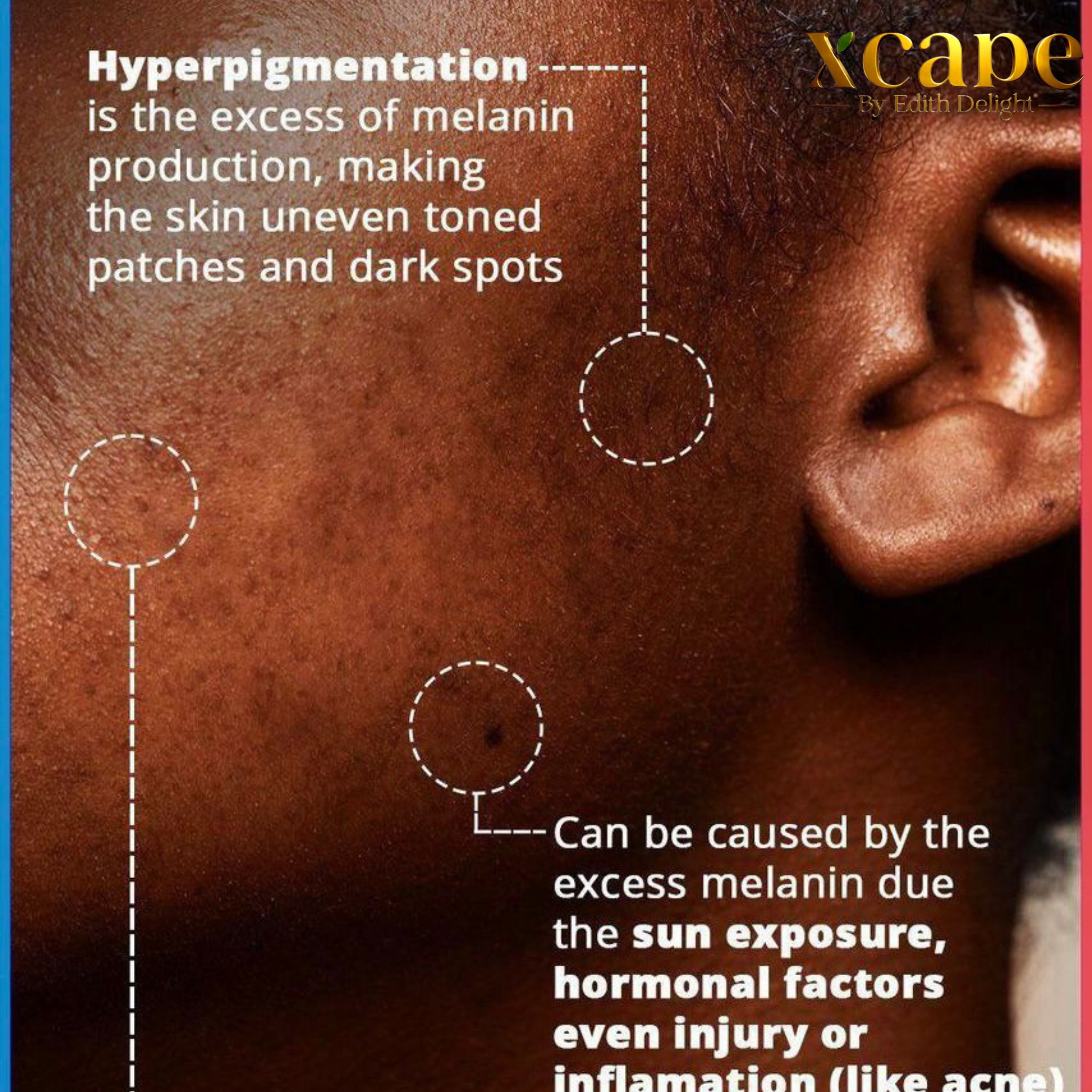
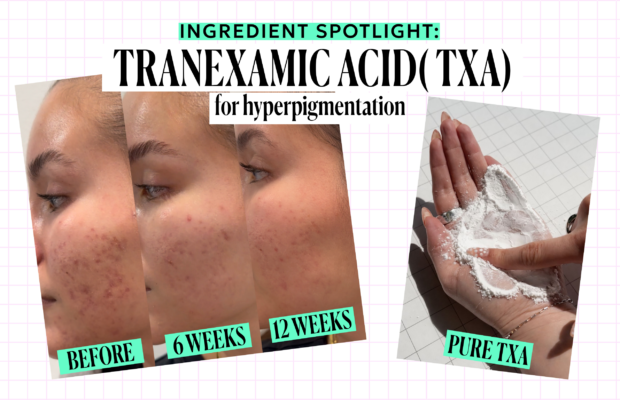
Brightening and hyperpigmentation (mixed results, limited evidence)
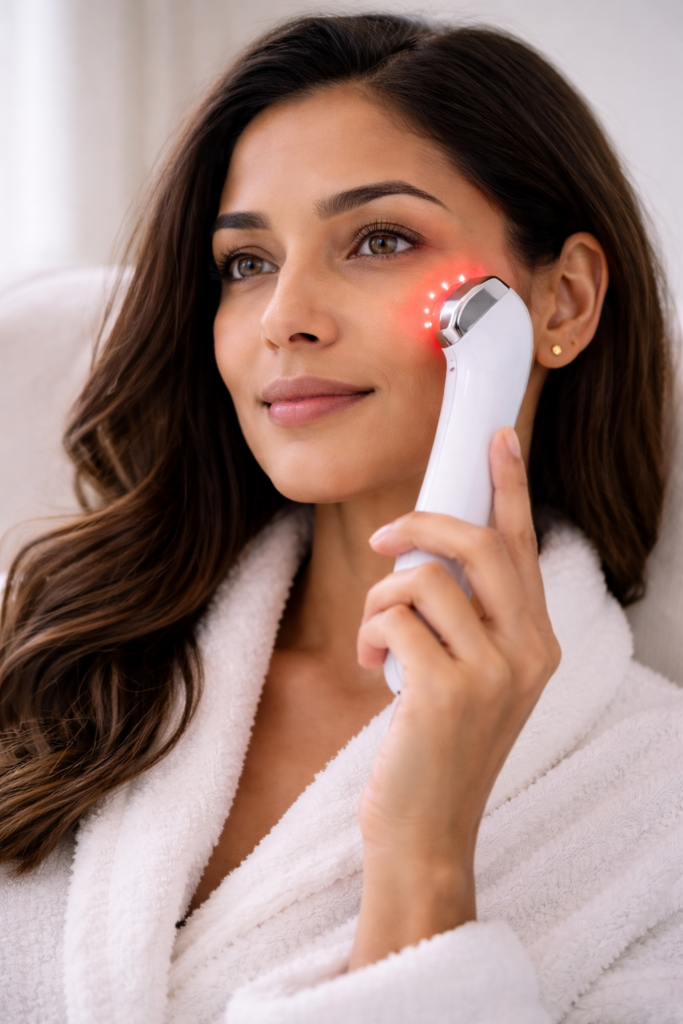
Although there is a lot of promising data about at home LED devices, hyperpigmentation is one skin concern where marketing has gotten ahead of evidence. In fact, you can actually cause the opposite effect if you are not careful!
- Blue light can worsen pigment issues (especially melasma/PIH risk), because it can trigger melanin production pathways. So pigment-prone skin needs extra caution with blue modes.
- Red/NIR may improve “overall skin quality” and glow, but it’s not a primary pigment treatment, and claims like “erase dark spots” aren’t evidence-based.
If pigment is your main concern, you’ll usually get more predictable results from proven topical approaches (and careful sun/visible-light protection).
Why results vary so much between people
When someone says “LED did nothing for me,” it’s often one (or more) of these reasons:
- Unrealistic Expectations: expecting LED to clear severe acne or erase deep wrinkles quickly (it’s usually additive, not a replacement).
- Dose problems: underpowered device, too-short sessions, or inconsistent use (weekly use is often not enough).
- Skin tone and pigment biology: there’s limited data in deeper skin tones in some trials, and melanin can absorb light (especially blue), which may affect both response and pigment risk.
How at-home devices differ from in-office LED treatments
In-office LED systems generally deliver higher irradiance and treat larger areas at once:
- One paper stared in-office arrays delivering roughly 50–100 mW/cm², often reaching 60+ J/cm² in a ~20-minute session, while many home masks sit around 5–20 mW/cm². That’s a much as one-tenth of the power!
So the tradeoff is:
- In-office: higher dose per session, fewer sessions needed. Potentially more expensive and a repeated purchase over time to see results.
- At-home: lower dose per session, but you can do it frequently and build cumulative dose over weeks. One time high cost, requiring discipline and consistency.
That also explains the timeline most people experience:
- acne can start improving around ~4 weeks
- wrinkle/firmness changes often show around ~8–12 weeks with adherence
How to evaluate LED tools realistically
If you want a simple “is this worth it?” filter, focus on targets, specs, and your willingness to be consistent.

1) Match wavelength to your goal
- Acne: look for blue (~415 nm) + red (~630 nm)
- Fine lines/texture: red (~630–660 nm) and often NIR (~830–850 nm)
Extra colors (green/amber/etc.) may be fine, but the science notes the strongest evidence sits with the “big three” blue, red, and NIR. If you have multiple concerns or just want flexibility it is possible to find masks that do multiple colors.
2) Look for credible dose signals (not just “number of LEDs”)
Brand transparency with helpful information is always helpful to consumers. When you are doing research on masks helpful information includes:
- published irradiance (mW/cm²) and session time
- auto shutoff around 10–20 minutes (aligned with study-like use)
3) Prefer devices with real oversight for real claims
Look for brands with FDA-cleared Class II devices when you want “treats acne” or “reduces wrinkles” type claims, because clearance implies submitted safety/effectiveness data for specific indications.
4) Be realistic about your commitment before you buy
A strong at-home plan looks like:
- clean, bare skin
- 10–20 minutes
- 3–5x/week, often closer to daily early on for best odds
- commit for 8–12 weeks before judging
If that schedule sounds miserable, and at home LED light therapy devices may not be “worth it” for you. The best science will not deliver the results you want if you can’t be consistent. Consistency is the whole game.
5) Don’t ignore safety details
Overall, home LED masks do not generate heat and are generally well-tolerated, with mostly mild, temporary effects (like slight redness/dryness) reported. However, there are to big watch outs:
- Eye protection matters, especially with blue light; avoid direct eye exposure.
- If you’re pigment-prone (melasma/PIH), be cautious with blue modes or avoid them unless a clinician thinks it’s appropriate for your case.
The bigger picture
LED can be a great “low-drama” add-on: no peeling, no downtime, and evidence for acne and mild rejuvenation when the device and routine are solid.
But it’s rarely the main character.
If your acne is severe, your pigment is stubborn, or your wrinkles are deep, LED is more likely to be a supportive tool alongside proven basics (sunscreen, targeted topicals, and when needed, professional treatments).
Conclusion
So, do LED light therapy devices work? Yes, some do, for some concerns, under the right conditions. If you are interested in an at home LED mask you can always consult a medical or skincare professional about its fit for your unique skin.
A realistic way to think about at home LED light therapy devices is:
- Best-supported wins: inflammatory acne (blue+red) and mild fine lines/texture (red/NIR).
- Biggest make-or-break factor: dose + consistency over 8–12 weeks.
- Biggest mismatch risk: buying for pigment “spot erasing,” or using blue light when you’re pigment-prone.
If you find this kind of evidence-based breakdown helpful, I share deeper analyses and updates through my email list.
References
Ablon, G. (2025). A 7-week, open-label study evaluating the efficacy and safety of 415-nm/633-nm phototherapy for treating mild-to-moderate acne in adolescents and adults. The Journal of Clinical and Aesthetic Dermatology, 18(10), 25–32.
Barolet, D. (2018). Dual effect of photobiomodulation on melasma: Downregulation of hyperpigmentation and enhanced solar resistance—A pilot study. The Journal of Clinical and Aesthetic Dermatology, 11(4), 28–34.
Goldberg, D. J., Amin, S., Russell, B. A., Phelps, R., Kellett, N., & Reilly, L. A. (2006). Combined 633-nm and 830-nm LED treatment of photoaging skin. Journal of Drugs in Dermatology, 5(8), 748–753.
Lee, S. Y., Park, K.-H., Choi, J.-W., Kwon, J.-K., Lee, D. R., Shin, M. S., Lee, J. S., You, C. E., & Park, M. Y. (2007). A prospective, randomized, placebo-controlled, double-blinded, and split-face clinical study on LED phototherapy for skin rejuvenation: Clinical, profilometric, histologic, ultrastructural, and biochemical evaluations and comparison of three different treatment settings. Journal of Photochemistry and Photobiology B: Biology, 88(1), 51–67.
Li, L., Jiang, X., Tu, Y., Yang, Y., Zhang, X., Gu, H., & He, L. (2023). Impact of blue light on skin pigmentation in patients with melasma. Skin Research and Technology, 29(7), e13401.
Park, S. H., Park, S. O., & Jung, J.-A. (2025). Clinical study to evaluate the efficacy and safety of home-used LED and IRED mask for crow’s feet: A multi-center, randomized, double-blind, sham-controlled study. Medicine (Baltimore), 104(7), e41596.
Regazzetti, C., Sormani, L., Debayle, D., Bernerd, F., Tulic, M. K., De Donatis, G. M., Chignon-Sicard, B., Rocchi, S., & Passeron, T. (2018). Melanocytes sense blue light and regulate pigmentation through Opsin-3. Journal of Investigative Dermatology, 138(1), 171–178.
Scott, A. M., Stehlik, P., Clark, J., Mackenzie, H., Grant, S., Glasziou, P., & Del Mar, C. B. (2019). Blue-light therapy for acne vulgaris: A systematic review and meta-analysis. Annals of Family Medicine, 17(6), 545–553.
Barolet, D., & colleagues. (2023). Low-intensity visible and near-infrared light-induced cell signaling in skin photobiomodulation (review).