
You’re doing everything right.
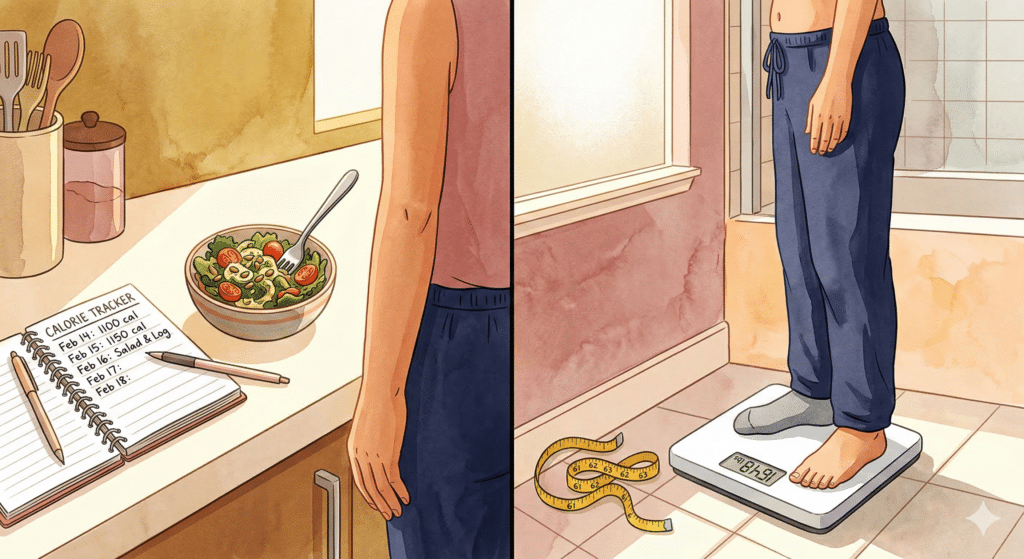
You’ve cut the carbs. You’re watching your portions. You’re dragging yourself to the gym even when you’re so exhausted you can barely lift your arms. You’ve said no to the bread basket, the birthday cake, the late-night snack you actually wanted.
And the scale won’t move.
Or worse — it creeps up. Slowly. Stubbornly. Almost mockingly.
Sound familiar?
Before you blame your willpower, your metabolism, or your genes — I need you to consider something most doctors never think to ask about.
What if the reason you can’t lose weight has nothing to do with food?
What if the real problem isn’t happening at the dinner table at all — but at 2 a.m., while you’re completely unconscious and have absolutely no idea?
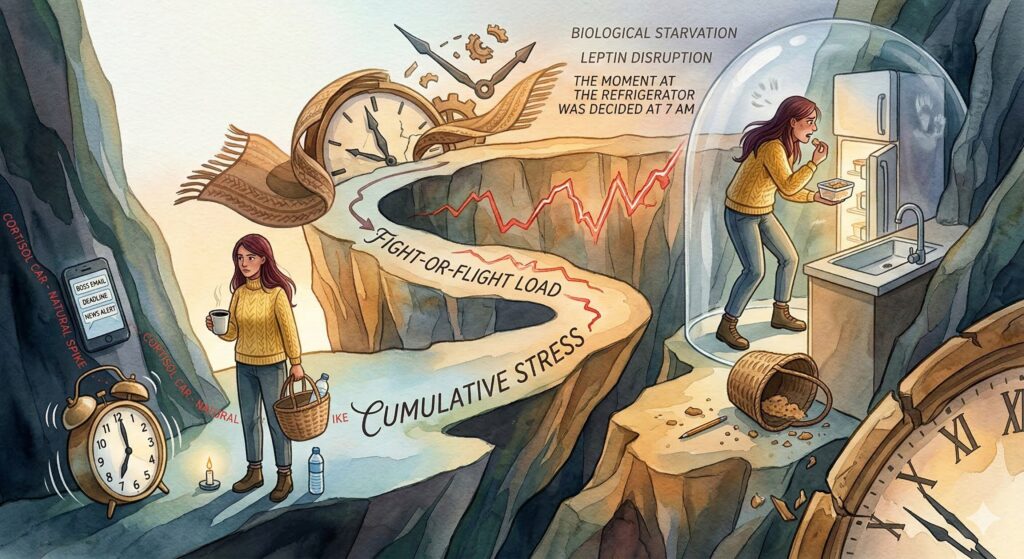
I want you to hear this clearly: This is not a willpower problem. It is not a laziness problem. It is not a character flaw. What you’re experiencing is a biological problem — one being driven by a hidden hormonal storm that no diet on earth can fix.
In the sections below, I’m going to show you exactly what that storm looks like, why your body is holding onto fat as a survival response, and what’s actually happening inside your body while you sleep.
The Twist Nobody Sees Coming
For millions of people, the biggest obstacle to weight loss isn’t food, exercise, or motivation. It’s a silent sleep disorder called sleep apnea — and most people who have it don’t even know. If you’ve ever woken up exhausted after a full night’s sleep, this might be the most important thing you read all year.
The Hidden Epidemic Nobody Is Talking About
An estimated 39 million Americans have sleep apnea. Most of them have no idea.
Not a vague “probably some of them don’t know.” We’re talking about a condition that goes undiagnosed in up to 80% of people who have it. That’s tens of millions of people waking up exhausted every morning, struggling with their weight, wondering what’s wrong with them — and never once suspecting their airway.
And here’s the thing that might surprise you most: you don’t have to fit the profile.
Sleep apnea isn’t just a condition for overweight, middle-aged men who snore like freight trains. Thin people have it. Women have it — and are dramatically underdiagnosed because their symptoms often look different. Young adults in their twenties have it. Athletes have it. People who sleep quietly, who never gasp or choke, who genuinely have no idea anything is wrong.
Sound familiar?
You Don’t Have to Snore to Have Sleep Apnea
Many people with sleep apnea sleep completely silently. No gasping. No loud snoring. No obvious signs. The airway collapses, the brain sends a panic signal, and the body micro-wakes — all without a single sound. You can have severe sleep apnea and share a bed with someone who has never noticed a thing.
So what actually is sleep apnea? In the simplest possible terms: your airway collapses while you sleep. Your brain panics. You wake up — briefly, sometimes for just a second or two — to breathe again. Then you fall back asleep. And it happens again. And again. Sometimes dozens of times per hour. Hundreds of times per night.
You never consciously know it’s happening. You have no memory of waking up. But your body knows.
Think about the composite version of this person. They’re someone like Mark — 43 years old, works a desk job, goes to bed at a reasonable time, gets a full eight hours. But every morning, the alarm feels like a physical assault. He’s bone-tired. He tells himself he’s just “not a morning person.” He’s been saying that for twenty years. He has no reference point for what genuinely restful sleep feels like — because he’s never had it.
That’s the cruelty of this condition. Because it happens while you’re unconscious, you have nothing to compare it to. You assume everyone feels this way. You assume you’re just tired, just stressed, just getting older.
The Science: Your brain cannot distinguish between a collapsed airway and a genuine physical threat. Each time the airway closes, the brain triggers the same emergency survival response it would if you were being attacked — flooding your body with stress hormones and activating ancient fat-storage programs designed to keep you alive in dangerous conditions.
This is the core of Jon Gabriel’s FAT Programs concept. Your body has ancient survival switches — responses to cold, to famine, to danger. Sleep apnea hits the Danger switch hundreds of times every single night. And your body responds the same way it always has when survival is on the line: it holds on. It stores. It protects.
None of this is your fault. Your airway anatomy, structural factors, or chronic inflammation can all contribute to sleep apnea. You didn’t choose this. Your body is not broken. It is doing exactly what it was designed to do.
But here’s what that means for your weight — and why no diet on earth can fully override it while this is happening in the dark.
Your Body Thinks You’re Under Attack All Night
Here’s what’s actually happening while you sleep with undiagnosed apnea.
Your airway collapses. Oxygen drops. Your brain — the part responsible for keeping you alive — detects a threat. And it fires off an emergency signal.
That signal is cortisol.
Cortisol is your body’s alarm hormone. It’s the same chemical that floods your system when you narrowly avoid a car accident, when you get a terrifying phone call, when something genuinely dangerous is happening. It is a full-body emergency broadcast.
Now imagine someone sneaking into your bedroom and screaming at you 80 times a night. Each time, your body jolts into fight-or-flight mode. Your heart rate spikes. Your stress hormones surge. Then you fall back asleep — sometimes in seconds — with no memory of it happening.
That is sleep apnea. Silent. Invisible. Relentless.
And your body cannot tell the difference between a collapsed airway and a genuine life-threatening emergency. It responds the same way every single time.
The Science: Chronic cortisol elevation is one of the most powerful fat-storage signals in the human body. It directly stimulates lipogenesis — the biological process of converting energy into stored fat — particularly in the abdominal region.
Think about what cortisol actually does to your metabolism.
First, it tells your body that danger is present. And when danger is present, survival trumps everything. Your body’s ancient programming kicks in: hold onto every calorie, because you might need it to survive whatever is threatening you.
Second, it breaks down muscle tissue for quick energy. Less muscle means a slower metabolism. A slower metabolism means fewer calories burned at rest. You’re losing the very tissue that helps you stay lean — while you sleep.
This is the same hormonal cascade as Jon Gabriel’s Famine Response. The same fat-storing survival switch. Just triggered by stress instead of starvation. The body doesn’t care which FAT Program is running. It just runs it.
The Cortisol Fat-Storage Switch
Every time sleep apnea triggers a cortisol surge, three things happen simultaneously: your body receives a signal to store fat, begins breaking down muscle for fuel, and drives systemic inflammation that makes your cells resistant to the hormones that would normally help you lose weight. This cycle repeats dozens — sometimes hundreds — of times per night.
Here’s a useful way to think about it. You know how a car alarm goes off in the middle of the night, and after a while the neighborhood just… tunes it out? Nobody consciously hears it anymore. But the sound is still happening. The damage is still accumulating.
That’s what chronic sleep apnea does to your body. You stop consciously waking. But the hormonal alarm keeps firing. Night after night after night.
And cortisol doesn’t stop at fat storage. It also triggers systemic inflammation throughout the body. That inflammation drives insulin resistance. It drives leptin resistance. It creates what Jon Gabriel calls cellular starvation — where your cells are surrounded by fuel they literally cannot access.
This is why dieting while your sleep apnea goes untreated is like bailing out a sinking boat with a teaspoon. You are working against a biological command that is being reinforced hundreds of times every single night.
Your body isn’t broken. It’s doing exactly what it was designed to do. It genuinely believes you are under threat. The problem is that the threat signal is faulty — a structural issue in your airway — not an actual predator. But your body doesn’t know that.
And no diet in the world can override a survival program running at full volume while you sleep.
The Leptin Catastrophe — When Your Fat Thermostat Breaks
There is a hormone inside your body right now that is supposed to be your best friend when it comes to weight loss.
It’s called leptin. And if sleep apnea is in the picture, it’s being systematically destroyed every single night.
Here’s how leptin is supposed to work. Your fat cells produce it. It travels to your brain and delivers one very clear message: “We have enough stored energy. You don’t need to eat more. Go ahead and burn some fat.”
Leptin is, quite literally, your biological fat-burning signal. It’s your body’s internal thermostat telling your metabolism to turn up the heat.
Now here’s what sleep is supposed to do for that thermostat.
During healthy, uninterrupted sleep, leptin levels rise. At the same time, ghrelin — the hormone that screams at you to eat — falls. This is your body’s natural overnight hormonal reset. You sleep. Your hunger hormones recalibrate. You wake up with a reasonable appetite and genuine energy to burn.
That’s the design. That’s what’s supposed to happen.
Sleep apnea destroys this process completely.
When your airway collapses — even briefly, even without you knowing — your body doesn’t get the deep, restorative sleep it needs to regulate these hormones. Instead, leptin levels plummet. And ghrelin? It surges.
The result is devastating. You wake up not because you lack discipline, but because your hormones have been scrambled all night into a state of biological famine. Your brain genuinely believes you are starving. It is demanding food. Urgently.
Sound familiar? That overwhelming morning hunger. The cravings that hit before you’ve even had coffee. The way you can eat a full breakfast and still feel unsatisfied an hour later.
That’s not a character flaw. That’s leptin resistance in action.
The Science: Research published in the Journal of Clinical Endocrinology & Metabolism found that even partial sleep restriction — just a few nights of disrupted sleep — can reduce leptin levels by up to 18% and increase ghrelin by 28%. The combined effect increases hunger and appetite by roughly 24%, with a specific spike in cravings for high-calorie, carbohydrate-dense foods. Sleep apnea does this to your body every single night.
And here is where it gets truly cruel.
Over time, your brain stops responding to leptin at all. Even when you have plenty of body fat producing plenty of leptin, the signal doesn’t register. The thermostat is broken. Your brain keeps getting the same panicked message: “We’re starving. Store more fat. Keep eating.”
This is why Jon Gabriel talks about the body needing to want to be thin. It isn’t a motivational phrase. It’s biology. When leptin resistance takes hold, your body’s deepest programming is actively working against weight loss — no matter what you eat, no matter how hard you try.
No calorie deficit fixes a broken thermostat.
No amount of willpower overrides a hormone that has gone haywire.
The Leptin-Ghrelin Crash: What Sleep Apnea Does Overnight
Every time your airway collapses during sleep, your body misses another window to restore its hunger hormones. Here’s the cascade that quietly unfolds while you’re unconscious:
Leptin drops: Your “stop eating, burn fat” signal weakens, leaving your brain convinced you’re energy-depleted.
Ghrelin spikes: Your hunger hormone surges, creating intense, biologically-driven cravings — especially for sugar and refined carbs.
Leptin resistance builds: Over months and years, your brain stops hearing the leptin signal entirely. The fat-burning thermostat stops working — not because you did anything wrong, but because the nightly disruption rewired the system.
Here’s what’s important for you to hear right now.
If you have been white-knuckling your way through diets, fighting hunger constantly, feeling like your body is working against you — you are not imagining it. Your body is working against you. But not because you’re broken. Because a treatable sleep disorder has hijacked the hormonal system that controls hunger, metabolism, and fat storage.
The frustration you feel is real. And it finally has an explanation.
If you’re ready to stop fighting your body and actually start working with it, I invite you to experience the complete step-by-step system inside the 12-Week Total Transformation Program.