Published January 13, 2026 05:55AM
So far, 2026 seems to be just as high-strung, fast-paced, and non-stop as previous years. The effects of the modern world can build up quietly, leaving you feeling tense, overwhelmed, and disconnected. One way to counterbalance all that? Spending even a little time on your mat. Although some days you might want to exert yourself, other days you you probably feel the need for something less intense, like yin yoga for stress.
Specifically, you need this floor-based practice in which you remain lying down the entire time in a way that brings relaxation without effort. Using simple props to support you for several minutes at a time, you’ll be able to target stored tension in the connective tissues and calm the nervous system.
15-Minute Reclined Yin Yoga for Stress
This rejuvenating sequence of long-held yin yoga poses will leave you feeling grounded, spacious, and at ease. You’ll need one or two yoga blocks and a bolster or a couple of firm pillows.
Supported Fish Pose
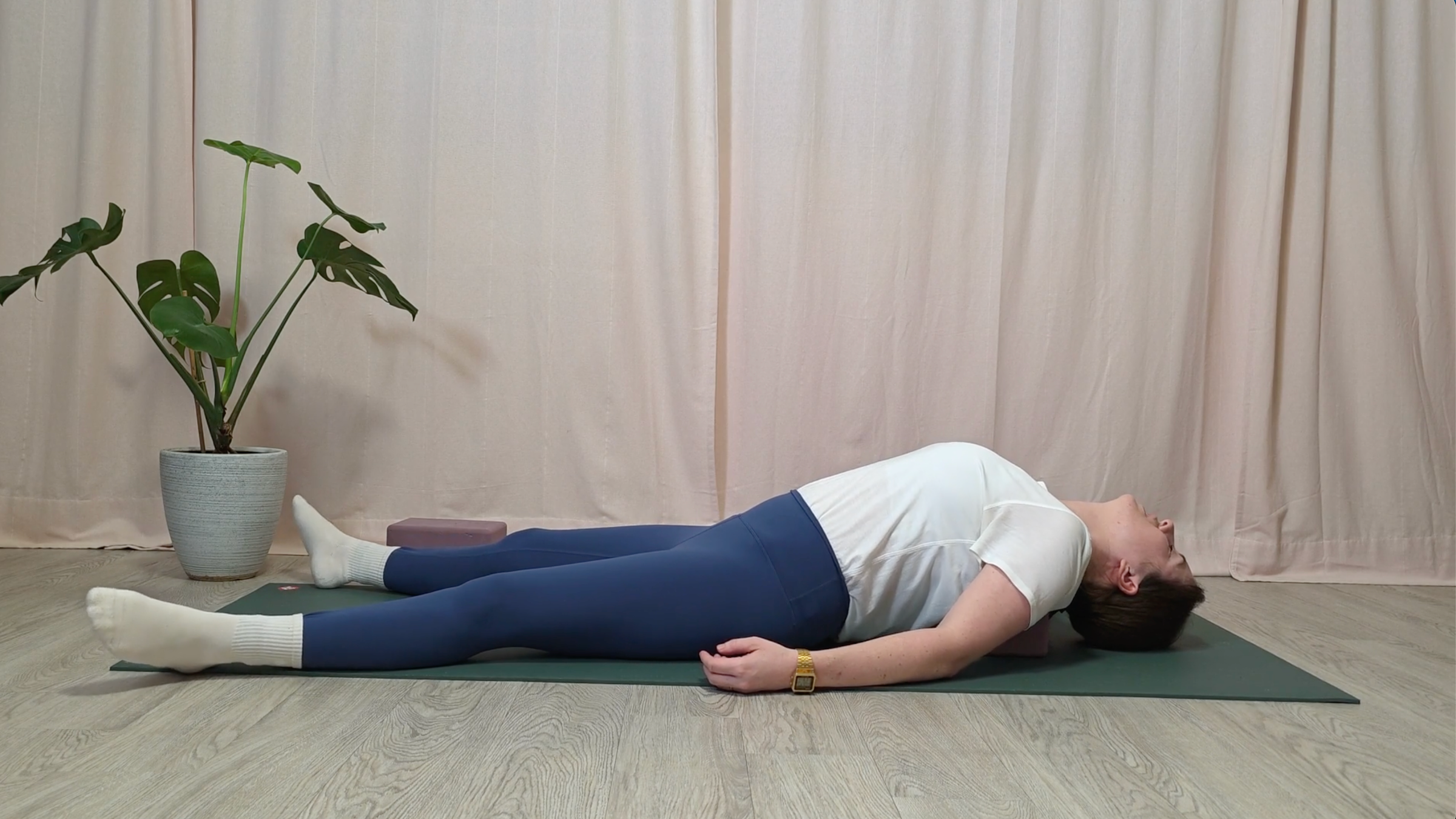
This gentle, reclining backbend helps release tension in the chest and shoulders—areas where stress often accumulates. Supported Fish Pose also calms the nervous system and encourages slow, mindful breathing, which in turn invites immediate relaxation.
How to: Place a yoga block on its lowest or medium height or a bolster lengthwise along the center of your mat. Sit at one edge, facing away from it, and then slowly lie back so the prop rests in between your shoulder blades and supports your upper back. Let your head rest directly on the mat or, if you experience any neck strain, support it with a second block or pillow. Allow your arms to relax at your sides, palms facing up, and let your legs extend straight in front of you or bend your knees as you take your feet flat on the mat for added lower-back comfort.
Stay here for 3 minutes, letting gravity do the work and allowing yourself to release a little more with every exhalation. Breathe slowly and deeply into your chest and belly, noticing any sensations of release.
To modify: For less intensity, use a folded blanket over the block or opt for stacked pillows. If you’re using a block, turn it to a lower side.
Savasana
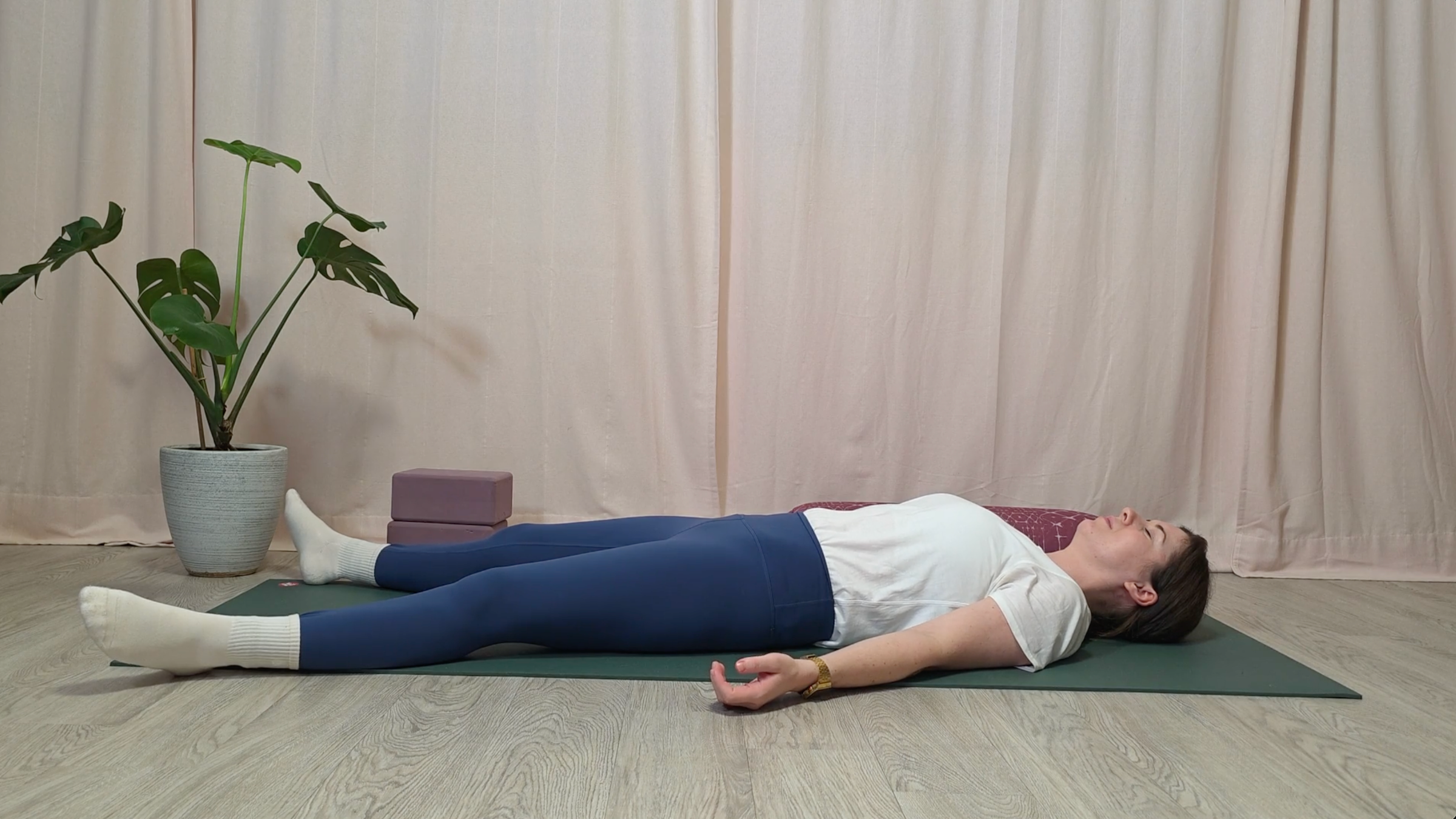
Here, Savasana, or Corpse Pose, is relied on as a neutralizing counter pose to a backbend.
How to: As you come out of Supported Fish Pose, slide any props to the side, lower yourself flat onto the mat, and rest for just a few breaths in Savasana before moving on.
Reclined Butterfly Pose
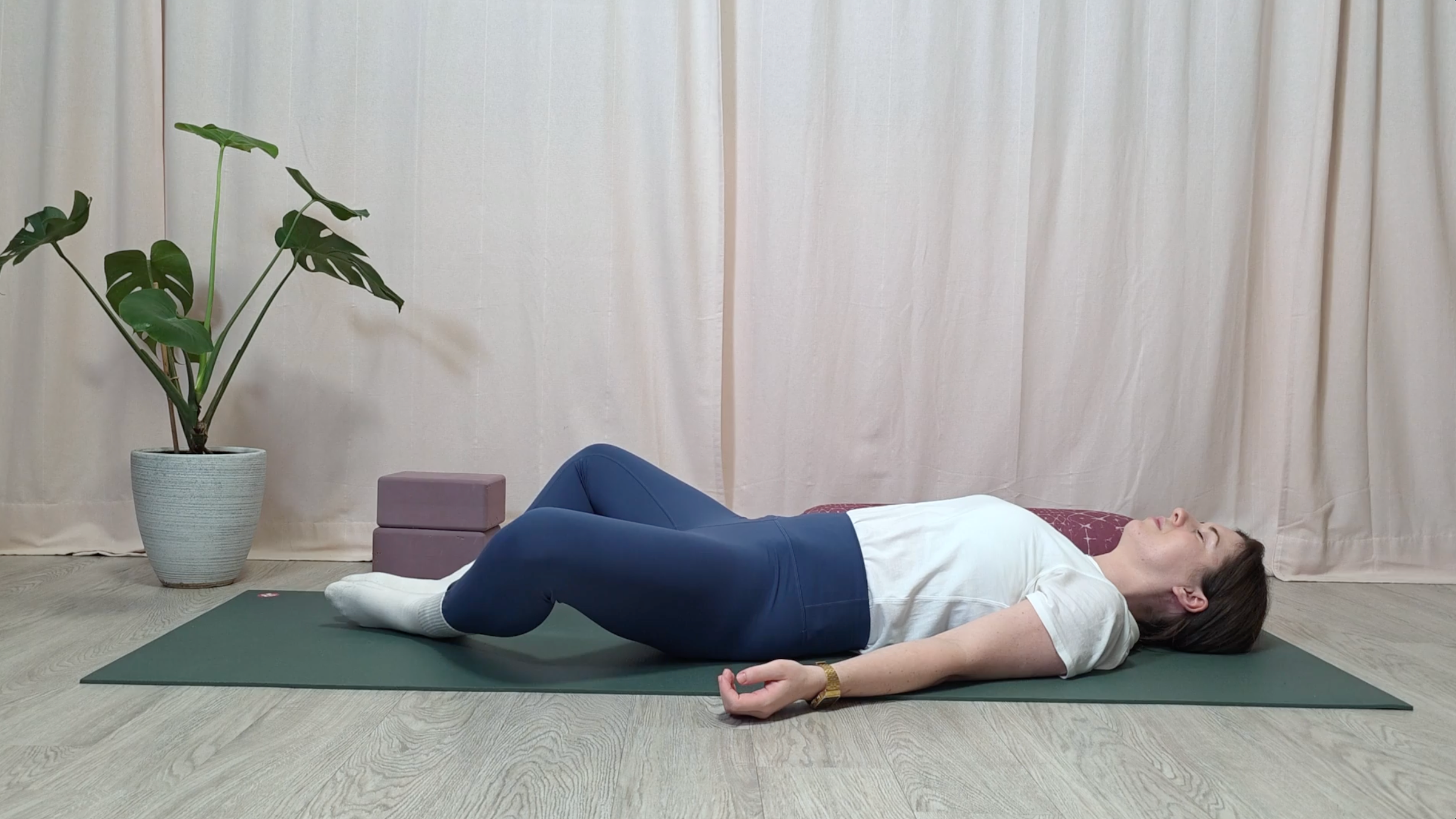
This yin version of Reclined Bound Angle Pose opens the hips and inner thighs while allowing the entire body to surrender into complete relaxation. The back rests supported on the mat, encouraging the parasympathetic nervous system to activate and helping banish stress through a profound sense of calm and release.
How to: Lie on your back and bring the soles of your feet together, allowing your knees to fall open to the sides like butterfly wings. Let your arms relax out to the sides, palms facing up. Your feet can be close to or farther away from your hips, depending on how much intensity you prefer. Opt for a distance that allows you to rest comfortably since you will linger here for 5 minutes. Allow your breath to remain slow and natural.
To modify: For added comfort and to prevent strain in the hips or knees, place folded blankets, blocks, or pillows under each thigh for support. If the hips feel tight, bring your feet farther away from your body.
Constructive Rest
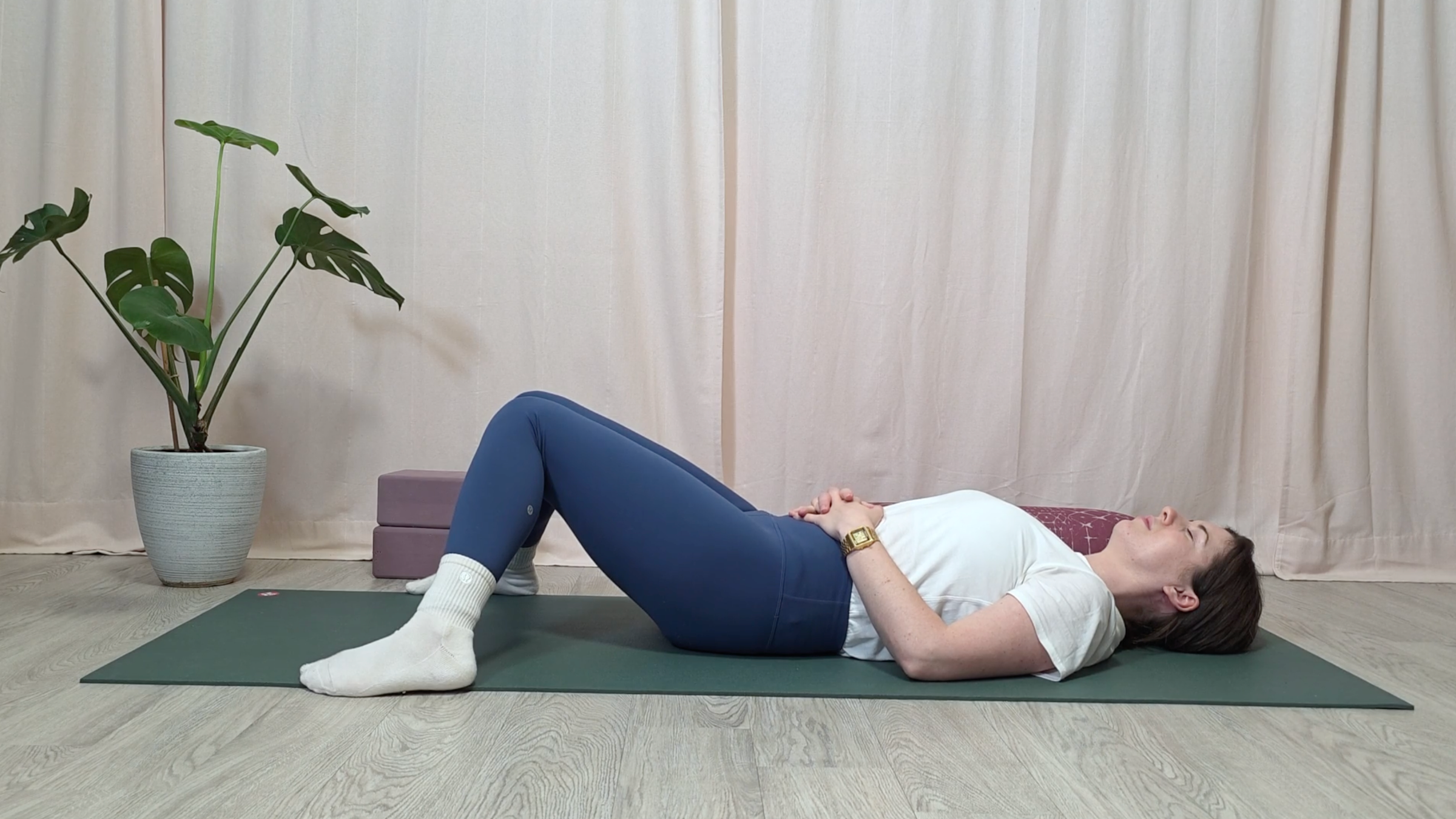
This pose, as with the other yin yoga for stress poses, gently encourages the spine to settle, the psoas muscles to relax, and the mind to quiet.
How to: Gently draw your knees together and lean them against one another in Constructive Rest. Continue lying flat on your back with your knees bent and your feet grounded. Pause here for a few breaths before moving on to the next pose.
Supported Bridge Pose
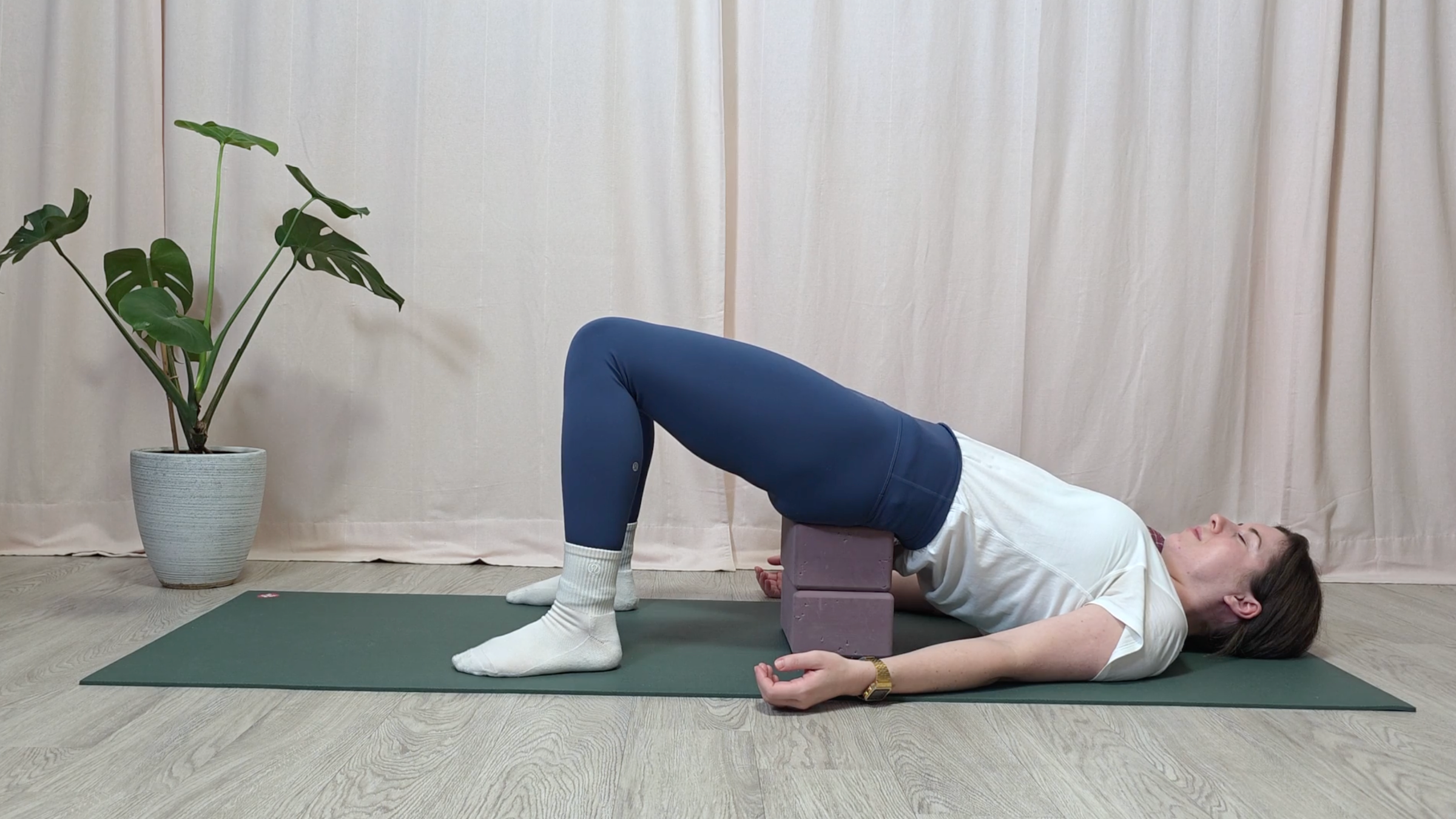
This restorative inversion opens the entire front body—chest, abdomen, and hip flexors—while supporting the lower back. The passive lift of the hips encourages relaxation, improves circulation, and quiets the mind by shifting perspective and easing the effects of prolonged sitting.
How to: Lie on your back with your knees bent and feet flat on the mat. Press into your feet to lift your hips, then slide a yoga block (start on the lowest or medium height) under your sacrum—the flat, bony area at the base of your spine. Gently lower your hips to rest fully on the block(s), ensuring the support feels stable and comforting rather than a strain on the lower back. Let your arms rest alongside your body, palms facing up. Keep your feet grounded on the mat or extend your legs straight if that feels better. Rest here for 5 minutes, breathing deeply and evenly. Soften your hips and lower back with each exhale, letting gravity deepen the release across the front body.
When time is up, press into your feet to lift your hips slightly, remove the block(s), lower down to the mat, rest in Constructive Rest before moving into Corpse Pose for your final relaxation.
To modify: Adjust the block height—lower for gentler support, higher for more intensity, or stack two blocks on the lowest level if that feels supportive.
Savasana
Ease into Corpse Pose by extending your legs long, letting your feet fall open, and resting your arms softly by your sides, palms up. Stay here for as long as you can. Allow your breath to return to its natural rhythm and notice the quiet spaciousness that has replaced the stress you carried in. When you’re ready to close your practice, deepen your breath, wiggle your fingers and toes, and roll to your right side for a moment of pause. Remind yourself that you can carry this calm with you as you move back into your day.