Published January 15, 2026 11:00AM
You’ve been hearing about good posture since you were a child, including the generic advice to “stand up straight.” You’re also familiar with “bad” posture habits: caving your chest and drooping your neck forward as you scroll on your phone, hiking your shoulders, and rounding your back on your daily commute.
As much as you’ve heard about good and bad posture, you still might find yourself confused about what, exactly, good posture means.
Simply defined, posture is the way our bodies are held in space. And contrary to popular belief, it isn’t only one static position. “The best posture is one that moves,” says Anji Gopal, yoga teacher and The BackCare Expert. “So, not sitting or standing for too long in any one shape.”
It’s ironic, then, that you could spend hours at the gym or on the yoga mat attempting to correct the minutiae of your posture in Down Dog or Warrior 2; but if your inner desk gremlin returns the second you’re sitting down again, those changes won’t feel sustainable.
That’s why yoga isn’t just an incredible tool for improving posture on the mat—but in your everyday life as well.
Why Posture Matters
Many people already know they need to work on their posture. The issues poor posture can cause in the body include pain, stiffness, and muscle spasms. For instance, continually hunching your shoulders when you feel stressed can cause back pain, shallow breathing, weak upper back muscles (which are key postural muscles), and more.
Another common pitfall is tucking your pelvis, which easily happens when slouching on a couch, desk chair, or car seat. “When the pelvis is tucked, the entire spine is pulled out of its natural alignment,” says Esther Gokhale, L.Ac., founder of the Gokhale Method, a system for improving posture. “This seemingly subtle distortion is actually at the root of many other, more recognizable posture problems.” These include rounded shoulders, a forward head (ever heard of tech neck?), and a rounded upper back.
Swaying the back, which is often done as an over-correction to slumped posture, is another hazard. Swayback involves a big inward curve in your low back from a forward-tilted pelvis, and a hunched mid and upper back. Over time, swayback can compress the spinal discs and nerves in your lower back, and lead to other spinal issues, says Gokhale. This is why attention to less than optimal postural habits has strong payoffs.
8 Yoga Poses to Improve Your Posture
Practicing yoga can support your posture, especially when practiced regularly. It helps strengthen overlooked muscles that support your alignment and draws your attention to your posture on and off the mat.
“The real postural benefits come from integrating these movements into daily life,” says Gopal. Roll your shoulders back as you sit at your desk or stand at your kitchen sink. Hinge from your hips as you bend forward to open a drawer. Avoid dumping into your lower back as you reach up to grab a coffee mug from a high shelf. And, of course, remember to put your phone down to give your neck a break.
The following yoga poses, especially when practiced regularly, can support your posture. Practice them as a sequence for a short posture-focused flow, add them to your existing practice, or choose a few to try every day.
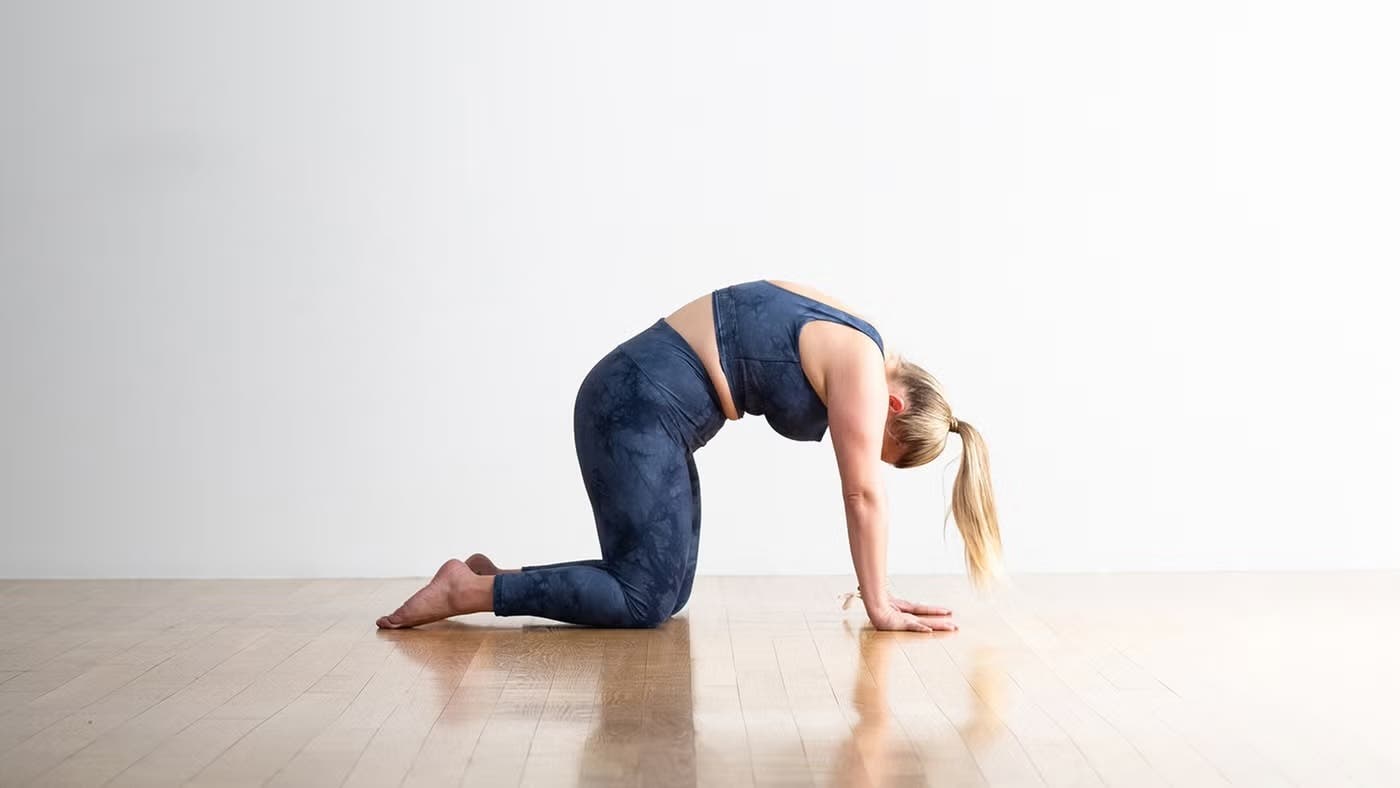
1. Rolling Cat
This is slightly different from the more common Cat-Cow pose that you may be familiar with from yoga class. It stretches the front and back of the spine while allowing the surrounding muscles to move, says Gopal.
How to: Start in Child’s Pose. Inhale as you come to your hands and knees, lift your chest, and arch your back in Cat Pose. Exhale as you lower your hips back to Child’s Pose. Repeat 3-5 times.
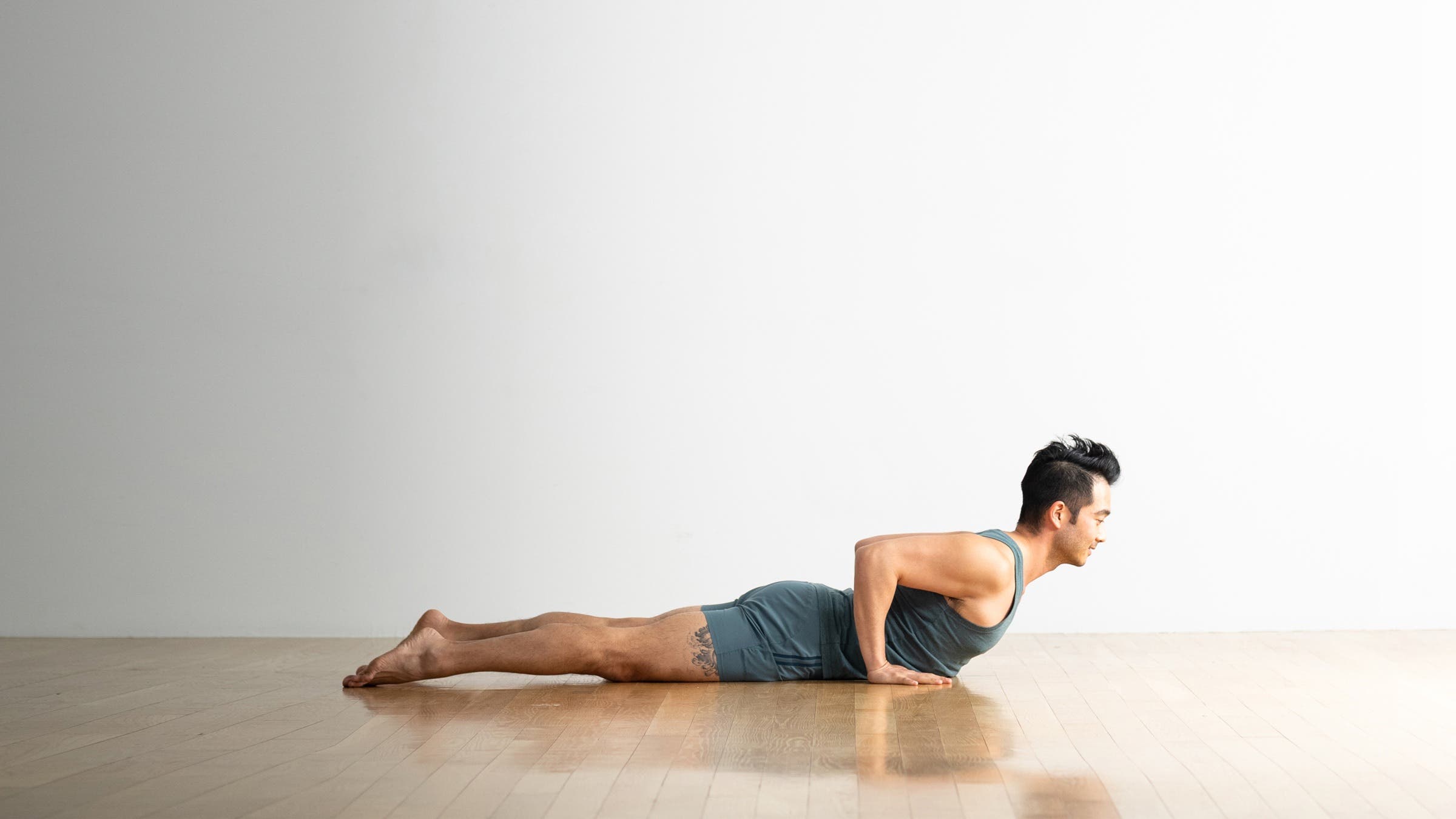
2. Baby Cobra
A step in between Sphinx and Cobra pose, but a pose in its own right, is Baby Cobra. It can support a healthy spine from front to back, and bottom to top.
“The meeting place of the ‘behind’ and the back often becomes stiff after years of tucking the pelvis,” explains Gokhale. This gentle backbend helps restore mobility.
How to: Lie on your belly and press the tops of your feet into the mat. Plant your palms on either side of your ribs, with your elbows pointing back. Inhale and lift your head and chest slightly off the mat, while pressing your hip bones into the mat and drawing your front ribs together in Baby Cobra. Stay here for 5-10 breaths, then release.
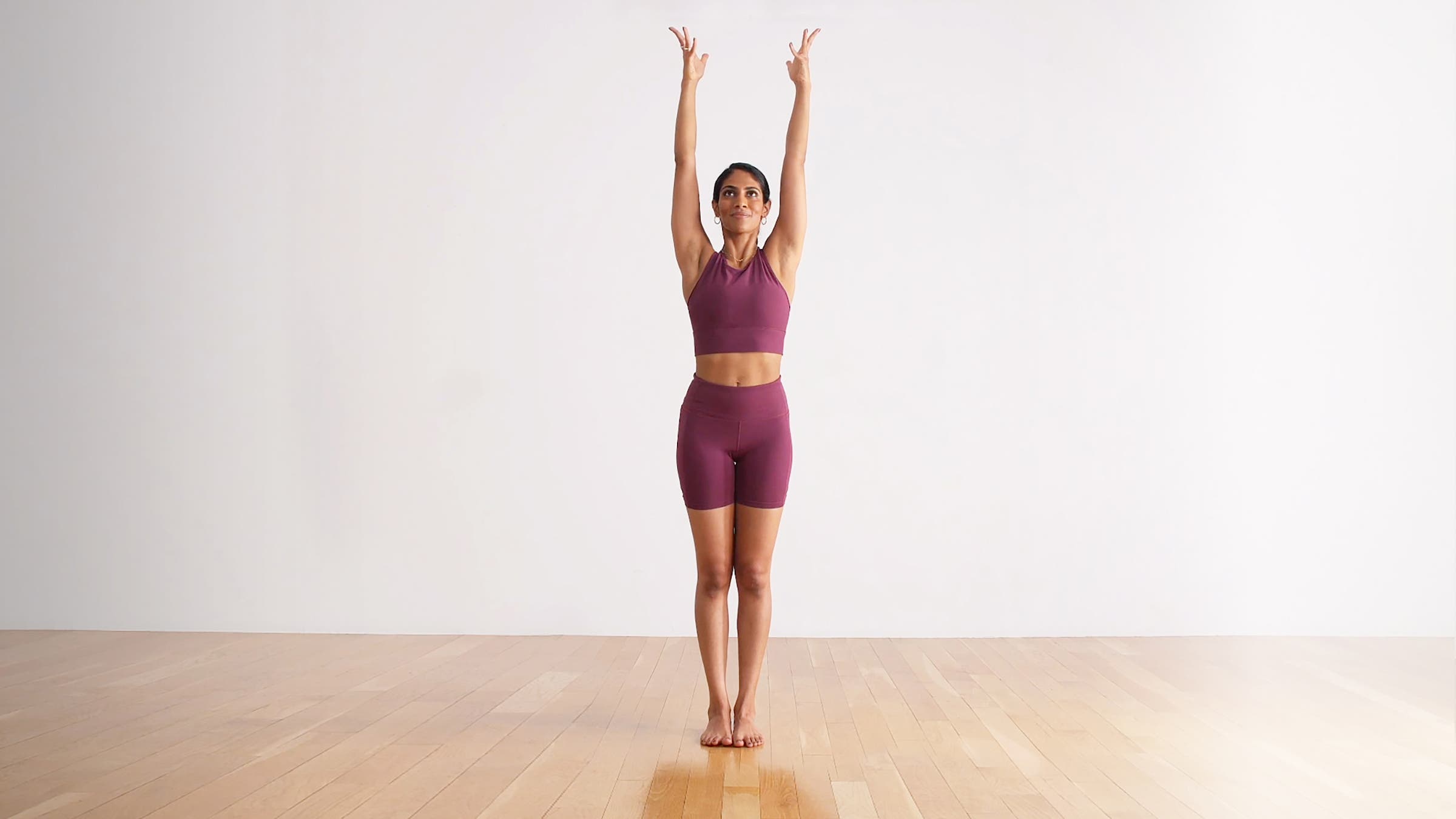
3. Upward Salute
This pose, also known as Urdhva Hastasana, is a staple in Sun Salutations and the foundation for many standing poses. It looks simple, but it’s anything but.
“Urdvha Hastasana is a great posture to realign, to center, and to ground, and also to stretch,” says Gopal.
How to: Stand at the front of your mat with your feet together or hip-distance apart. Visualize pointing your tailbone toward the mat as you inhale and lift your arms overhead, with your palms facing each other in Upward Salute. Stay here for 5-10 breaths.
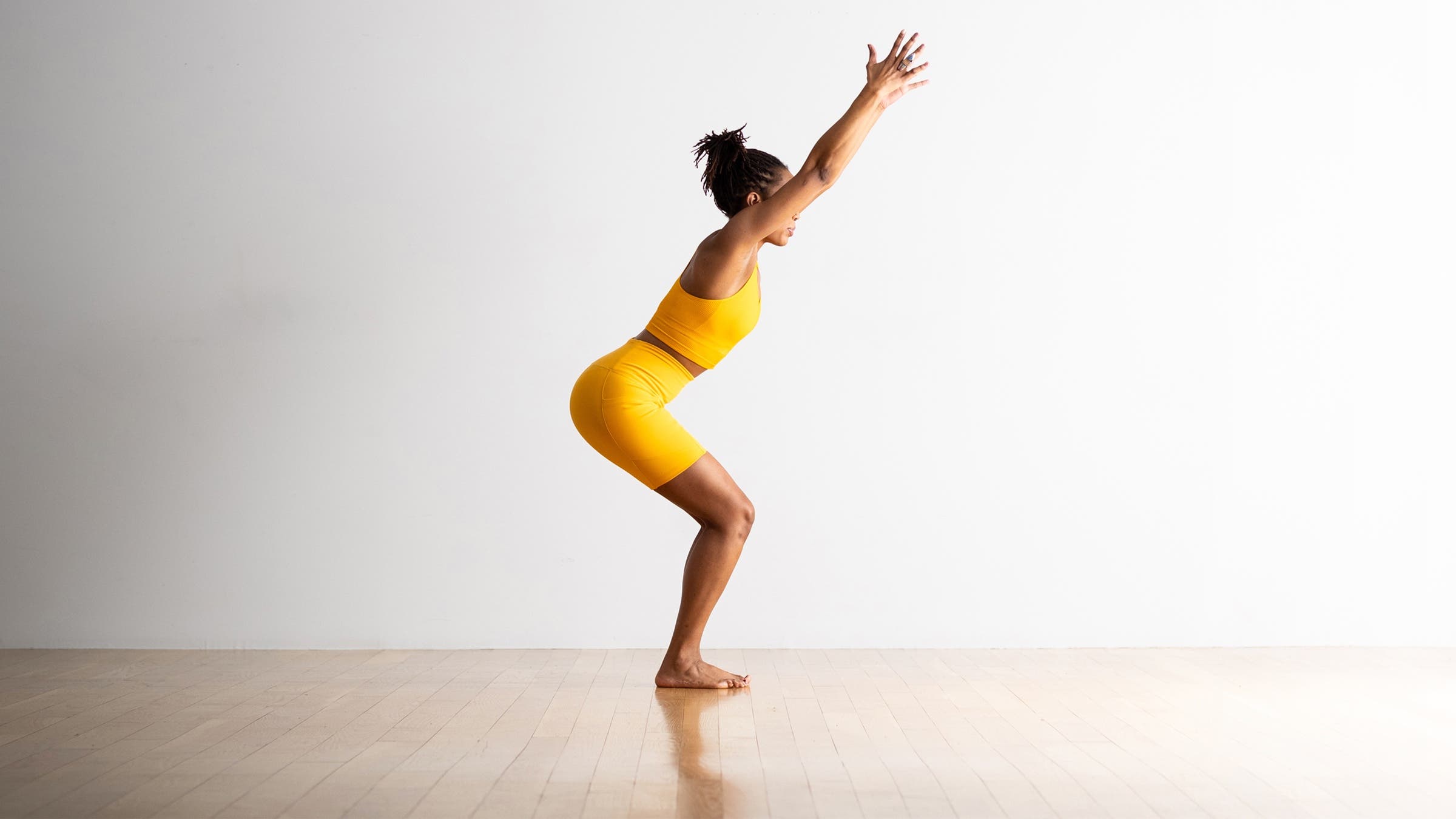
4. Chair Pose
Do you ever find yourself leaning your hips forward against a counter for support, or locking your knees when you’re standing? These tendencies could be a sign of underused postural muscles, which help support your spine and keep your body upright.
“Chair Pose (Utkatasana) is my favorite recommendation for people [who do these things],” says Gokhale. It targets the same muscles you use for standing. “This makes it a powerful training ground for healthy standing,” she adds.
How to: Stand with your feet and knees together. Inhale and raise your arms overhead, with your palms facing each other. Exhale and bend your knees in Chair Pose. Stay here for 5-10 breaths.
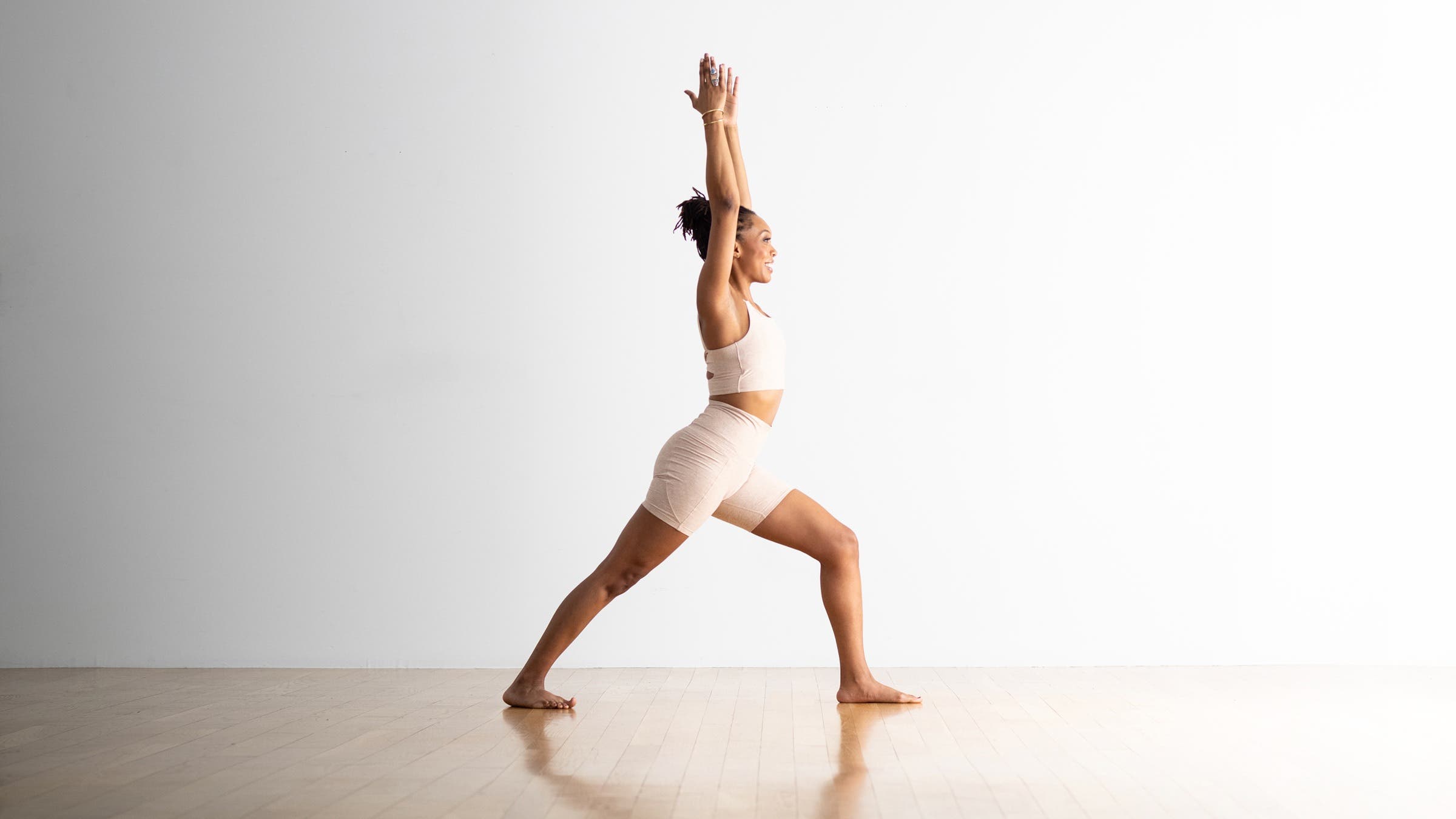
5. Warrior 1
A well-aligned Warrior 1 (Virabhadrasana I) can be an incredible tool for improving your posture— particularly for improving your gait, or walking pattern.
“A straight back leg, an engaged rear glute, a grounded rear heel, and a bent front knee all mirror the essential elements of a healthy stride,” says Gokhale. A surprising percentage of the population learn unhealthy walking patterns, according to Gookhale, and yoga can help reintroduce healthy gait mechanics.
How to: Stand facing the front of the mat and plant one foot about a leg’s length behind you and turn your back foot out slightly. Bend your front knee so that it’s stacked above your front ankle. Keep your back knee straight. Turn your chest toward your front knee.
To keep a healthy posture, Gokhale recommends leaning your torso slightly forward to prevent any swaying in your low back. Inhale and reach your arms overhead with your palms parallel to each other in Warrior 1. Gaze forward and down. Stay here for 5-10 breaths.
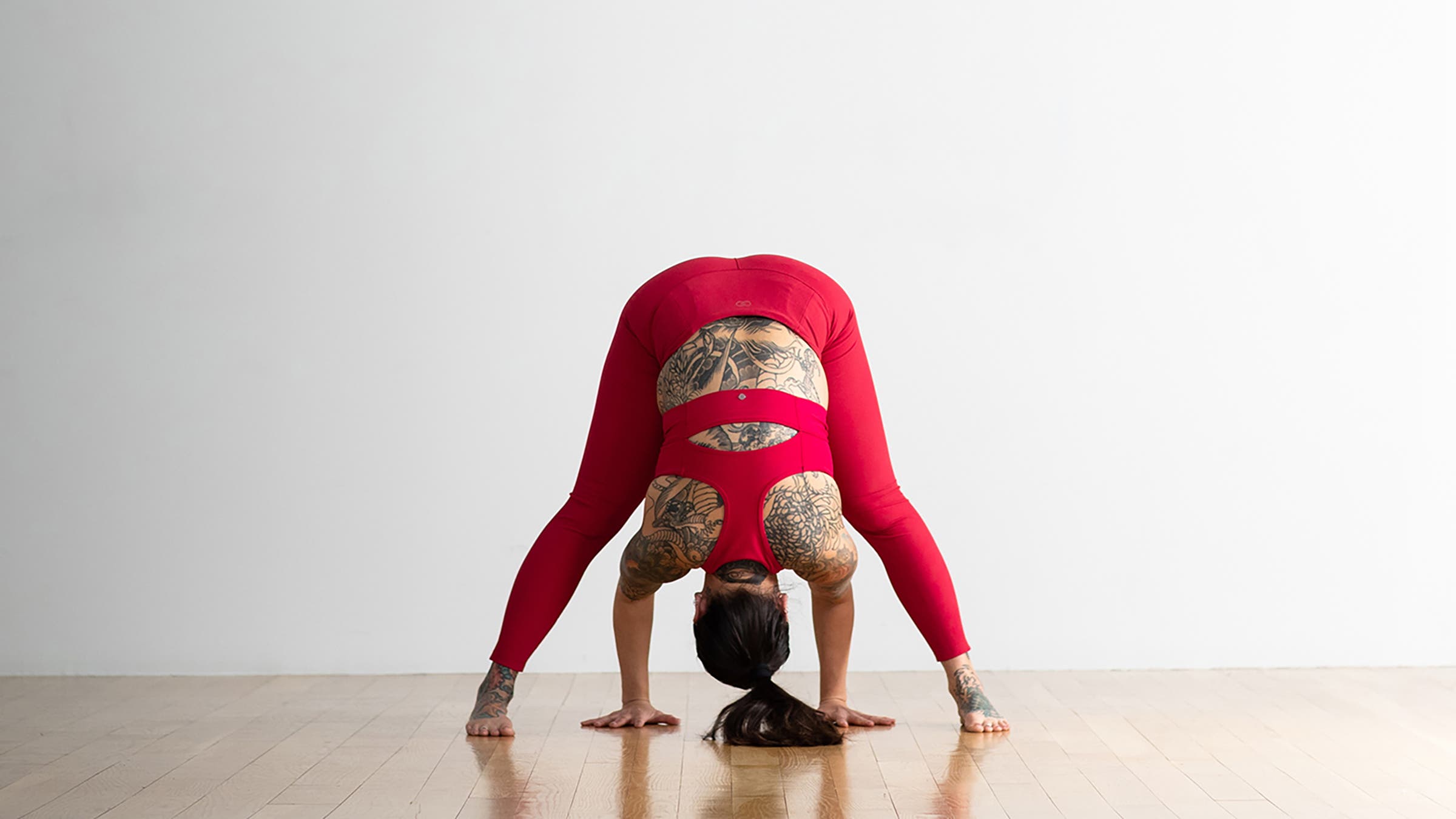
6. Wide-Legged Standing Forward Bend
This forward fold, commonly known as Prasarita Padottanasana, gives your spine more space to move, while also letting you practice safe methods of bending (both on and off the mat!). By bending forward with a flat back, and keeping the movement focused on the rotation of your pelvis, you protect your spine.
How to: Face the long side of the mat and plant your feet 3-4 feet apart. Take your index and middle fingers and press them against your hips. Inhale and lift your chest. Exhale and hinge forward from your hips, avoiding rounding your back. It may be more comfortable to turn your feet out slightly to create more room to lower your chest. Bring your hands to the mat or blocks in Wide-Legged Standing Forward Bend. Stay here for 5-10 breaths.
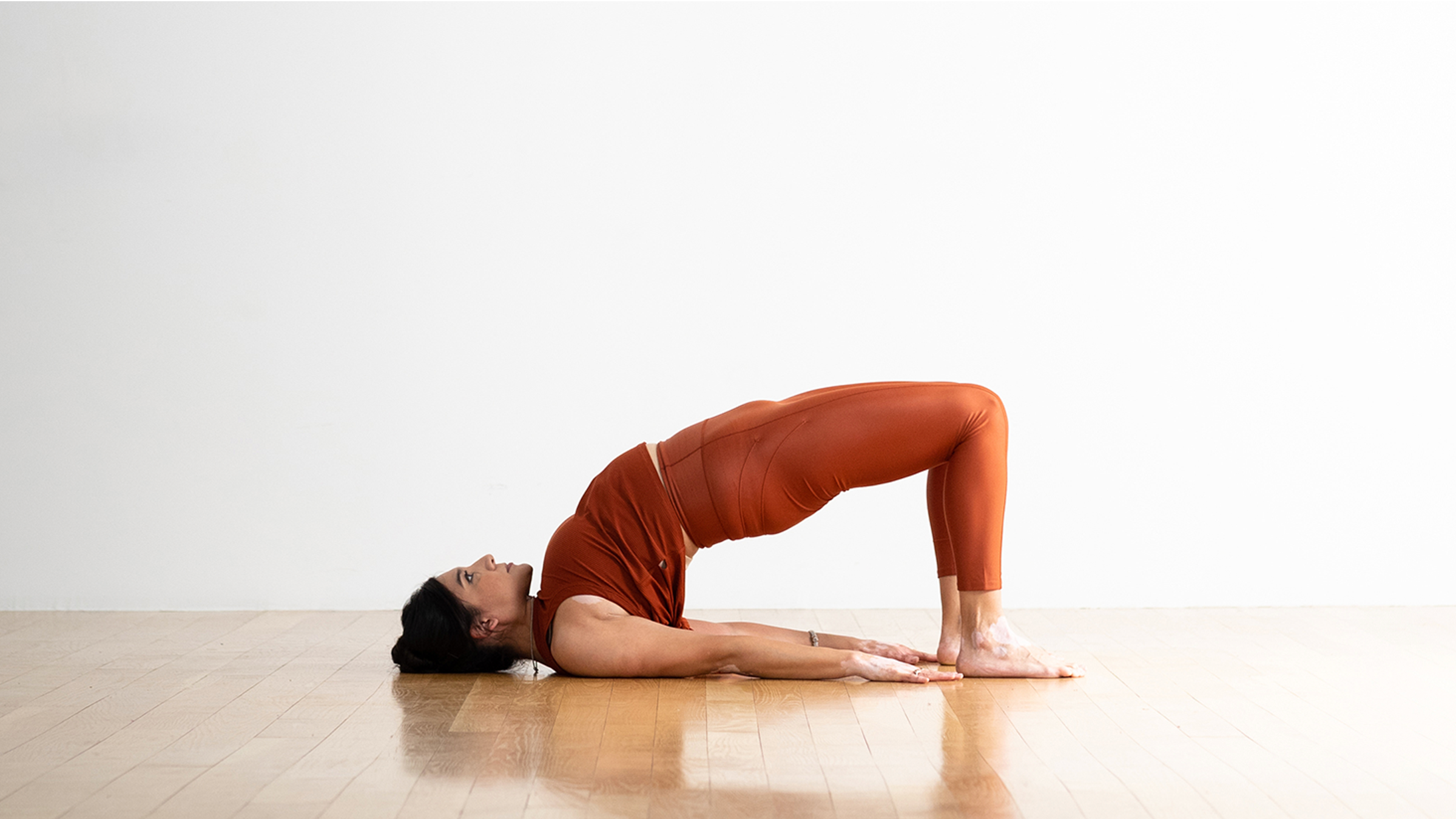
7. Bridge Pose
Sitting all day at your desk or in your car can round your back and tighten your hip flexors. Practicing Bridge Pose (Setu Bandha Sarvangasana) can help reverse those effects—as well as strengthen your legs and glutes.
How to: Lie on your back with your knees bent and feet planted on the mat. Inhale as you press into your feet and lift your hips off the mat. Keep your arms at your sides. If it’s comfortable, roll your shoulders underneath you and, keeping your arms straight, clasp your hands together in Bridge Pose. Stay here for 5-10 breaths.
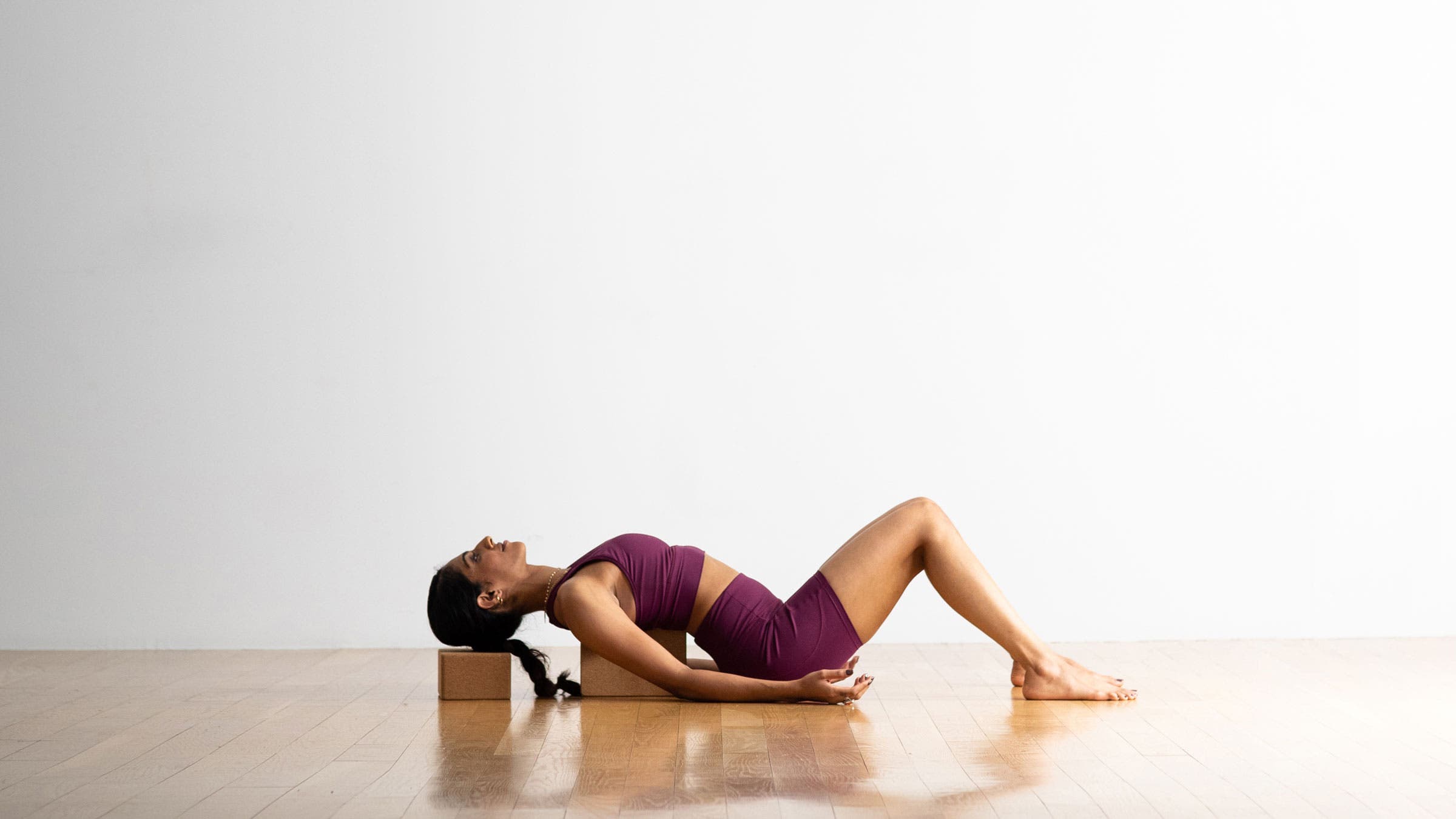
8. Restorative Fish Pose
What makes this variation of Fish Pose (Matsyasana) extra restorative is the support of props. The gentle backbend again helps “undo the hunched position,” says Gopal.
How to: Position a block on its tallest setting toward the front of the mat and another block on its medium setting a few inches in front of it. Lay a bolster or long, firm pillow or couch cushion on the blocks. Sit with your hips at the edge of the prop touching the mat and lie back. You can place a folded blanket or pillow underneath your hips for more support. Lie with your arms relaxed next to you or rest them on blocks or pillows. Straighten your legs or bend your knees in Restorative Fish Pose. Rest here, breathing deeply, for 3-5 minutes.