Updated January 23, 2026 10:18AM
You step out of bed and—there it is. That sharp, needling sting at the bottom of your heel or along your inner arch, as if your foot has forgotten how to bear weight overnight. A few minutes of hobbling later, the sensation eases…until you sit for a while and stand again, or push through a long walk or run.
For some people, foot pain is a result of plantar fasciitis, a condition in which the fascia along the soles of the feet becomes inflamed. For many, achy feet become more common from everyday wear and tear. Whether it’s unsupportive shoes or muscle weakness in the body, the result is tired and uncomfortable feet.
As a yoga teacher, I’ve had students constantly tell me about their foot pain. Hearing their stories made me curious so I began to research. I wanted to know, “How can yoga help?”
Common Triggers of Foot Pain
Anyone can experience foot pain, although midlife tends to be a perfect storm—not because your body is “declining,” but because life gets busy and movement patterns become limited.
Hard Floors and Barefoot Living
Tile, wood, and concrete are unforgiving. If you’re spending time barefoot at home (or in unsupportive shoes) without gradually building foot strength, the arch can feel the strain.
Sudden Mileage Jumps
A new walking routine, pickleball phase, travel days, or a return to running after time off can create a sudden shift in the body quickly—especially if you engage in these activities without warming up or easing into them.
Tight Calves and Limited Ankle Movement
When the calves are stiff, the heels often take on the extra demand of supporting your body. Less ankle mobility can also change how you land and push off while walking or running, increasing strain through the plantar fascia.
Hip and Glute Weakness
The feet often compensate for what’s happening above. When the hips are tight, weak, or don’t stabilize well, the arches are less supported and strained.
8 Foot Stretches to Help Relieve Pain
One way to help ease foot pain is to roll a tennis ball underneath the soles of your feet. Practice this while seated so you don’t put too much pressure on your arches. When you have more time, though, you can add yoga stretches into your daily routine. If you already have a yoga practice, you’ll want to skip or modify things including jump-backs, fast vinyasas, or repetitive bounding. Instead, choose steady, controlled stretches that allow you move slowly and breathe deeply, like the ones below.
These poses support the feet in three ways: they gently stretch the muscles and fascia that support the feet, strengthen your calves and hips to reduce strain on the plantar fascia, and gently restore ankle mobility. Taking deep breaths also help shift the nervous system from the “guarding” mode that can keep the calves and feet tight to a more relaxed state that releases muscular tension.
Practice this sequence a few times during the week or choose one or two poses to do when you have a spare minute. Keep your effort at a level that feels steady and doable. If heel pain spikes during a pose, back off, add support, or reduce your range—your goal is consistency and gradually increasing your capacity rather than intensity.
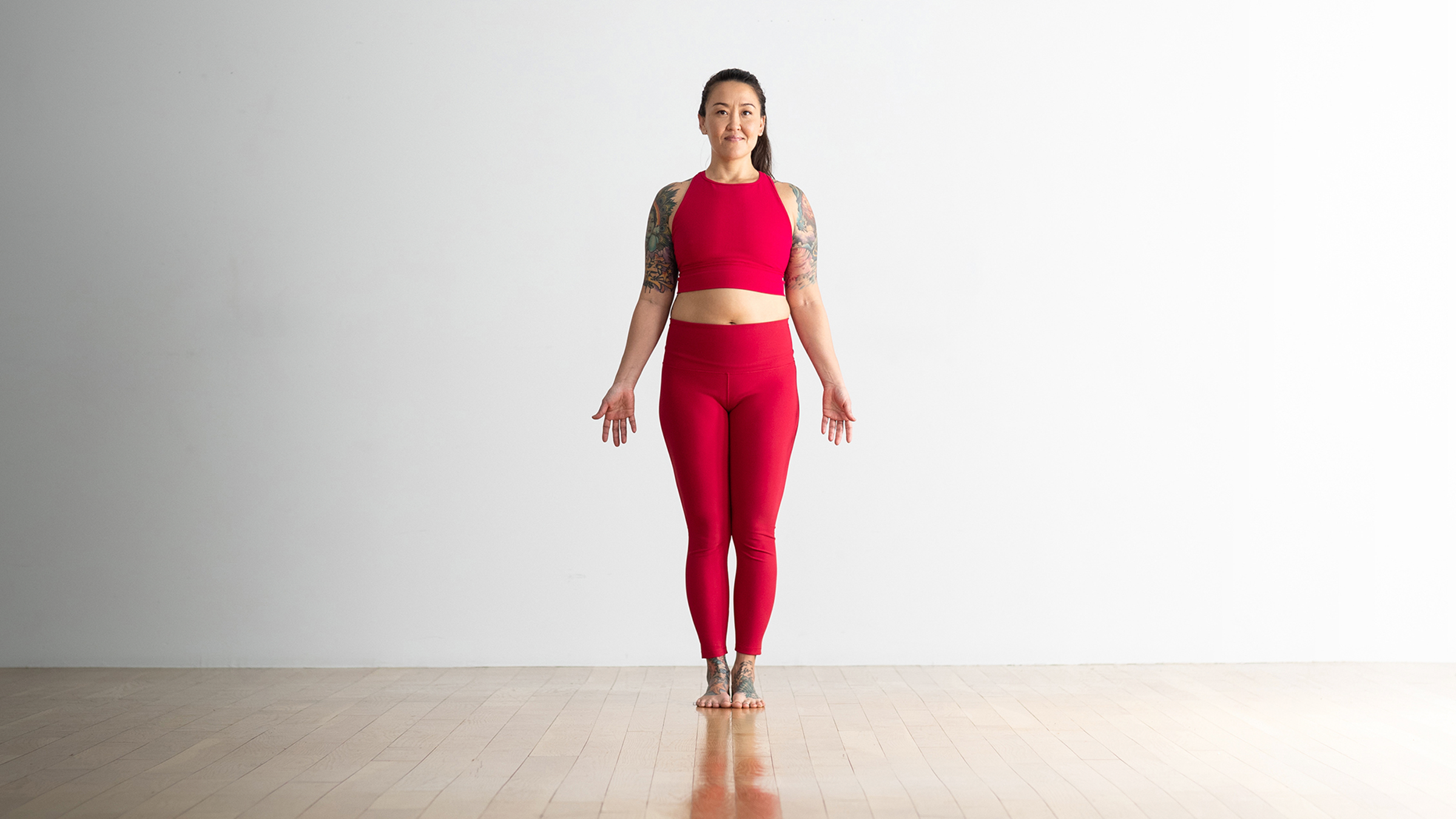
1. Mountain Pose with Arch Lifts
This exercise is a way to strengthen your arch support from the inside out so the plantar fascia isn’t overworking. Practice this Mountain Pose (Tadasana) variation anytime, although it can be especially useful to do after waking up and before moving.
How to: Stand in Mountain Pose with your feet hip-width apart. Feel your heels and the bases of your big toes and little toes pressing into the mat. Without curling your toes, gently draw the balls of the big toes slightly back toward the heel so the arches subtly lift. Pause for 5-8 breaths, then release. Repeat for 3-5 rounds.
2. Chair Pose with Heel Raises
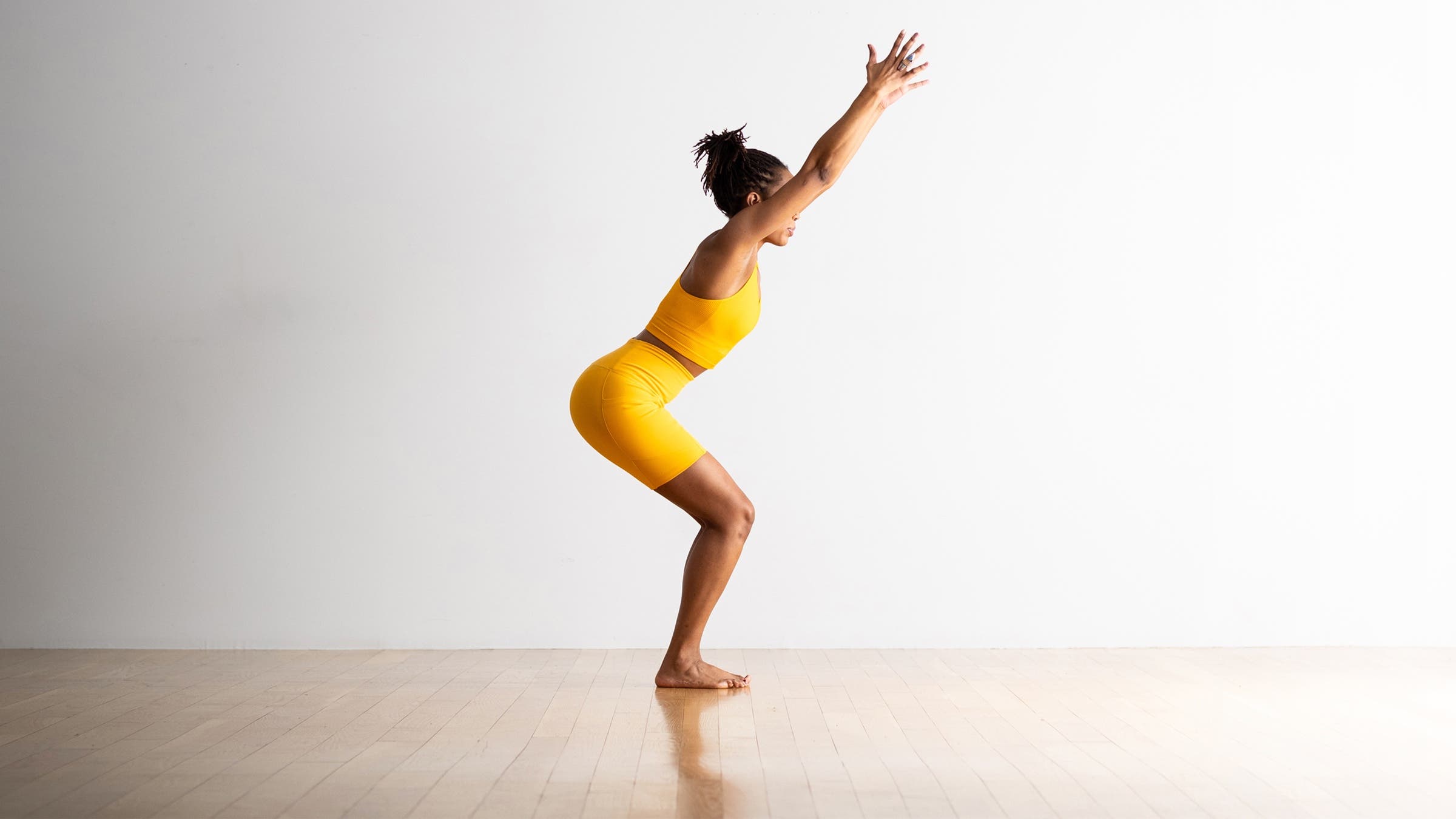
The key to reducing heel strain while walking and climbing stairs? Building calf strength in a way that teaches your feet to stay stable under load. That’s exactly what happens in this Chair Pose (Utkatasana) variation.
How to: Come into Chair Pose. Press your heels and the bases of your big toes and little toes into the mat. Shift your weight slightly forward into the balls of your feet. Slowly lift both heels off the mat, then lower them. See if you can lift your heels for 3 counts, pause for 1 count, then lower for 3 counts. Repeat for a total of 6-10 slow reps.
3. Downward-Facing Dog with Calf Pedaling
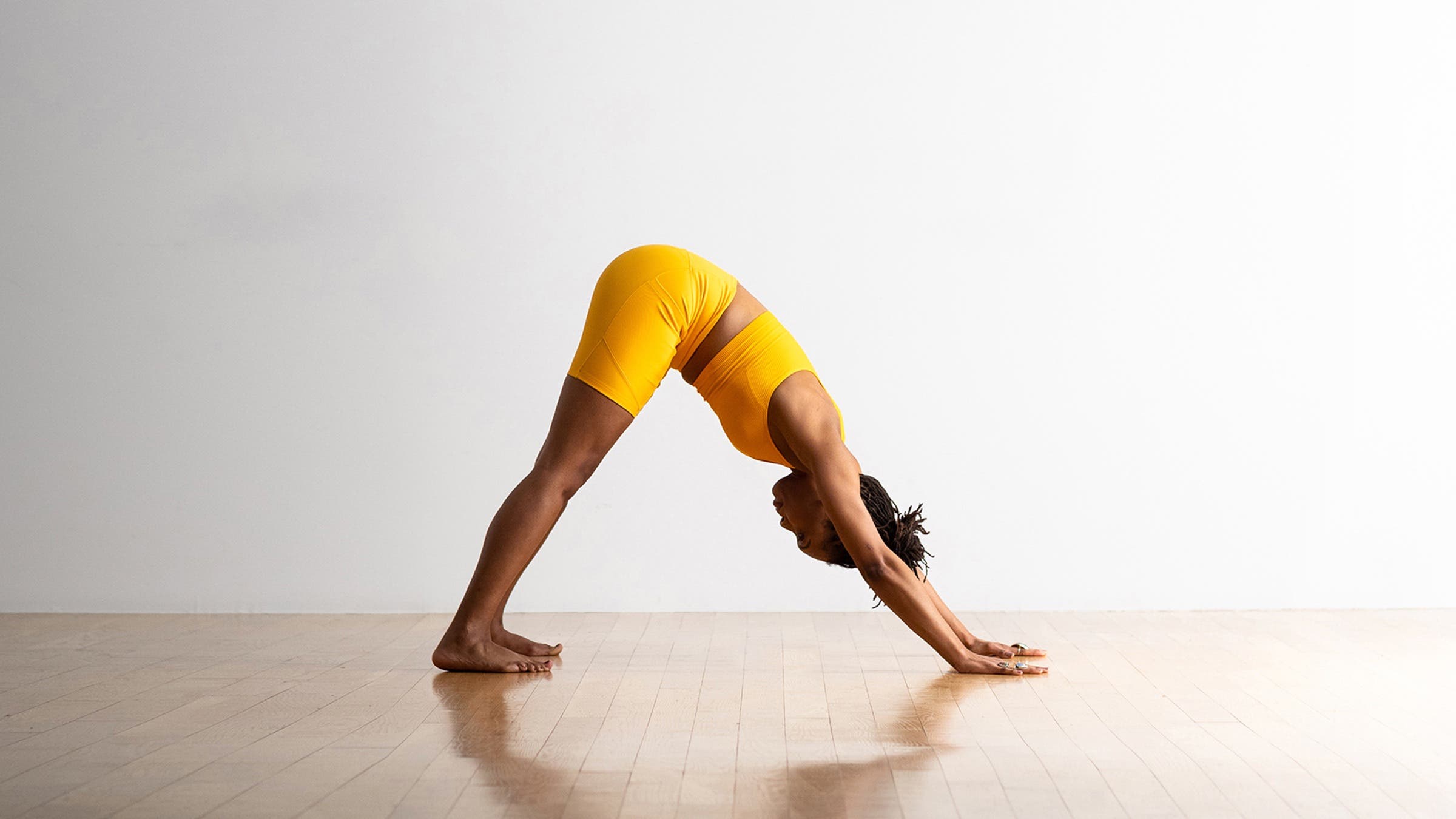
Intense calf stretches can irritate the tendon that attaches to the heel, but alternating which leg is straight and bent in Downward-Facing Dog (Adho Mukha Svanasana) can help ease the calf muscles into a more doable stretch.
How to: Come into Downward-Facing Dog with both knees bent. Lengthen your spine and lift your hips toward the wall behind you. Straighten one leg and gently press that heel toward the mat. Switch sides so the opposite leg is straight. Continue to switch sides as if you were slowly walking in place. Pedal for 5-8 breaths.
4. Reclining Hand-to-Big-Toe Pose
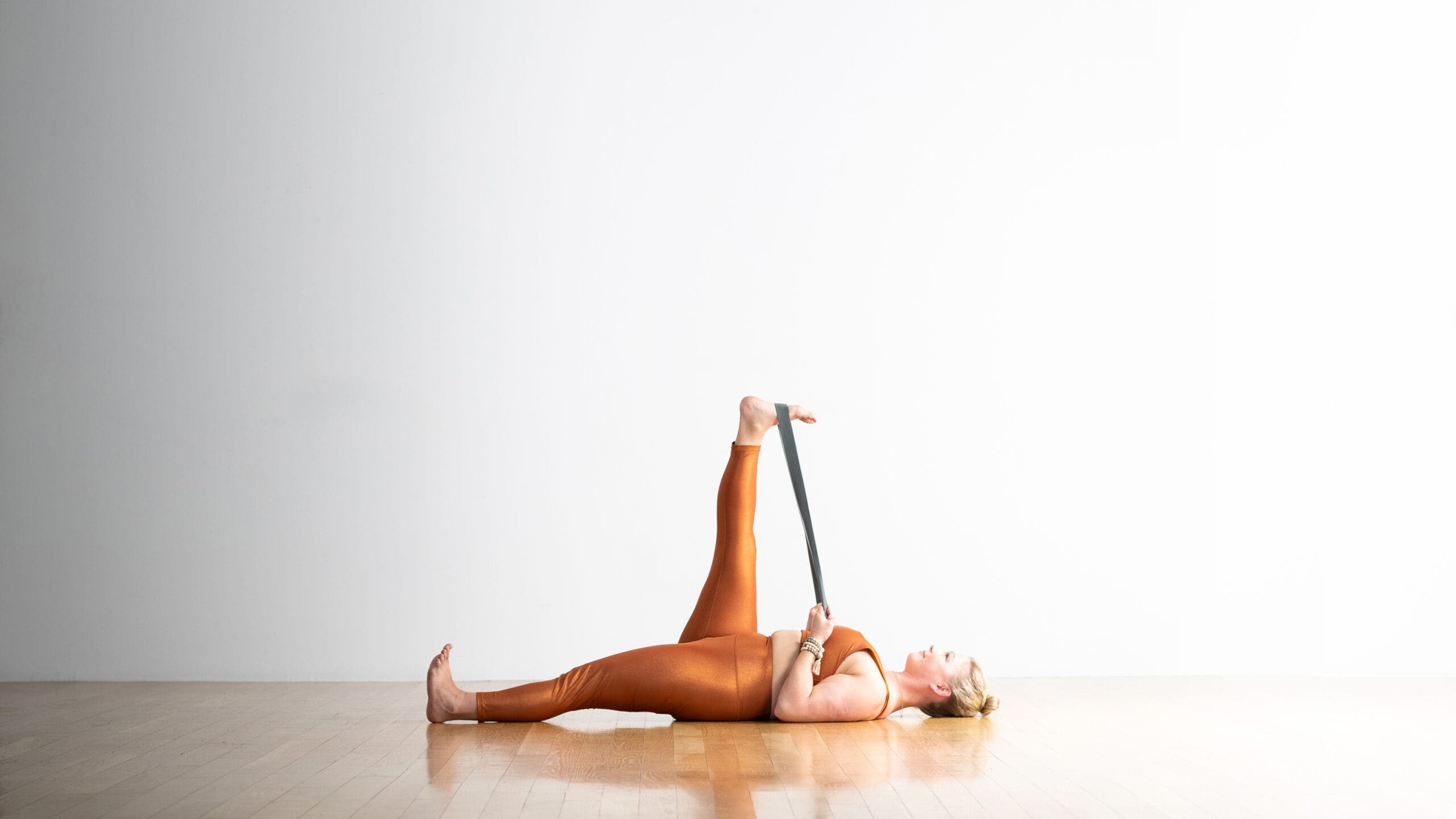
This pose is especially useful when standing stretches feel too intense for the feet. Reclining Hand-to-Big-Toe Pose stretches your hamstrings and calves without putting any weight on the heel.
How to: Lie on your back with your legs straight. Bend one leg and wrap a strap or belt around the ball of your foot. Extend your leg, reaching your foot toward the ceiling, until you feel a mild stretch. Press your foot against the resistance of the strap in Reclining-Hand-to-Big-Toe Pose. Keep your leg bent slightly if it’s more comfortable. Gently draw the top of your toes toward you, but keep the movement in your ankle rather than your toes. (avoid pulling your toes toward you). Stay here for 6-10 breaths, then switch sides.
5. Squat
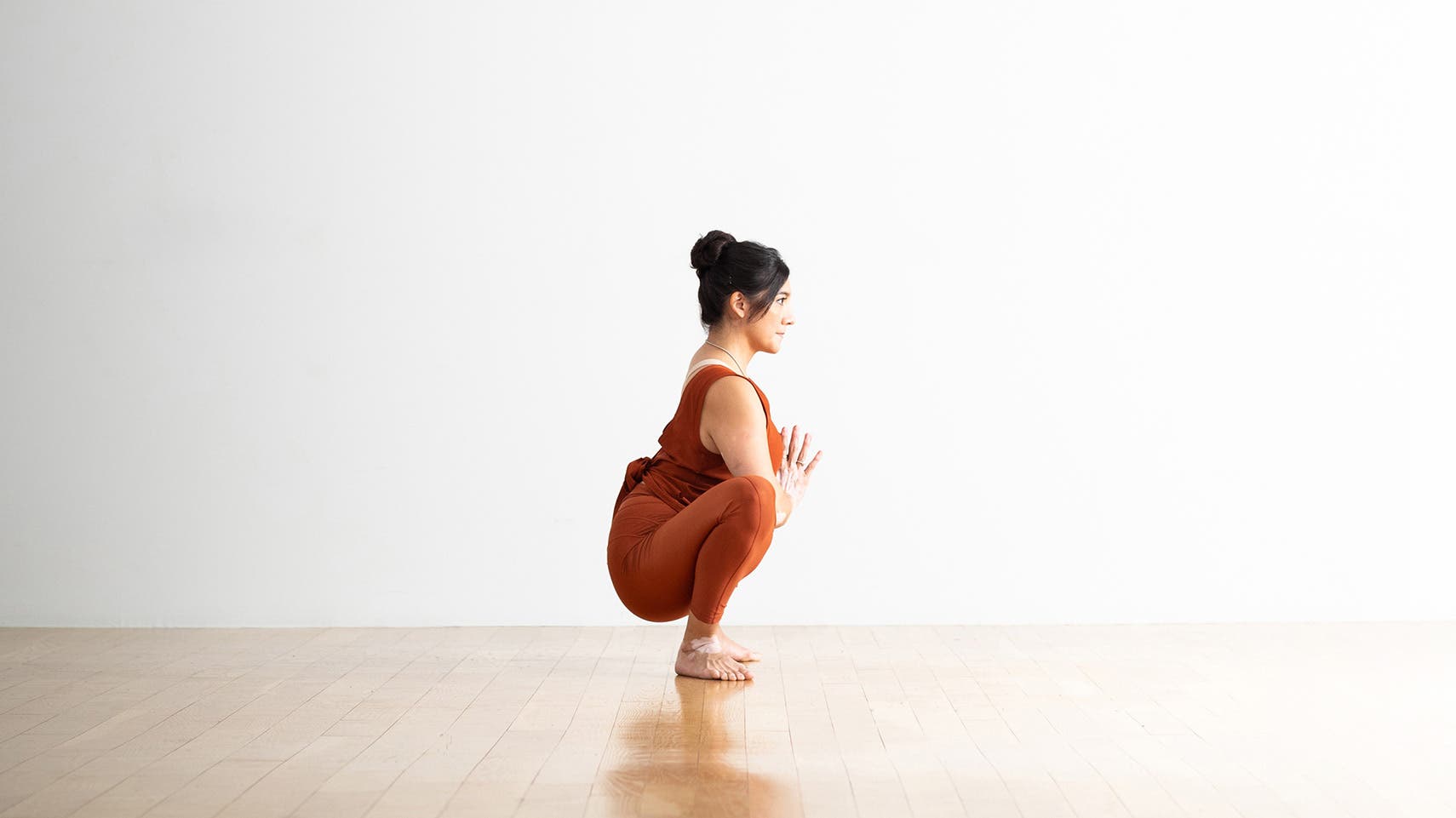
A position that helps ease calf and foot tension while mobilizing the ankles and hips, Squat tends to feel more manageable when you slide support underneath your heels.
How to: Stand tall with your heels on the edge of a folded blanket. Turn your toes slightly outward and lower your hips down into a Squat as far as is comfortable. Press the entire surface of your feet into the mat and blanket (not dumping into the inner arches). Place your hands in prayer position (anjali mudra) at your chest. Stay here for 5-8 slow breaths. Rise up slowly.
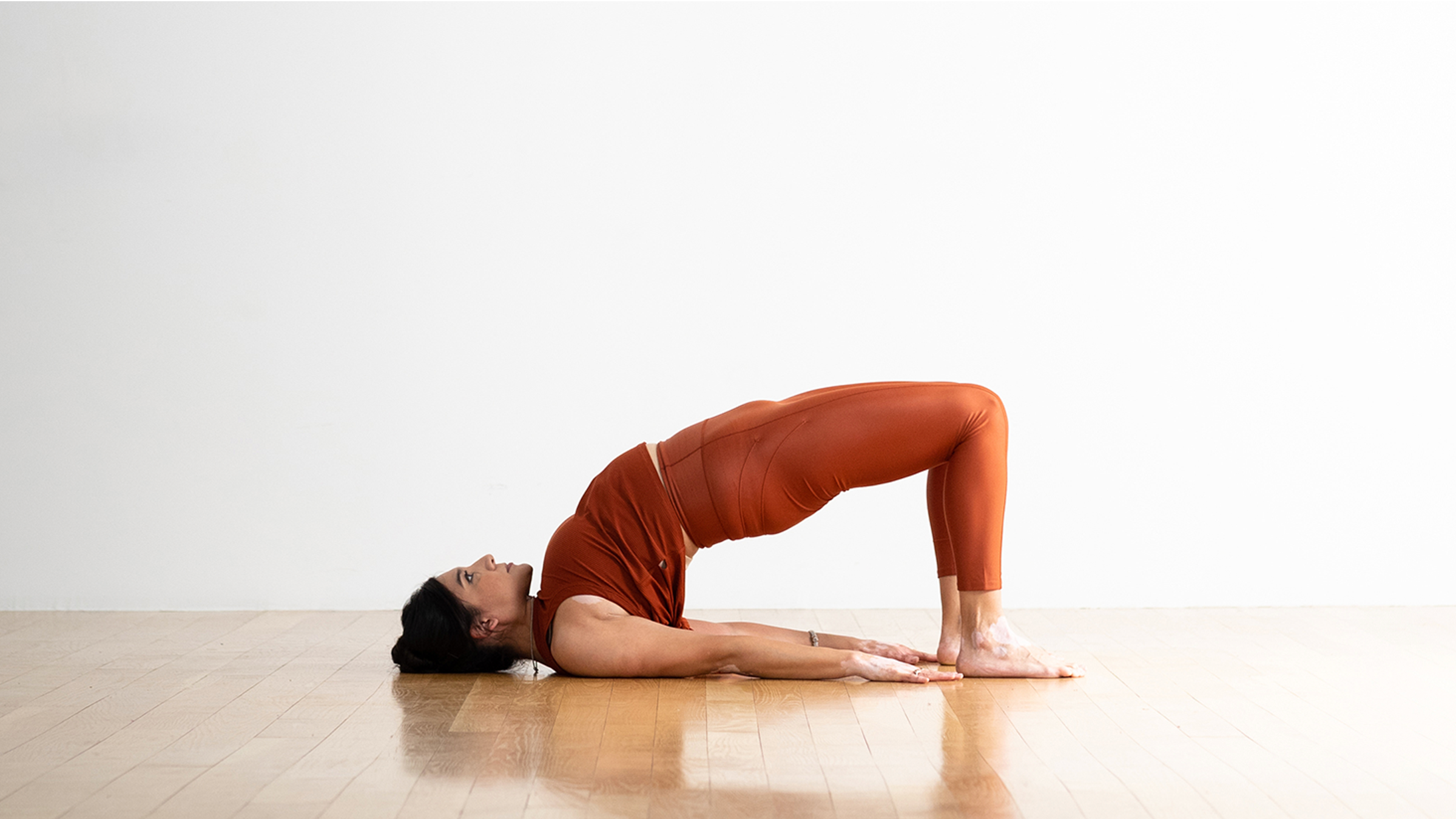
6. Bridge Pose
An often-overlooked part of plantar fasciitis recovery? Strengthening your glutes and muscles of the back body, which helps take weight off your arches. Bridge Pose (Setu Bandha Sarvangasana) helps you do that.
How to: Lie on your back with your knees bent and your feet planted on the mat hip-width apart. Press your feet into the mat and lift your hips in Bridge Pose. Imagine dragging your heels toward your shoulders (without actually moving them) to wake up your hamstrings and glutes. Stay here for 5-8 breaths, then slowly lower your hips. Repeat for 2-3 rounds.
7. Supported Forward Fold
In this variation of Standing Forward Fold (Uttanasana), you get to decide how intense or mild the calf and foot stretch. Bonus: this allows you to better experience the pose’s calming effects.
How to: Stand with a chair in front of you. Fold forward from your hips and rest your forearms on the chair seat. Lower your chin toward your chest and relax your neck. Keep your knees bent and your weight evenly distributed between your feet. Rest the top of your head on your forearms if it’s comfortable. Stay here for 8-12 breaths.
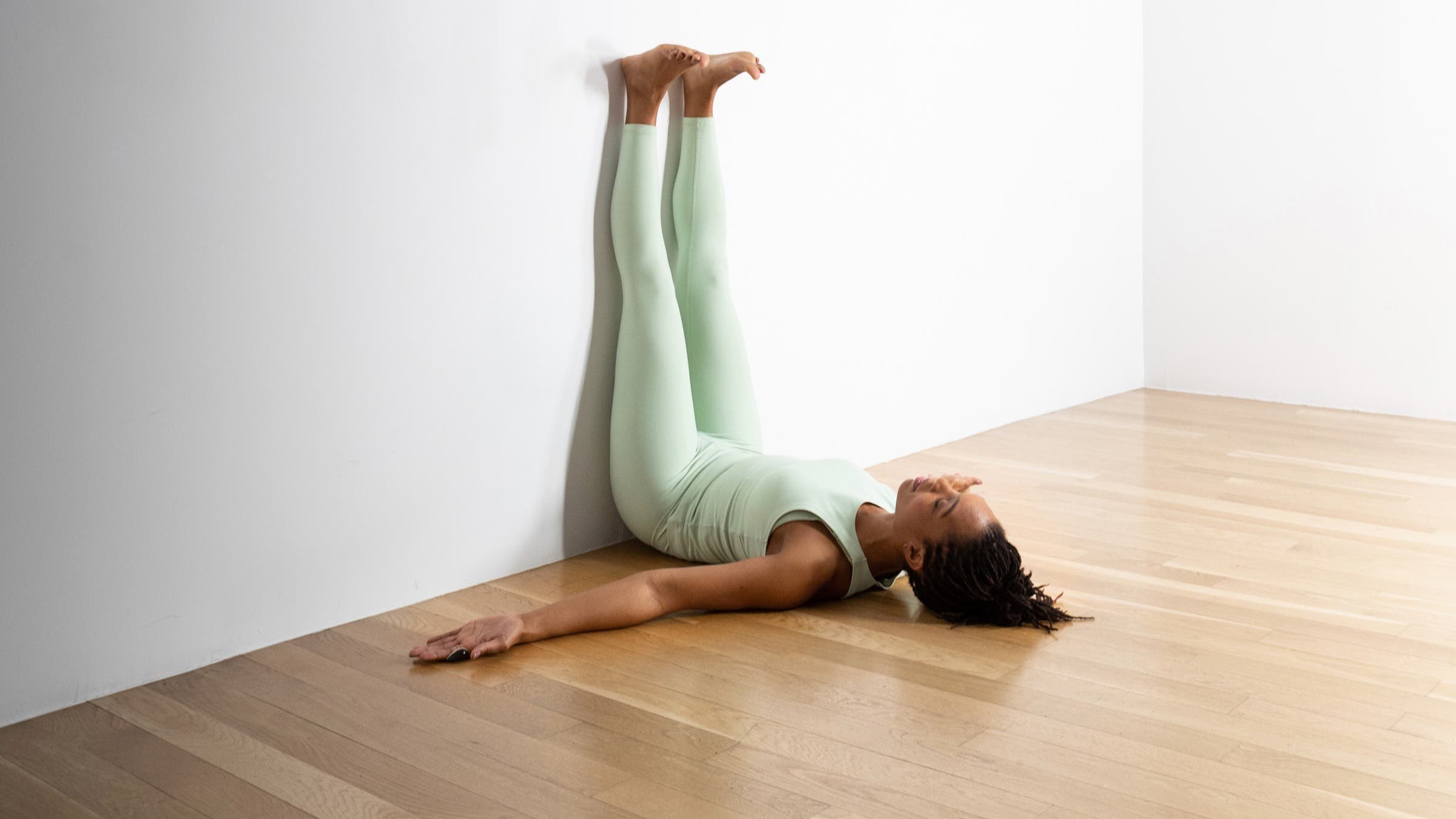
8. Legs-Up-the-Wall
A simple way to downshift your system when your feet feel irritated, Legs Up the Wall (Viparita Karani) helps relieve foot and calf tension and support recovery without loading the heels.
How to: Sit on the floor with one of your hips against a wall. Roll onto your back as you swing legs up so they’re against the wall. Place a folded blanket underneath your hips for more support. Adjust your feet hip-distance apart and let your heels rest against the wall and release any tension in your legs. Rest in Legs Up the Wall for up to 8 minutes, breathing slowly and steadily.