Published February 11, 2026 11:41AM
We’ve spent the last three years researching, practicing on, and critiquing dozens and dozens of contenders to bring you the best yoga mats for your needs. For the best budget yoga mat, our experts recommend the Gaiam Premium 5mm, only $25. If you’re a hot yoga devotee, the Liforme Classic was the undeniable pick for best hot yoga mat.
It all started with a flimsy foam mat. I was trying yoga for the first time and wanting to keep expenses to a minimum in case I ended up not wanting a committed relationship with it. Long story short, I kept practicing yoga. I also kept practicing on that cheap yoga mat. My hands slid precariously during Down Dog, my feet slipped as I transitioned from Warrior 2, and my mat wrinkled and wriggled beneath me no matter what. But I didn’t have any other mats to compare it to, so I just figured it was normal and made it work.
More than a decade later, when that $17 mat was worn to the point of flinging flecks of foam everywhere, I finally opted for a sturdier model. Instantly, I understood what it felt like not to be distracted by fears about falling on my face. I’m not going to say finding a mat that aligned with how I practiced changed everything. But it changed a lot.
In the decade since, I’ve seen and tried a lot of yoga mats while teaching 12 classes a week and, later, trying dozens and dozens of mats as an editor at Yoga Journal. I’ve basically spent the last three years of my life researching which yoga mats draw the strongest raves online and asking teachers and students I know as well as random strangers who slap their mat beside mine at class. And then I and 18 other testers I asked to help stretched, balanced, sweated, transitioned, arm balanced, and Savasana-ed on them at home and at studios in order to tell you which were the absolute best yoga mats for various usages.
Because there is no such thing as a single best yoga mat. The better question to ask is, “What’s the best yoga mat for me?”
Your answer might be different than mine and depends on an inexact algorithm related to how you practice and whether you prioritize grip, portability, cushiness, affordability, sustainability, or any of the other essentials I’m about to talk you through. Whatever your practice looks like, whether you’re quickly transitioning from one end of the mat in a headed studio or seeking a place where you can try to find some stillness, you need a mat that conforms to your needs, not the other way around. Following are the best yoga mats that do exactly that.
Have a yoga mat question? Drop it in our comments. We’ll be answering your questions live on Thursday, February 12, beginning at noon EST.
Best Yoga Mats: At a Glance
Best Budget Yoga Mat
Gaiam Premium 5mm
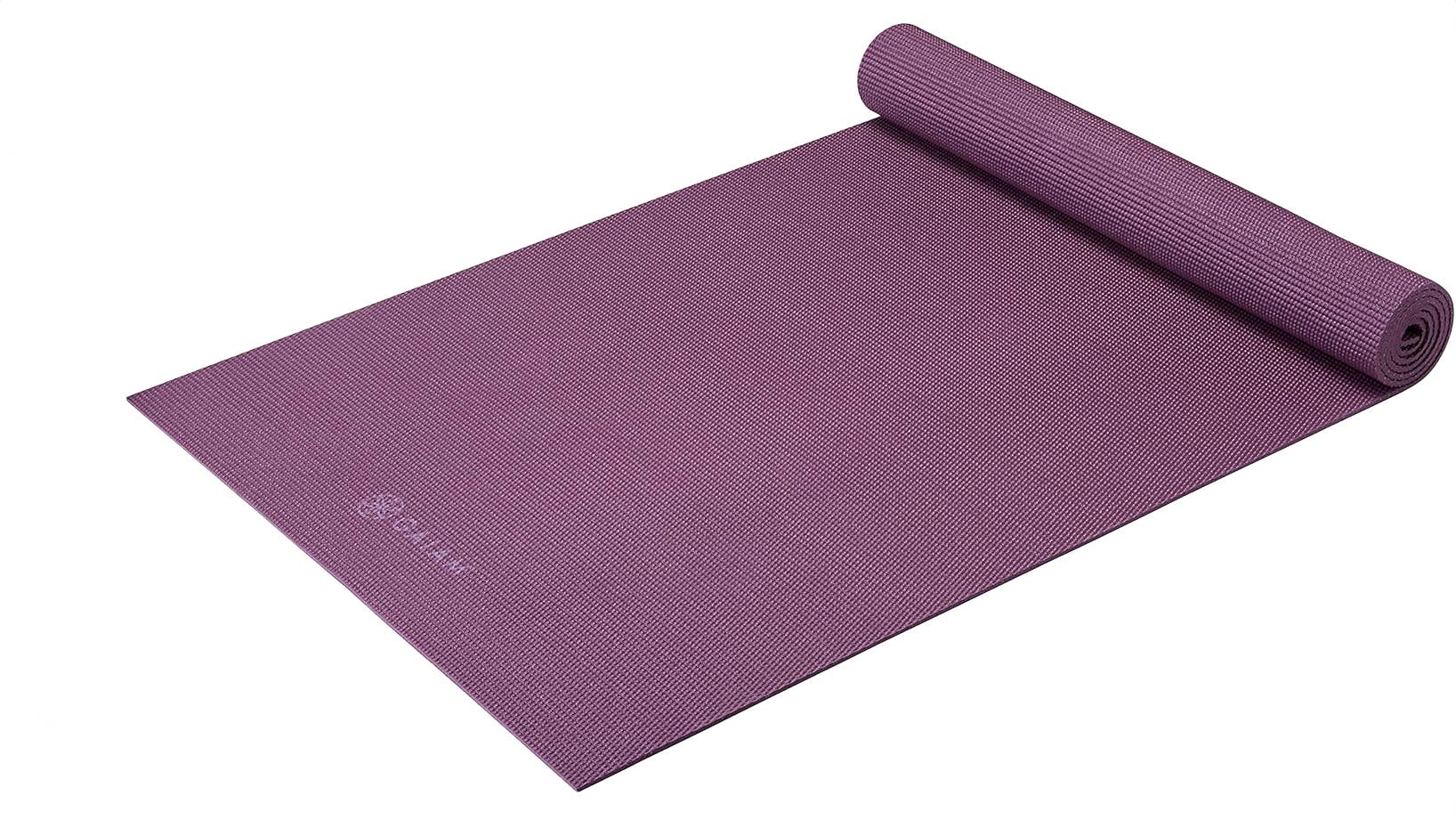
Material: Latex-free PVC
Thickness: 5mm
Dimensions: 68 x 24 inches
Weight: 2.6 pounds
Pros and Cons
+ Ethereally lightweight
+ Array of colors and designs
+ Reliable for beginners
– Slightly slippery
– Smaller dimensions than most mats
Seeking a serviceable yet affordable yoga mat? Consider Gaiam. The longtime mat-maker produces a dizzying array of options in the $20-plus range with differing thicknesses, surfaces, colors, and designs. The unanimous choice for best budget yoga mats among our testers? The Premium 5mm.
Don’t be fooled by the basic looks of this line of budget yoga mats. The spongy foam delivers a respectable amount of cushioning between the floor and you, whether you’re standing, sitting, or reclining for most of your practice. Manufactured from latex-free foam, the yoga mat is astonishingly lightweight, making it ideal if your commute to class includes lugging your mat as you walk several city blocks.
“Cushy!” is how a millennial tester described the Premium, noting it’s more comfortable than the other budget yoga mats she practiced on in standing, kneeling, and sitting poses. Similarly, my 78-year-old newbie-to-yoga Mom experienced substantially more confidence standing and transitioning on the Premium 5mm compared to other mats in the price category, finding the other options to be “too hard” and “too slippery.”
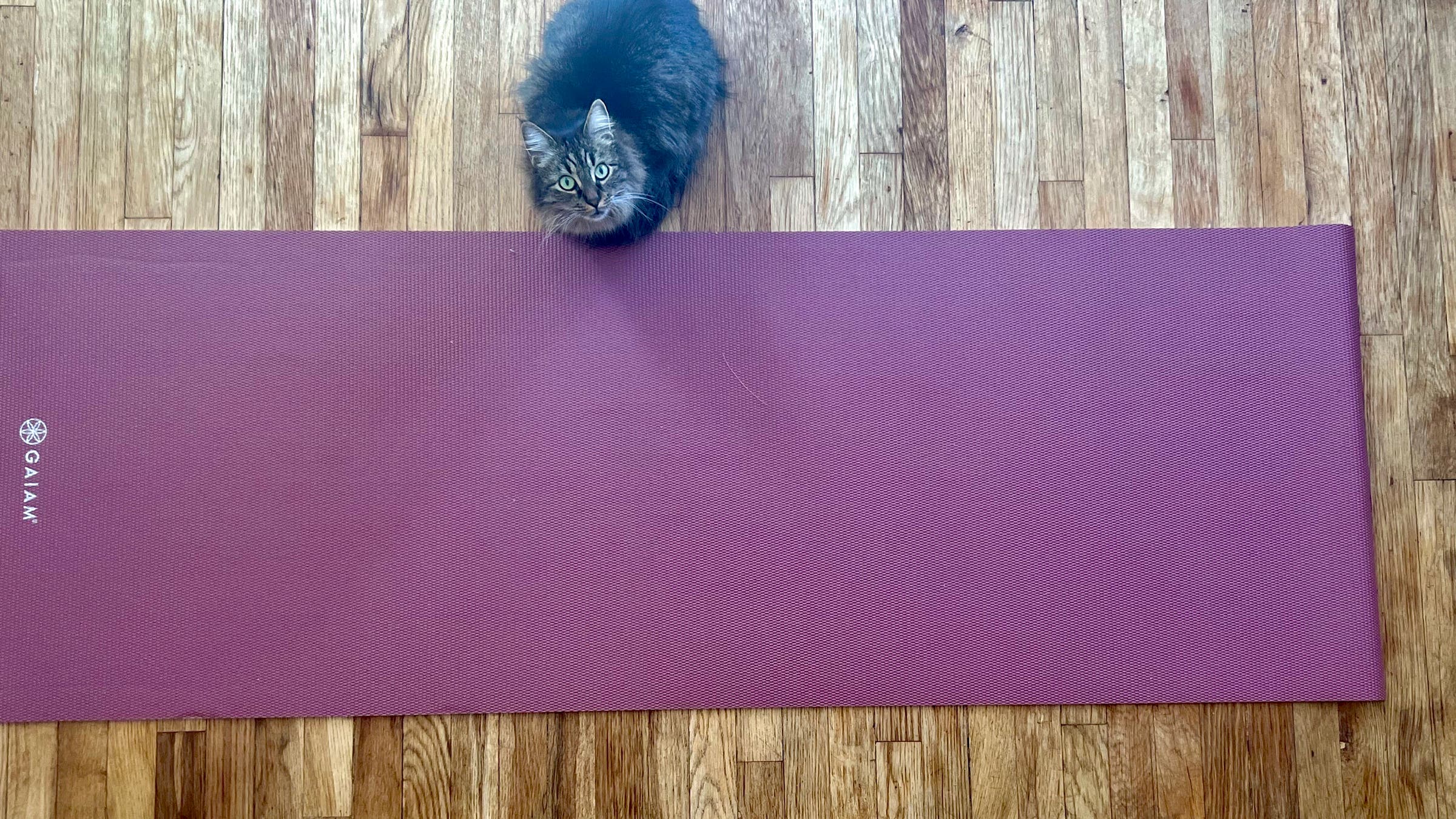
This is similar to the mat I initially practiced on for my first 10 years of yoga, yet this is exponentially less slippery. Will this be your forever mat if you end up taking a lot of yoga classes? Probably not. But it will be the most reliable option in the $20-something price range. It’s also the one that offers you the most vibrant array of colors and patterns, which drew gushes from testers.
Bottom Line: If you’re new to yoga or practice only occasionally and aren’t certain you want to commit a lot of money, this budget yoga mat is an exceptional option in the price range. Our testers prefer the less common 5mm to the 6mm model.
Best Hot Yoga Mat
Liforme Classic Yoga Mat
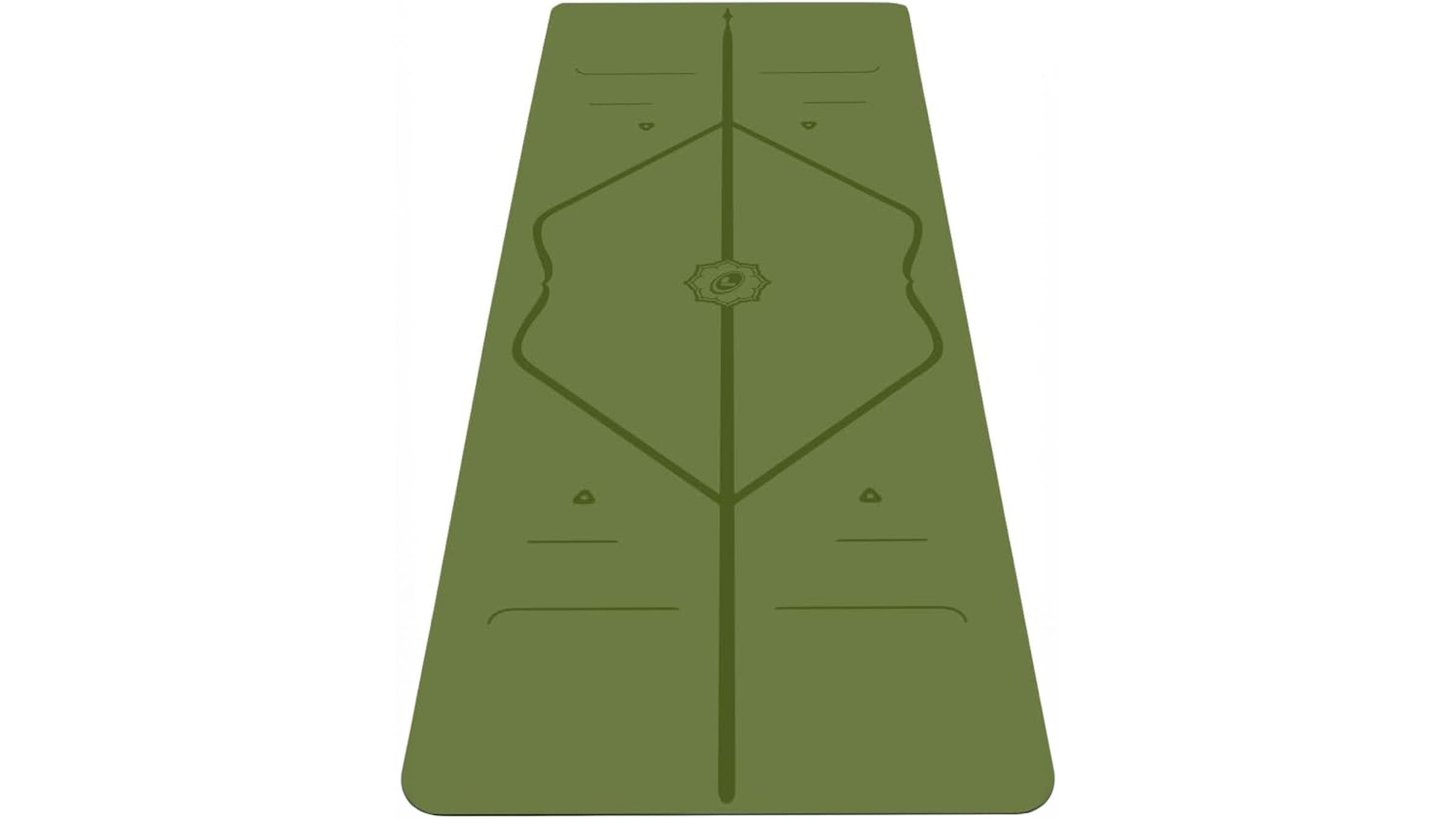
Materials: Natural rubber base + eco-polyurethane surface
Thickness: 4.2mm
Dimensions: 73 x 27 inches
Weight: 5 1/2 pounds
Pros and Cons
+ Grippy AF
+ No toxic anything
+ Aesthetically lovely
– Smudges and scuffs easily
In recent years, the Liforme Classic has become almost ubiquitous at hot yoga studios. Although you might be tempted to assume its status has everything to do with its sleek appearance, you’d be wrong to write it off as just a fashion statement. Among the many, many brands contending for best hot yoga mat, the Liforme soundly delivers functionality thanks to the surprising grip of its smooth surface, even when you’re dripping sweat.
Practicing on this hot yoga mat means no more sliding around on your mat during Chaturanga or second-guessing whether you’re attempting an arm balance on Slip N Slide. That grip also applies to its underside, which means there’s no annoying sliding or wrinkling happening beneath you as you take yourself through a Sun A or otherwise transition all around your mat.
Think of Liforme as the little black leggings of yoga mats—simple, sophisticated, and serviceable. Although one tester complained about the weight of the mat, others found it substantially less heavy compared to other dense yoga mats. Despite its generous length and width, it’s definitely something I’d commute to class with if I still lived in Manhattan and had to walk 10 city blocks to class. And if black feels too blah for you, the hot yoga mat comes in an array of colors and designs, from understated to flamboyant.
That lightness is largely due to its relative slender profile, which means if you require more cushioning for your knees or wrists, think twice. Personally, I don’t find the lack of cushiness to be an issue, even when I practice yin or restorative yoga on a hardwood floor. Zero complaints. Another tester especially appreciates that thinness, which she describes as “perfect” for her at-home practices during which she throws it down on a carpeted floor.
The sweat and scuffing of your hands and feet against the surface will smudge that lovely aesthetic a little. Also, its surface scratches rather easily, so beware leaving it unrolled and unattended around four-pawed roommates.
One tester, a self-described “Type A,” mentioned that she became distracted by the alignment lines grooved into the surface of the mat. Other testers found them to be either helpful or a non-issue. As far as we’re concerned, the biggest disadvantage of this mat is its price tag, although it regularly goes on sale.
Bottom Line: If you practice vinyasa or hot yoga, you’ll get years and years of reliable grip from the Liforme—as well as some enviable looks from others at the studio.
Best Yoga Mat You’ll Never Need to Replace
Manduka Pro
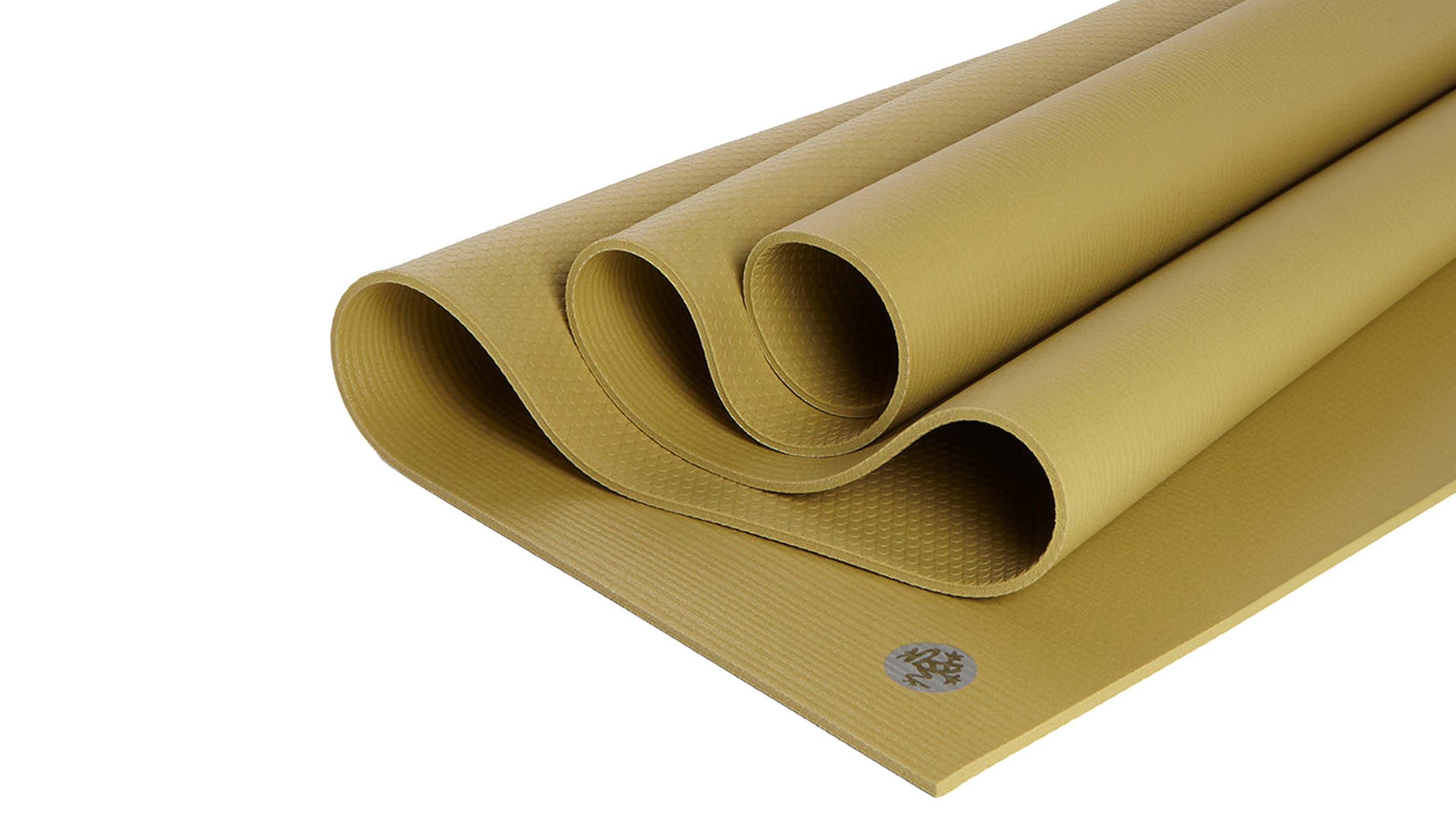
Material: OEKO-TEX Standard 100 PVC
Thickness: 6mm
Dimensions: 71 x 26 inches
Weight: 7.5 pounds
Pros and Cons
+ Dense cushioning
+ Wider than many mats
+ Easy to clean
– Slippery when sweaty
– Heavy
There’s a reason why so, so many yoga teachers consider the Manduka Pro their go-to yoga mat. Namely, the mat’s dense cushioning, which provides a sturdy foundation for any practice. It simply will not wrinkle or slip beneath you, no matter how quickly you transition or jump back. Seriously, even as you make your way from a revolved lunge facing one side of the room to side lunge facing the other side of the room, the Pro won’t budge beneath you.
The mat that I upgraded to the Manduka Pro yoga mat, I upgraded my yoga practice. Its stability meant I was no longer distracted by hands and feet sliding or the mat wrinkling and shifting on the floor each time I lifted my foot from Down Dog. Its slightly textured surface meant arm balances became less daunting without fear of my hands slipping out from under me. And its durability meant I practiced on this yoga mat almost every day—usually more than once a day, indoors as well as outside—for close to 10 years and it still looked almost new. When my Manduka Pro was stolen, I immediately replaced it with the same exact model.
A yoga therapist I know who has practiced exclusively on the Pro for years swears that its dense cushioning adequately supports “all bodies,” including those with “achy knees.” She found the thickness created a stable yet cushioned experience for kneeling in Camel, arm balancing in Side Crow, as well as reclining in Legs Up the Wall. That means as reliable as this yoga mat is for vinyasa, it’s also a fave among those who practice yin and restorative.
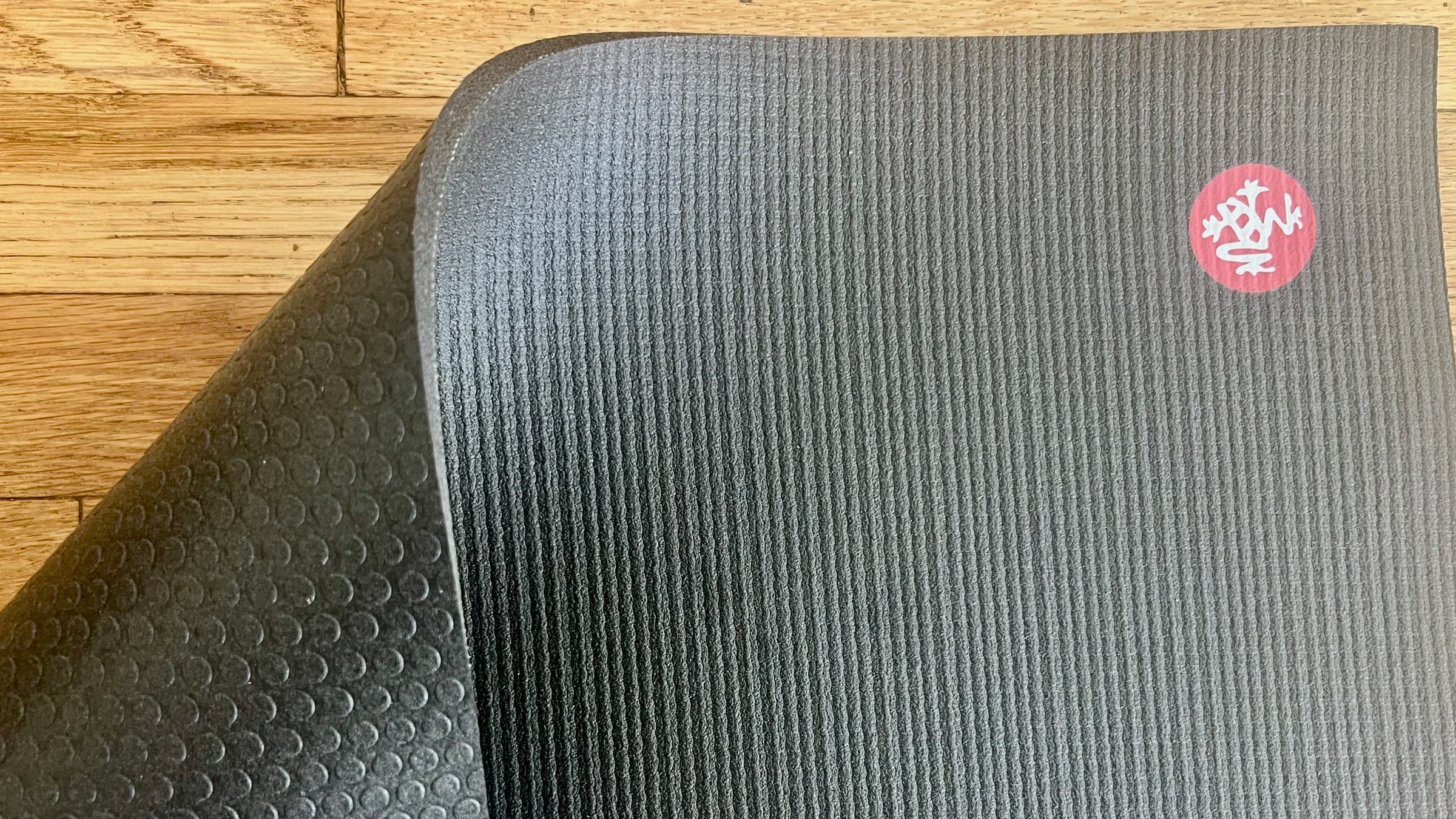
The Pro doesn’t absorb sweat, which makes cleaning it a cinch. It also makes for a slippery experience if you sweat a lot during class. More than one tester cautioned about throwing down a yoga towel on the mat if you’re taking hot yoga.
The biggest complaint? The breaking-in process for Manduka mats, which is prolonged compared to most mats but worth the patience required. Read the fine print included in the packaging on how to flatten those furled edges and tame any slight slickness during your initial practices. It’s also quite heavy, making it a strong option if you have the luxury of simply tossing it in the trunk and driving to class (but less great if you need a portable, travel-sized yoga mat).
Bottom Line: Whether you teach or take yoga, if you show up regularly to any sort of practice, this yoga mat will also show up for you. Bonus: Manduka guarantees their mats will last a lifetime. We don’t doubt it.
Best No-Toxic-Anything Yoga Mat
Jade Harmony
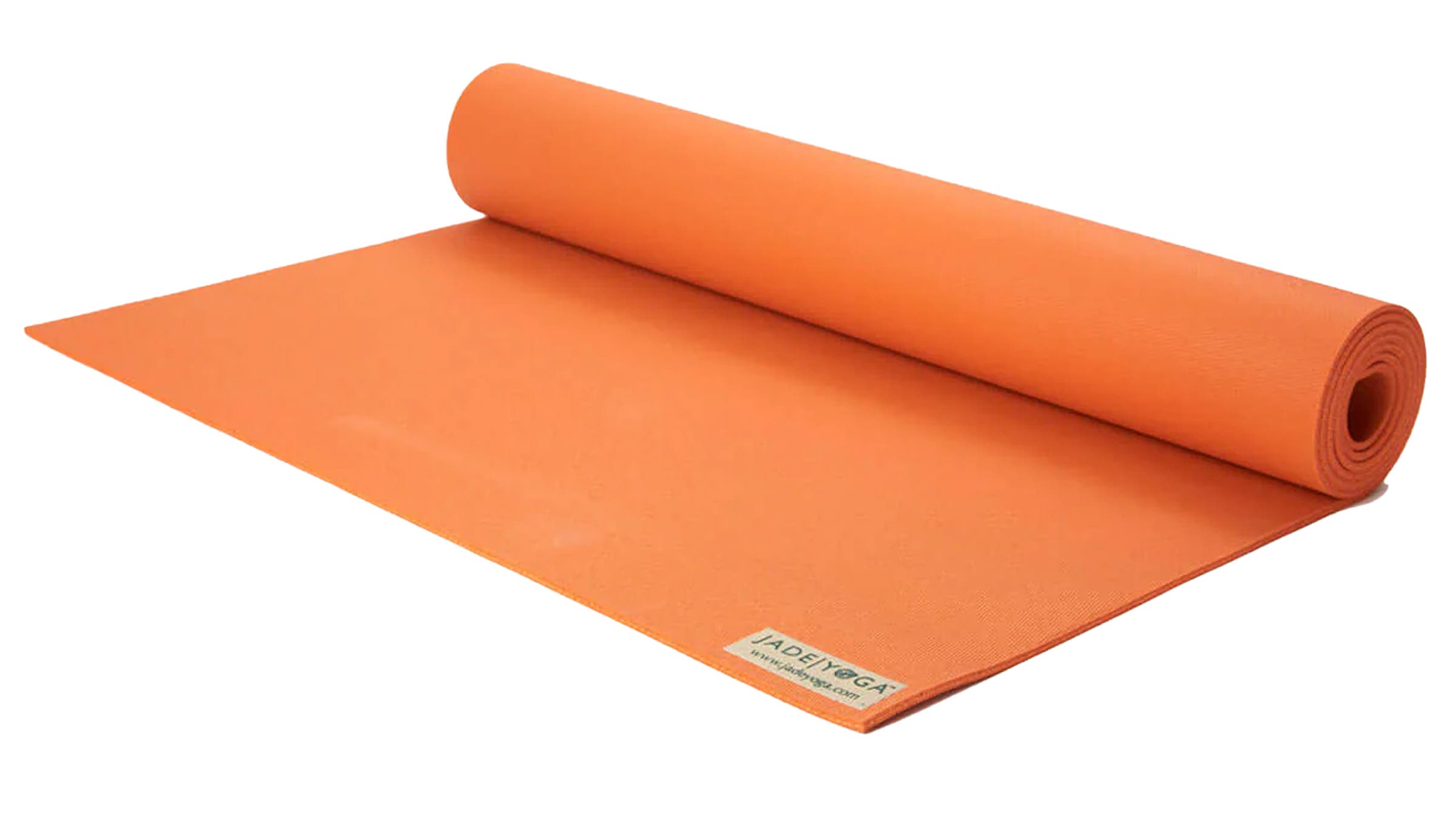
Material: Natural rubber
Thickness: 4.7mm
Dimensions: 68 x 24 inches
Weight: 5 pounds
Pros and Cons
+ Unearthly grip
+ Made of natural rubber
– Attracts fuzz and fur
– Not for outdoor use
There are a lot of claims among yoga mat makers regarding sustainability and renewability. Many brands back those words with efforts. But not always. Jade has executed on eco-friendliness since day one, using only natural rubber in the stateside manufacturing of the mats since 2000.
The other trait Jade is known for is yoga mats with grip. And when I say grip, I mean GRIP. The Jade Harmony yoga mats feature a natural rubber material with a much more obviously textured surface than other brands. Imagine suction cupping your hands and feet to the mat. That’s what it’s like to try and move on this mat.
That grip is especially helpful for anyone who practices hot yoga, perspires with gusto, or simply likes a lot of traction. “It’s ideal for my chronically sweaty hands and feet,” explained a tester who’s practiced on this model of mat for years. “I never slide. NEVER.” One of our testers has long sold Jade—and only Jade—yoga mats at her studio. Another tester switched allegiances to the Harmony after practicing on it only a few times.
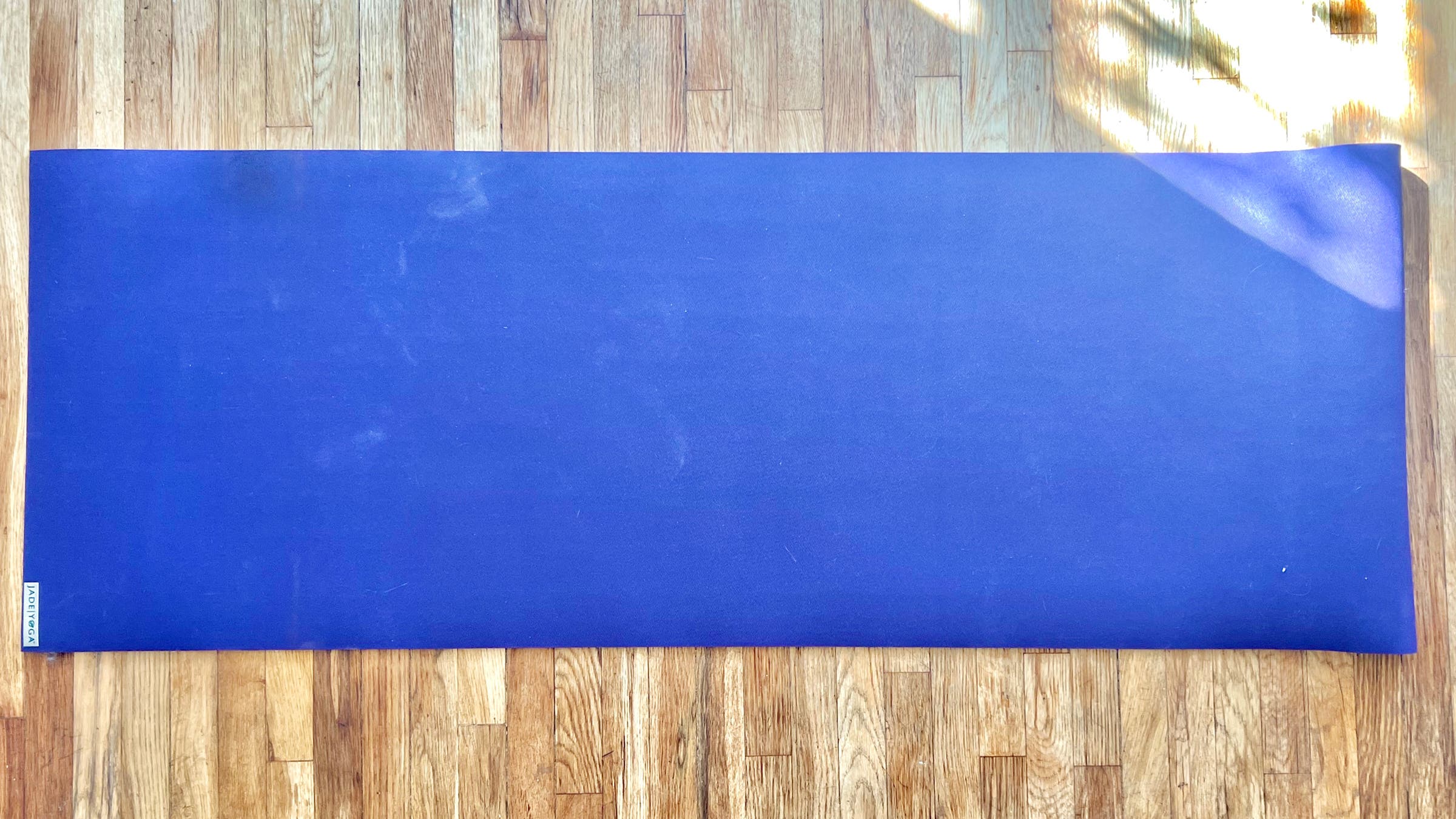
That traction, though, can slightly hinder seamless transitions around the mat. Personally, I don’t care to detach myself from the yoga mat each time I want to move. Also, the intensely textured surface holds onto more than just the undersides of your hands and feet. It also attracts fuzz, fur, dust, lint from yoga towels, and anything else that’s not locked down, which makes cleaning it relatively high maintenance and not something you can get by with a few simple swipes. A longtime Jade aficionado suggests taking the mat into the shower with you or hosing it down. Just be prepared to wait for it to dry.
As for thickness, one tester explained their affinity for the eco-friendly mat, explaining it has “a well-constructed feel for being relatively thin.” If you’re accustomed to more cushioning for your knees or during yin and restorative, you might find it lacking in this model. Jade also makes a thicker, more cushy version, the Fusion, as well as a thinner travel-size version. No matter the thickness, the yoga mat will start to show signs of wear over time wherever your hands and feet are commonly placed.
Aesthetically speaking, all testers commented on its lovely and muted earth colors and jewel tones that are “less nondescript than most yoga mats.”
Bottom Line: If you fancy support, grip, and cushioning, the Jade Harmony pretty much delivers exactly that. It simply depends which qualities are your priority. Also, every single tester noted that they respect the company’s commitment to planting a tree for each mat sold. As do we.
Best Upcycled Yoga Mat
Suga Recycled Wetsuits Yoga Mat
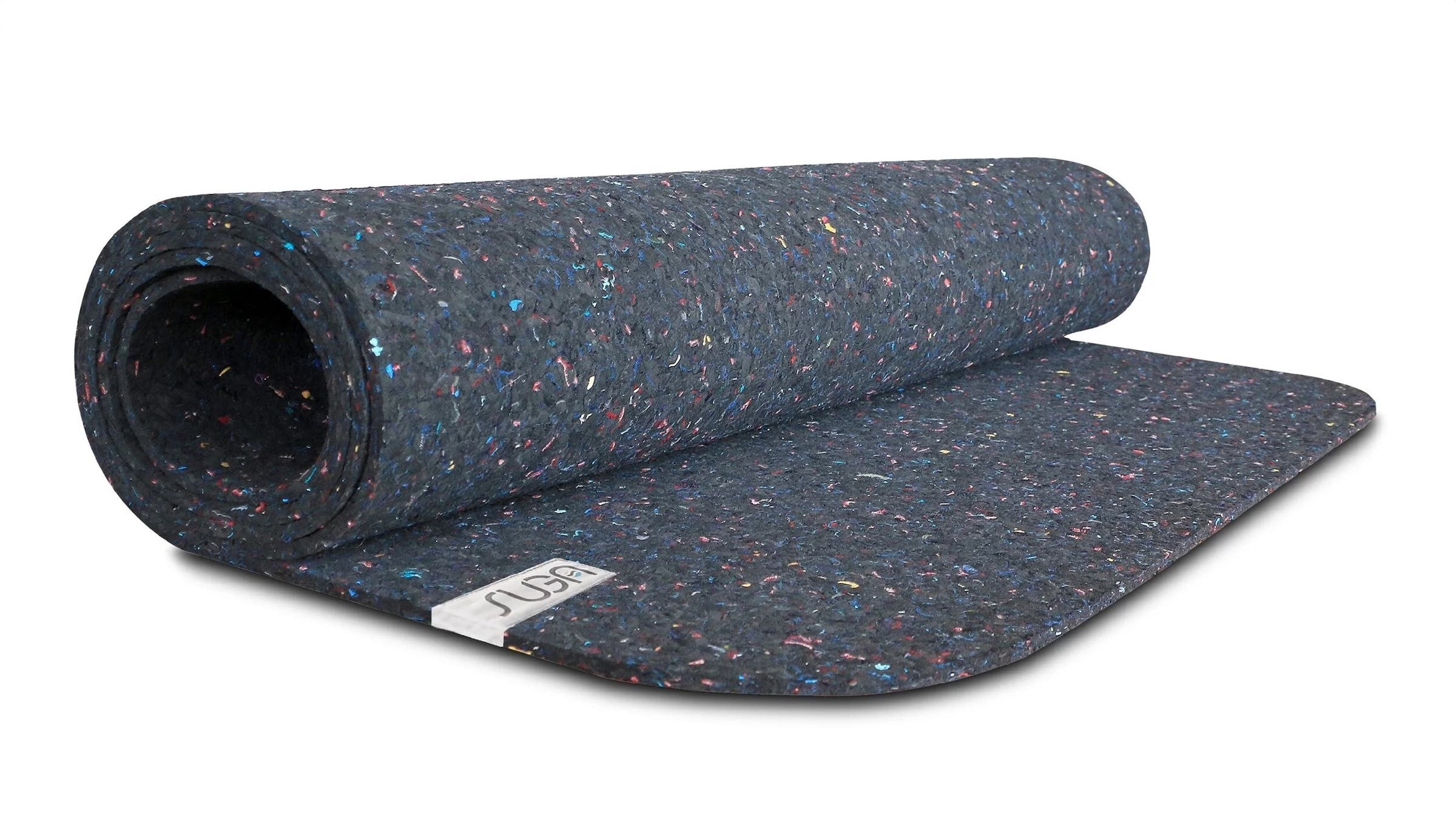
Materials: 100 percent recycled neoprene surf wetsuits
Thickness: 5mm
Dimensions: 72 x 25 inches
Weight: 5 pounds
Pros and Cons
+ Made exclusively from recycled wetsuits
+ Dense cushioning
+ Easy to clean
– Different (but not bad!) textured vibe
You’ve got to love a company that not only keeps materials out of a landfill but upcycles them into yoga mats. More specifically, as the folks at Suga like to say, they turn “petrochemical based landfill clogging neoprene monsters into highly functional instruments of yogic bliss.” That description pretty much nails it.
Suga, whose name draws from “surf” and “yoga,” makes a yoga mat with a subtly textured surface that’s somewhat unprecedented in the yoga space. It’s not uncomfortable. It’s simply different. And it makes for a surprisingly slide-free yoga mat, whether or not you’re sweating.
The material is also reassuringly dense with a supportive thickness that ensures a cushy space to practice, whether you’re kneeling, arm balancing, or stretching out in Savasana. It also rolls out flat immediately after you take it out of the box. I find the vibe to be a little reminiscent of the low, pre-shag carpeting I played on as a kid at my grandparents’ house—but not in a bad way. Just remind yourself you’re practicing on a badass surfer’s wetsuit that was once drenched in the ocean.
Although you might not see a lot of these in your local studio, Suga has an enthusiastic fan base with overwhelmingly appreciative online reviews for its concept as well as its practical application. We understand why.
Bottom Line: If you practice any sort of yoga, like to support sustainability, and fancy yourself a little different than the rest of the crowd, this could be the mat for you.
Best Cork Yoga Mat
42 Birds Cork Yoga Mat
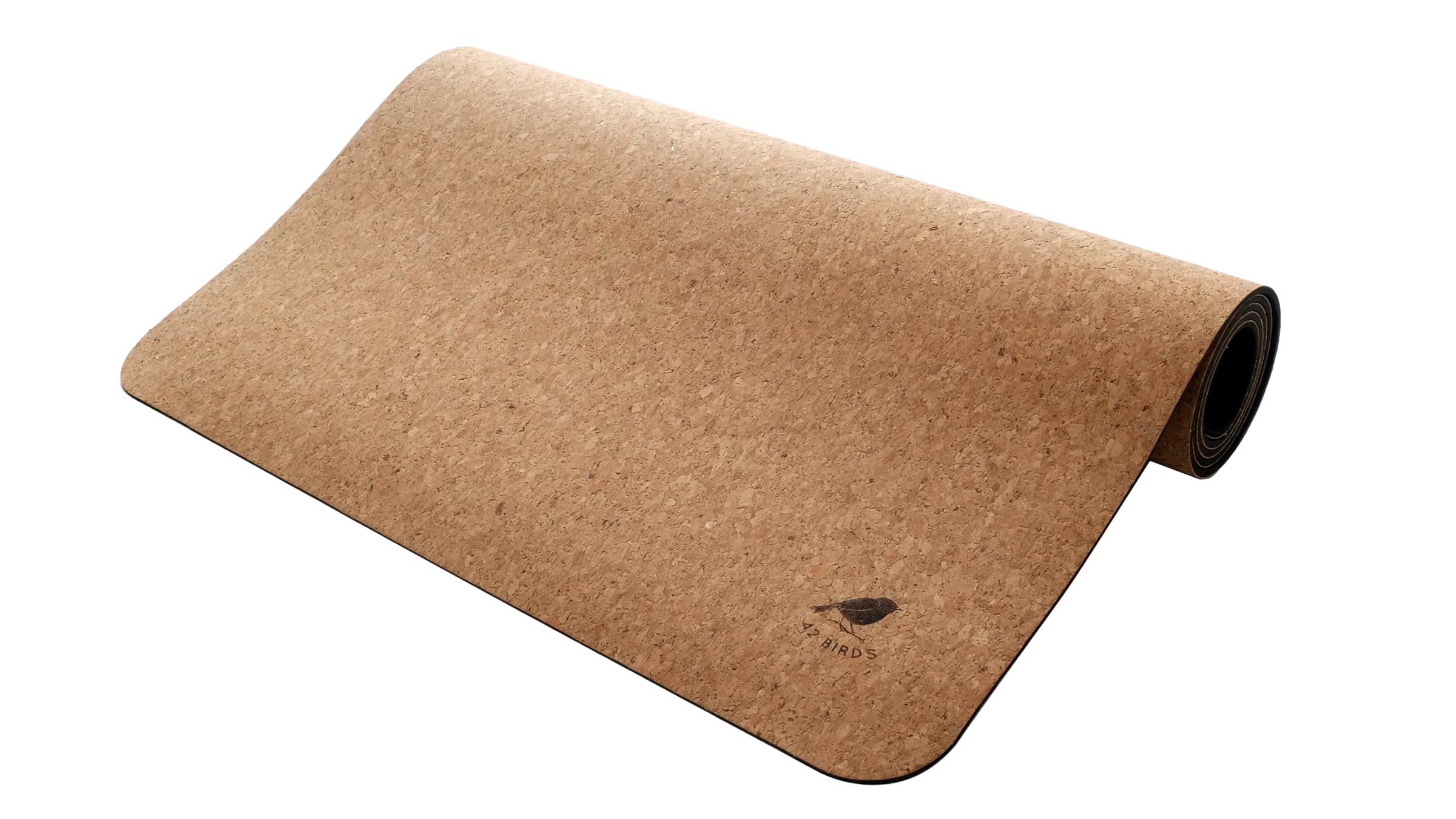
Materials: Natural rubber base + 100-percent recycled natural cork surface
Thickness: 5mm
Dimensions: 72 x 26 inches
Weight: Less than 2 pounds
Pros and Cons
+ Sustainably sourced
+ Ethereally lightweight
+ Somehow makes cork seem elegant
– Slightly slick when not sweaty
There’s no shortage of cork yoga mats out there. In fact, the options are daunting. Yet there’s a marked performance difference among them. Some companies make products whose only cork presence seems to be a graphic cork design imprinted on rubber. Others err on the side of too little or no rubber, resulting in a stiff, slippery, yet all-natural yoga mat. 42 Birds manages to deliver an exemplary balance of lightweight cork and grippy natural rubber, earning it our title of best cork yoga mat.
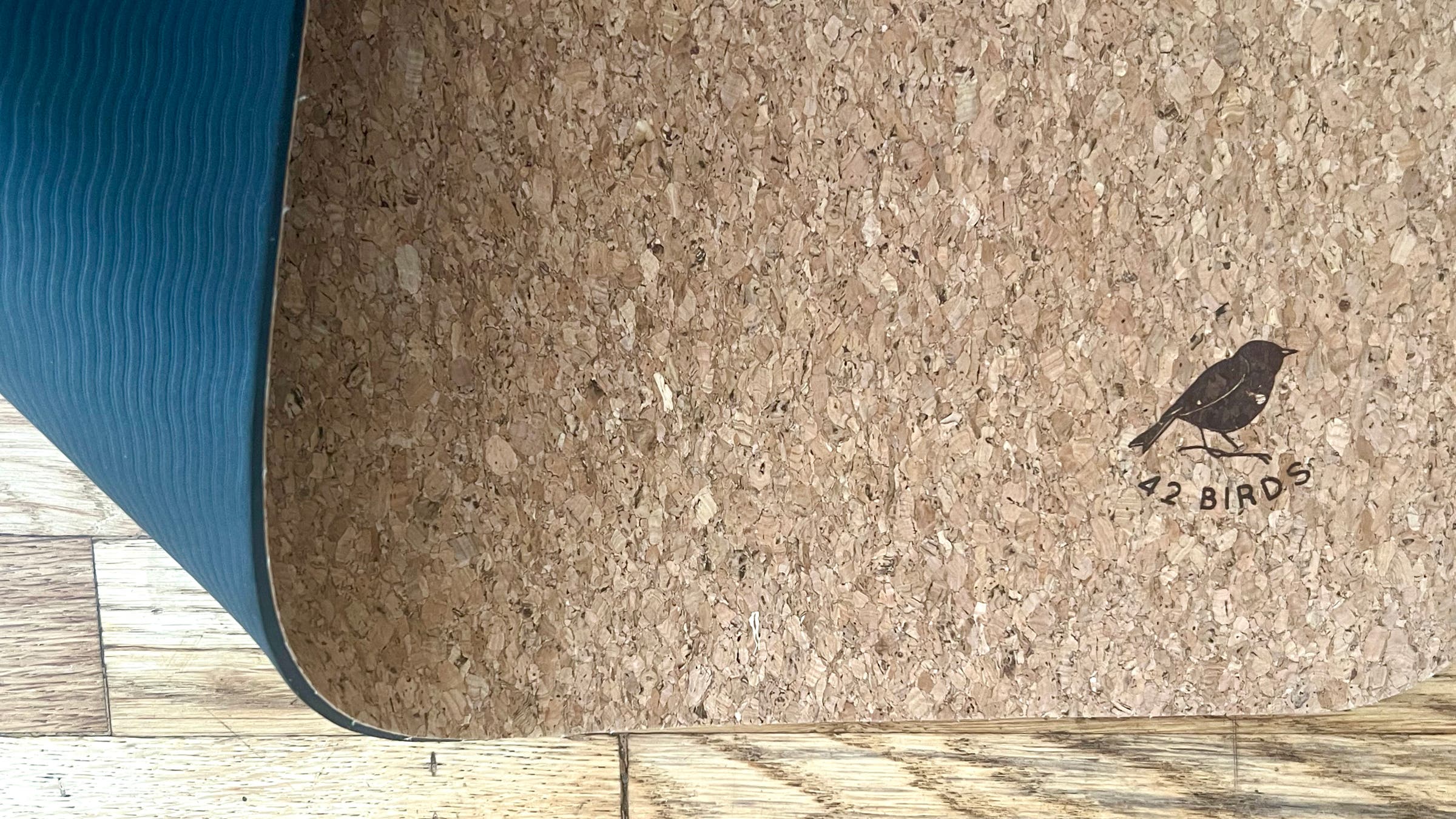
As with most cork surfaces, the surface of this yoga mat is grippier when slightly wet, so a spritz of water or a heated practice that quickly brings on the sweat will help your hands and feet stay put. Although the yoga mat feels exceptionally lightweight and airy, you’d be wrong to assume it’s delicate. It’s also surprisingly cushy and supportive. I’m mystified as to how something so airy could also be so durable and unscathed after all the standing, transitioning, balancing, sitting, and reclining I put it through. As one online reviewer noted, “Not to be dramatic, but this is the yoga mat I’ve been looking for my whole life.”
And yes, there’s a simple elegance to its bare look, even when rolled and tucked in the corner of your apartment to put your sustainable vibe on display. But the cork will easily take on grime and smudges, so beware where you stash it.
Bottom Line: If you schlep your yoga mat several city blocks or subway lines to class, or you simply want a renewably sourced mat, this uber-lightweight option is likely what you need. And if you appreciate cushiness and grip in a cork mat, then 42 Birds is definitely what you want.
Best Yoga Mat for Creative Aesthetics
Yune Natural Rubber Yoga Mat
Material: PER (Polymer Environmental Resin)
Thickness: 6mm
Dimensions: 72 x 24 inches
Weight: 2 pounds
Pros and Cons
+ Array of color and design options
+ Lightweight
+ Value
– Only modest cushioning
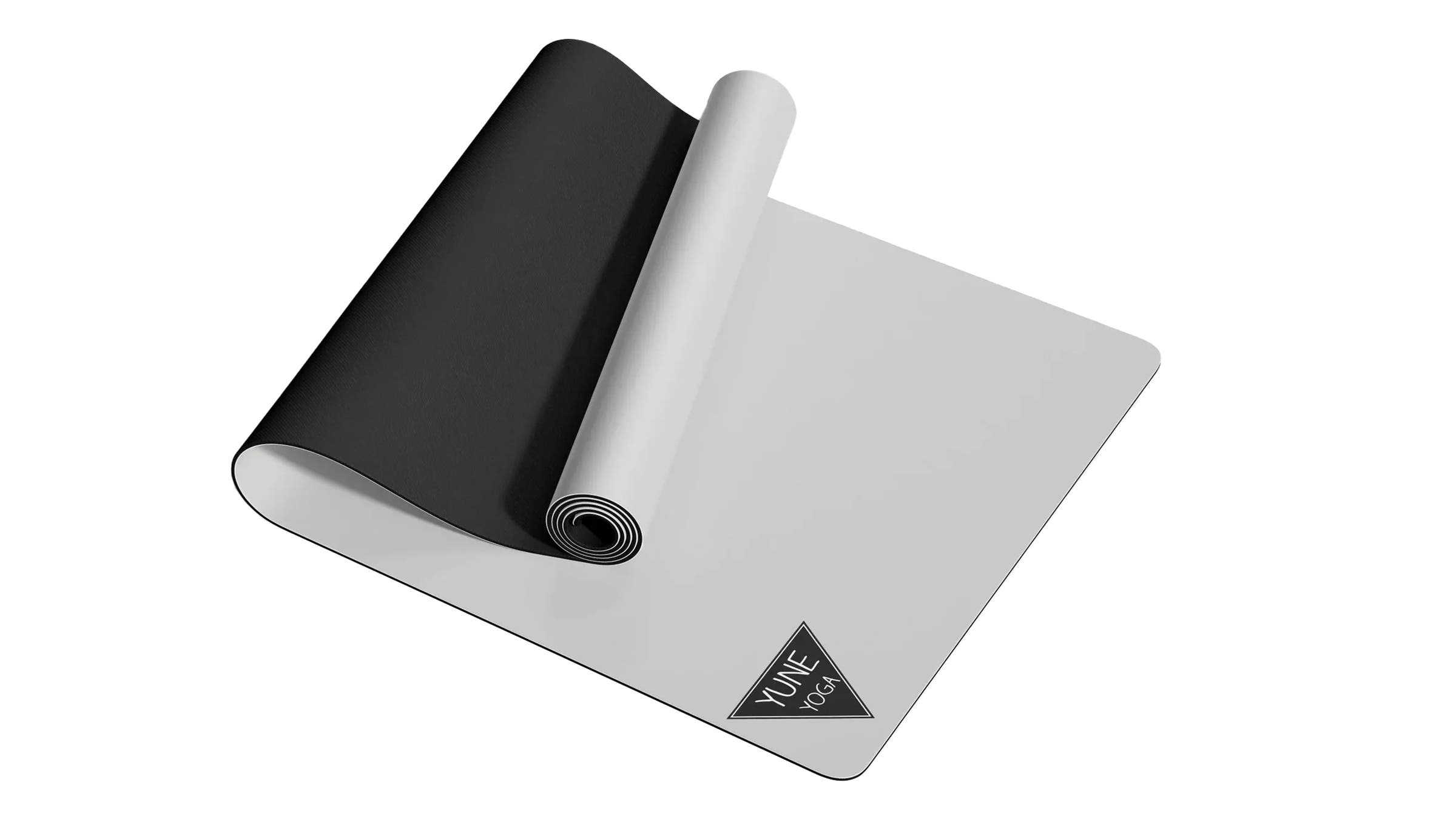
“Typically, when you buy a yoga mat, you’re confronted with a decision—function or fashion,” explained one of our testers, a yoga teacher and graphic designer. “Not with this one.” A handstander and arm balancer, she found the Yune to be the “perfect thickness” and “impossibly grippy.”
The grippy and design-savvy yoga mat satisfied more than just arm balancers. Several other testers reported feeling “completely confident” on the Yune while practicing vinyasa. And everyone appreciated how it lies flat and rolls up slender for ease of storage as well as lugging it to and from class.
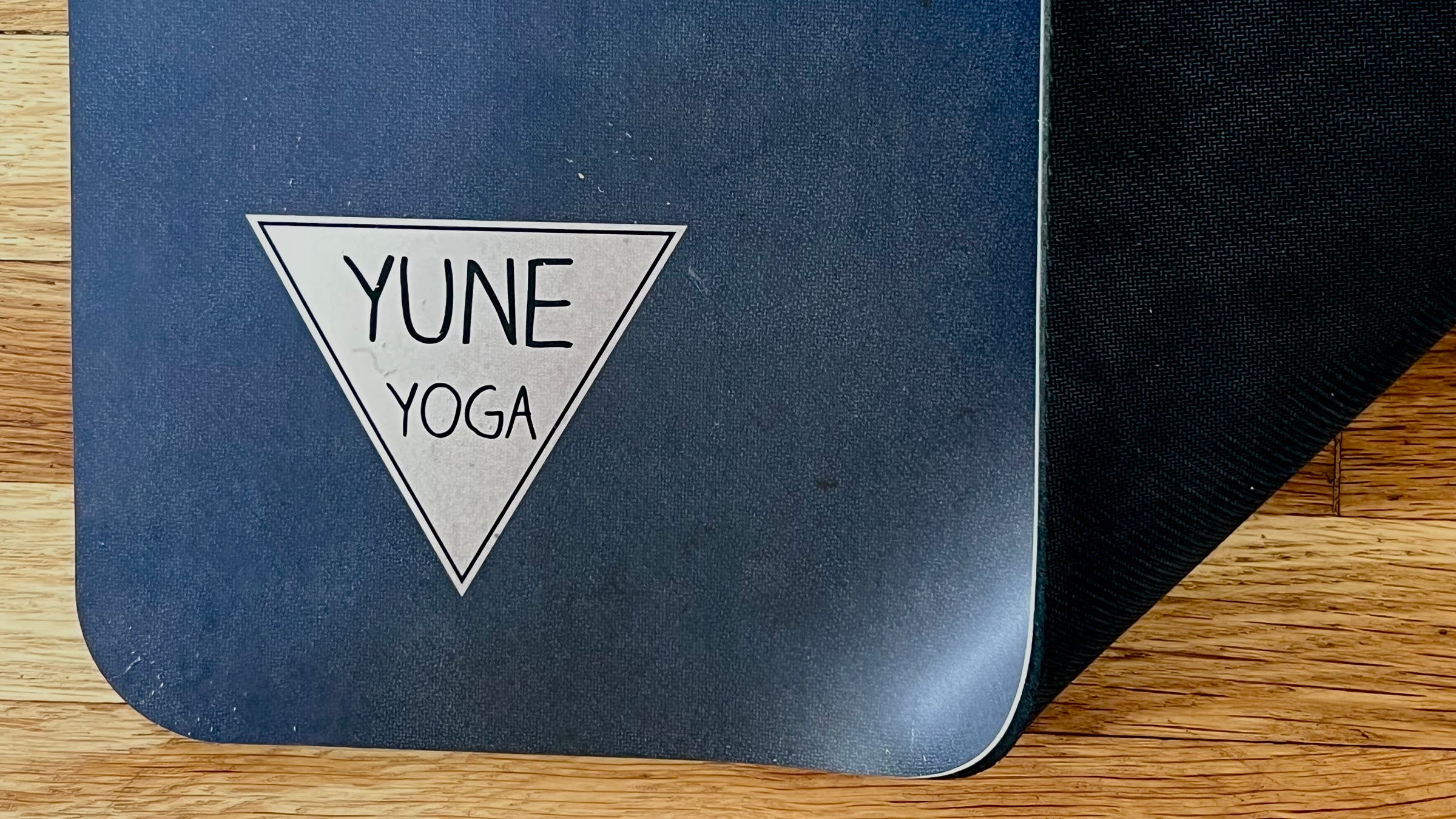
I found the thickness to seem less than it actually is, which means there’s adequate cushioning without the mat being cumbersome to roll, carry, or store. Our arm balancer also explained that it also “basically adheres to the floor,” which quickly earned her trust. If you prefer a lot of cushioning or a mad crazy grip in your mat, you might find the Yune slightly wanting.
Now, about those expressive designs. Your artful options include an array of patterns for specific astrological signs, contemporary art, space-age vibes, even depictions of Peanuts characters. Yune makes dozens of patterns, each “printed digitally with UV inks,” according to its website. Translation? Minimal environmental impact.
Bottom Line: If you prefer a mat that delivers well in all categories and gives you a pleasingly different aesthetic than most mats, you want a Yune.
FAQs
Have a question about these or other yoga mats and aren’t finding the answer here? Ask us in a comment below!
How much should I spend on a yoga mat?
It depends. If you practice yoga only occasionally, then you might not need to spend $100 on something you use infrequently.
But if you find that each time you practice yoga, your budget yoga mat frustrates and distracts you during class, then it’s time for an upgrade. You already have a sense of what you like and don’t like about your mat. Do you want something with more cushioning? More grip? More space? A hot yoga mat for sweaty classes specifically? These are legit desires for a mat and any of the above options will deliver. Expect to pay approximately $100 for a reliable mat that you’ll probably never need to replace.
Also, keep in mind, many yoga mats regularly go on sale. Bookmark our Deals page for easy reference for everything yoga-related that’s on sale.
What is the best thickness for a yoga mat?
A common thickness for yoga mats is anywhere from 4mm to 6mm.
If you practice mostly restorative or yin yoga, which means you’re typically sitting or reclining on your mat, you might want to consider something thicker for additional comfort.
If you practice styles of yoga that involve standing in poses, beware mats that are thicker than 6 mm and come labeled as “exercise mats.” These sometimes feel more like a mattress than a mat, which makes finding your balance tricky.
How to clean a yoga mat
It depends a little on what type of mat you have. But also, you need to think as much about how frequently you clean it. Ideally, you’d wipe it down after each practice and occasionally do a more thorough cleaning. And no, essential oils are not sufficient to kill germs. Here’s the cleaning advice you need, straight from a microbiologist.
How long will a yoga mat last?
There’s a lot of factors to consider. Don’t expect a mat that cost $24 to last you for years if you practice on it almost every day. Typically, the thinner and more foam-like the material, the more quickly it will show signs of wearing and start to degrade.
That said, many of the mats above are designed to last for the duration of your years of yoga practicing and come with a lifetime guarantee.
Things that can impair the longevity of your mat include forgetting it outside in the sun and keeping it where animals can lounge on, scratch, or bite it.
How We Test the Best Yoga Mats
Every year, Yoga Journal editors and testers evaluate various models of yoga mats for grip, stability, cushiness, portability, and more. We retest the mats we already own as well as explore newcomers to the market.
It began three years ago, when I asked 18 Yoga Journal editors and testers to ditch our usual mats to sweat, balance, kneeling, transition, stretch, and sit on different models. We unroll these contenders at studios, stretch on them at home, toss them in our car trunks, lug them along city sidewalks, and (sometimes) scrub them down immediately afterward. Then we do it again and again and again. And, because infatuation sometimes comes crashing down after a few weeks or months of reality, we also took into consideration comments from students and teachers who have been practicing on the same mat for years—and, in some cases, decades.
Then I asked testers to rank the mats they tried from one to 10 and answer several open-ended questions.
Why we do this comes back to the difference I experienced when I upgraded my $17 yoga mat to a sturdier, densely cushioned, more grippy mat. The difference had nothing to do with how the mat looked and everything to do with how my practice immediately changed. No longer did I become distracted by my hands sliding in Down Dog, my feet struggling to stay put during Warrior 2, and my knees screaming at me during Low Lunge. I could focus on my mat before then. But in an instant, that focus and ability to transition seamlessly from pose to pose became something I’d previously not experienced.
So to help you find that same sensation of safety and single-pointed focus on your mat, I seek insights everywhere, including reading online reviews and introducing myself to strangers at studio classes and even mat-toting strangers in parking lots and inquire what they love about their mat and what they wish was different. I take in a lot of feedback—and a few strange looks—in an attempt to share the most reliable mats with you
Keep in mind, not a lot changes in yoga mats from year to year, so you’ll probably see a lot of familiar names here. Some brands might introduce new colors or slightly different designs, but if it continues to work, we’re not going to fault it for being timeless. We’re also always open to exploring something we haven’t tried before.
Meet The Testers
Our yoga mat testers include longtime teachers, occasional students, even those in their 70s who’ve never stepped foot on a mat before.
Arundhati Baitmangalkar, yoga teacher trainer and host of Let’s Talk Yoga podcast
Tamika Caston-Miller, yin, restorative, somatic flow, and yoga nidra teacher trainer and founder of Ashé Yoga
Stephanie Acosta, vinyasa yoga teacher and founder of Yogis Unidos
Brady Garrison, hot, vinyasa, and yin yoga teacher and teacher trainer
Ben Ko, longtime student of Ashtanga and vinyasa yoga student and hair stylist
Ashlee McDougall, vinyasa yoga teacher and co-owner of Yoga Loft Tucson
Denver Clark, yoga therapist, anatomy teacher, and teacher trainer
Jenny Clise, yoga therapist, author of The Complete Guide to Yoga Props, and social media editor at YJ
Holly Fiske, yoga and movement teacher, author and app creator, and founder of UpsideDownMama
Yogi Bryan, yoga and meditation teacher and creator of the Sleep With Yogi Bryan app
Alex Tzelnic, longtime student of meditation as well as phys ed teacher
Phoebe Digges-Elliott, yoga teacher and movement enthusiast
Sierra Vandervort, yoga teacher and writer
Jane Schettler, newbie to yoga who likes to stretch in front of the TV
Sara Waits, newbie to yoga who lives in yoga leggings
Lisa Jhung, intermittent yoga student of 25 years and longtime runner
Laura Harold, digital editor at YJ
Calin Van Paris, digital editor at YJ
Renee Marie Schettler, yoga teacher and editor in chief of YJ
We updated this guide with additional mats and testing notes for 2026.