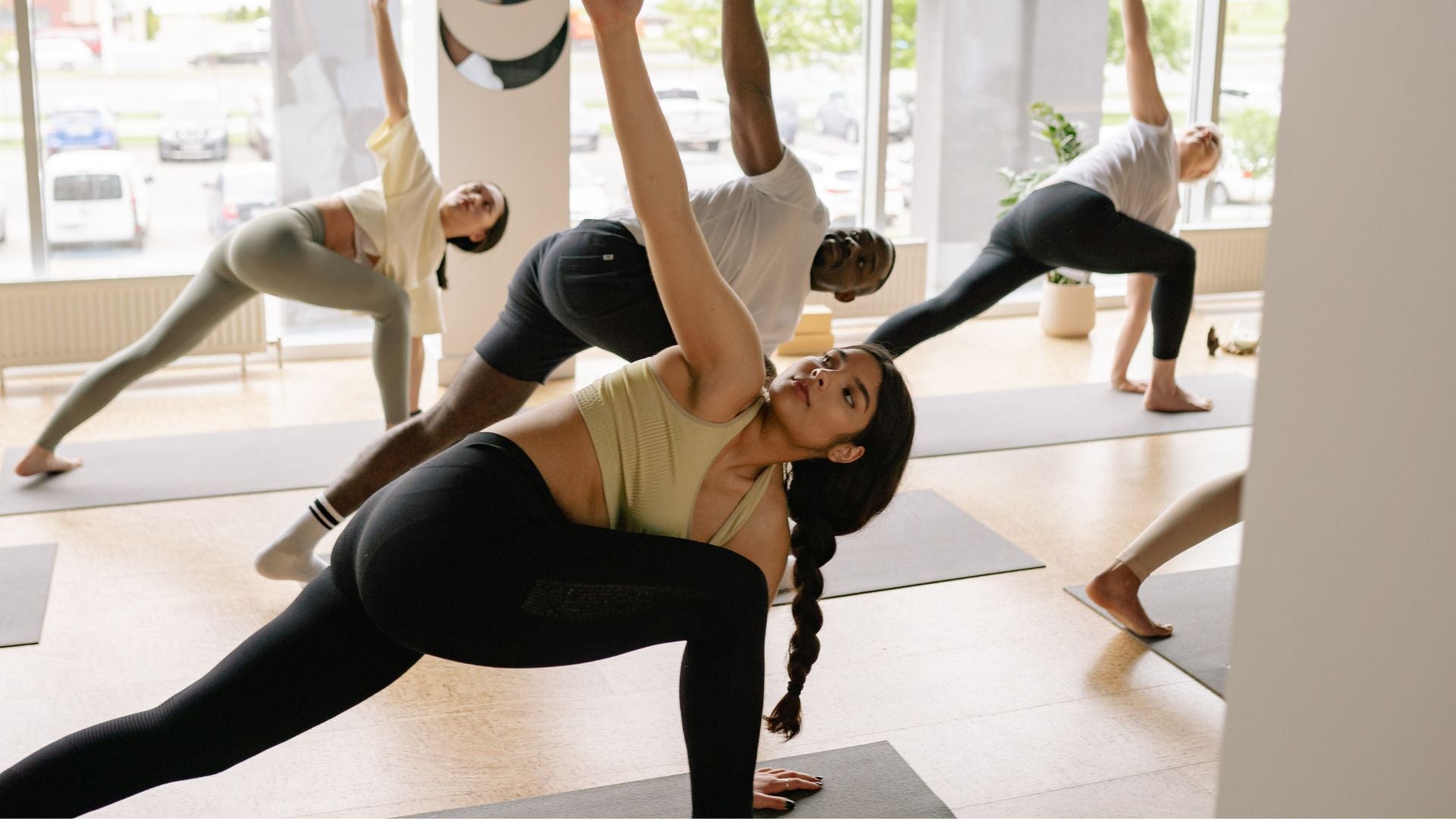
Your entire body will thank you.
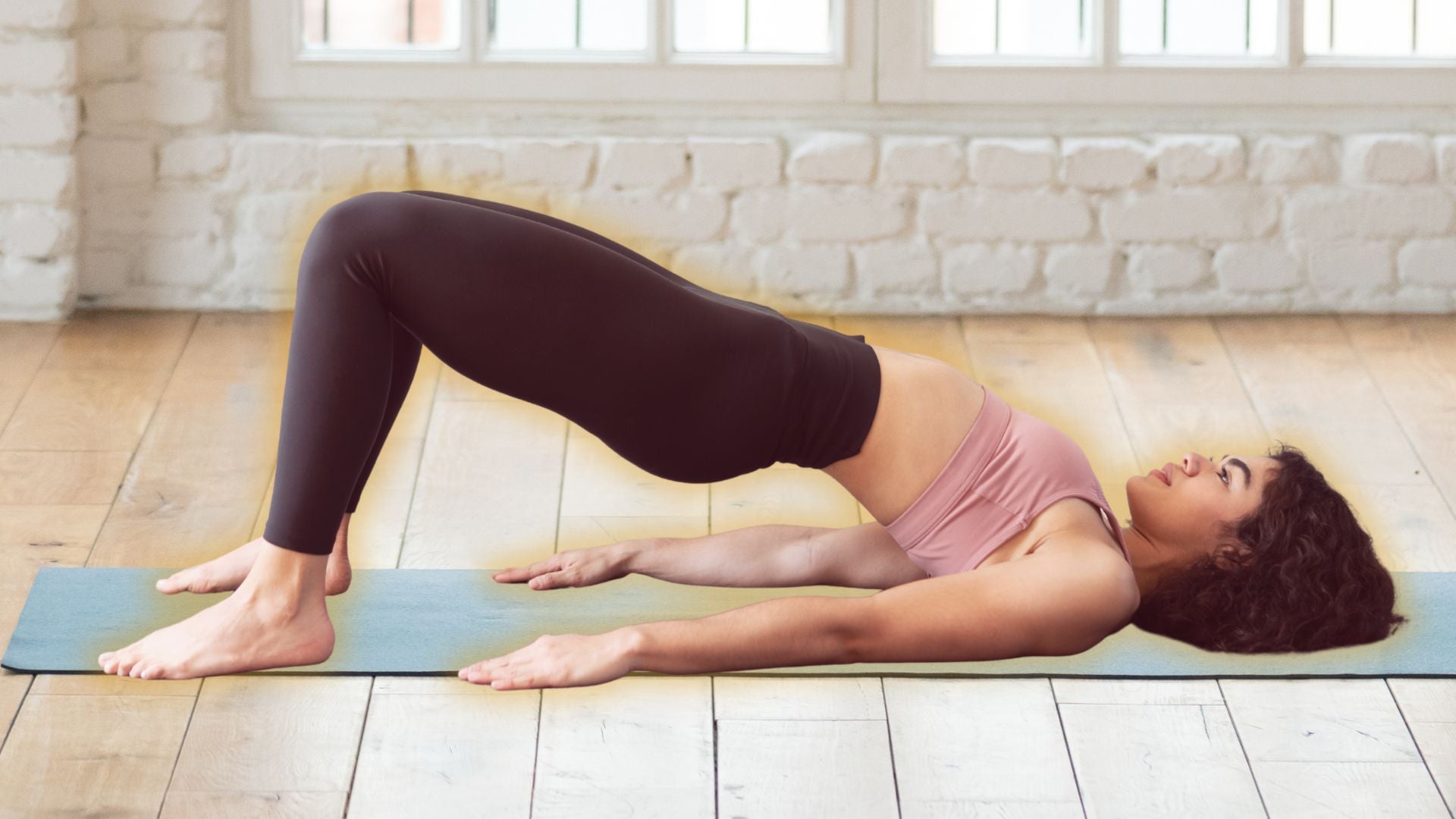
(Photo: Canva | Laura Harold)
Published February 22, 2026 09:13AM
As a yoga teacher, I’ve said it more times than I can count: “Engage your glutes.” And almost every time, students have follow-up questions along the lines of, “What does that even mean?” “Am I clenching? Squeezing? Tucking?” These questions are completely fair.
This speaks to how much the glutes are overlooked. So often in yoga teachers cue students to stand tall, draw their shoulders down, and breathe—but the glutes get left out. And that’s a missed opportunity.
Because strong glutes aren’t about aesthetics. They’re about how your body moves and feels.
Why Strong Glutes Matter
Your glutes are a team, not a single muscle. When we say “glutes,” we’re really talking about a group that works together:
- The gluteus maximus is the largest muscle that supports hip extension, in which your legs move underneath or behind you (standing up, climbing, backbends), and helps control external rotation of the thighs.
- The gluteus medius at the outer hip is a major pelvic stabilizer, especially in single-leg work (walking, balancing, stepping).
- The gluteus minimus is another stabilizing muscle that assists with hip stability and fine-tunes your posture and alignment in poses.
When the glutes aren’t strong, the rest of the body quickly overcompensates. You might notice a gripping or pinching sensation in your lower back, especially when you’re practicing lunges, backbends, and standing poses. Or your knees might collapse inward in Chair Pose or Warrior stances. Maybe it’s a pinchy or wobbly feeling in a single-leg balancing pose or posture fatigue in which your pelvis tips forward and your ribs push forward.
When your glutes are doing their job, your whole body tends to move more smoothly: your knees track more cleanly, your hips feels steadier, and your lower back doesn’t have to work overtime. The result is posture that feels more supported—especially if you spend a lot of your day sitting. When the glutes are online, your body falls into supported alignment:
- Your pelvis stabilizes for better balance and smoother movement.
- Your lower back shares load instead of overworking.
- Your knees bend without turning inward.
- Your hips feel supported, not compressed in backbends and other movements.
6 Yoga Poses for Strong Glutes
The poses below help strengthen your glutes while keeping your hips and lower back feeling spacious and supported.
In yoga, “engage your glutes” is rarely a full-on clench. Think firm and supportive, like you’re switching on the muscles enough to stabilize and steer—without jamming the pelvis forward or compressing the low back. When you engage the glutes, the core often turns on. So it’s less about forcing your body to tighten, and more about creating smart support.
If you are having trouble feeling the target muscles, add 8-12 slow pulses in the poses below, then hold the shape for a few breaths. The pulses wake up the muscle tissue; the hold teaches control and endurance.
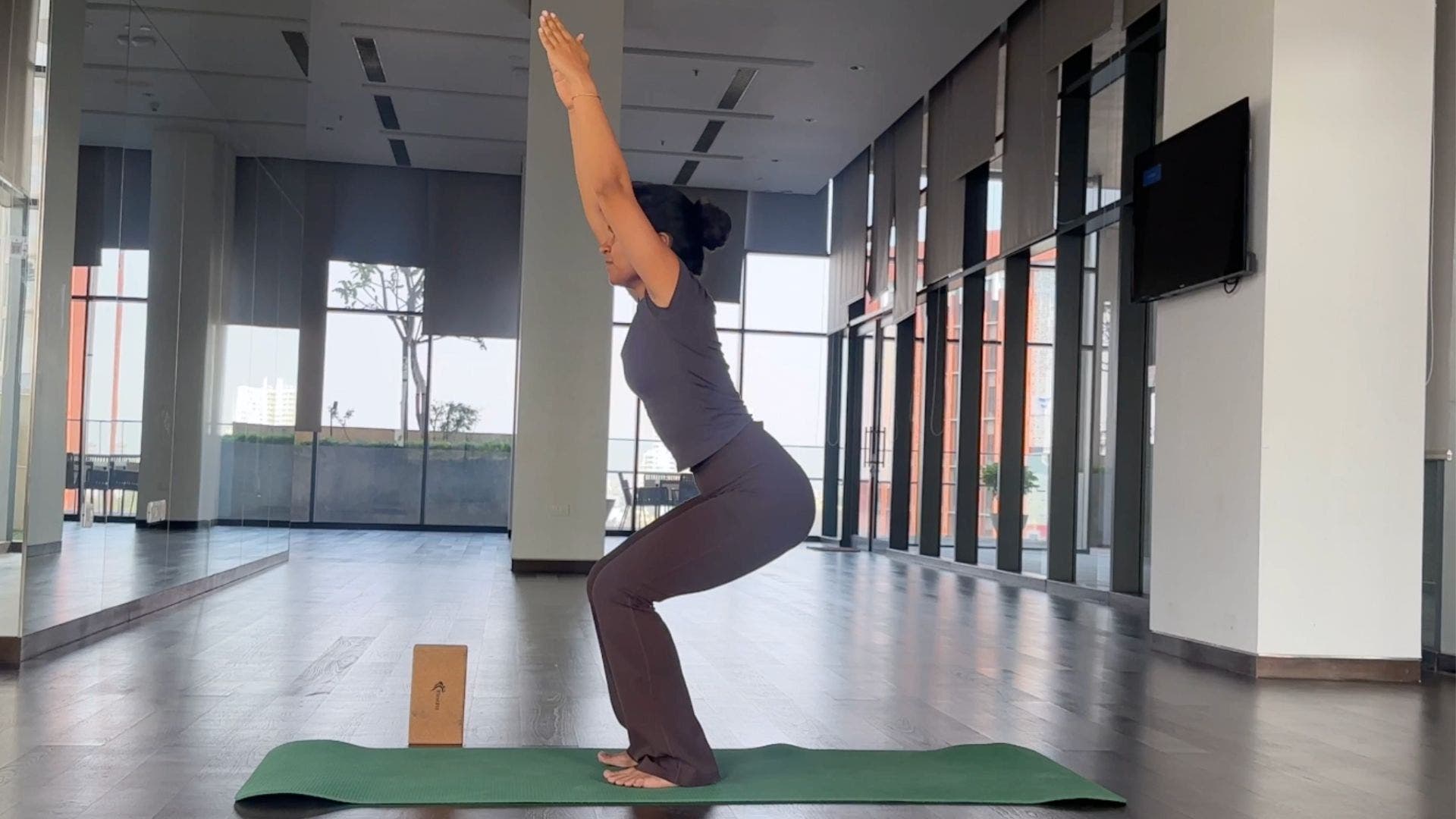
1. Chair Pose Variation
Stand with your feet hip-width apart. Bend your knees and sit your hips back as if reaching your hips toward a chair. Keep your weight in your heels, your chest lifted, and your spine long in Chair Pose. Let your knees track over your middle toes. Stay here for 3-5 breaths.
Variations to take in Chair Pose:
- Chair Pulses: Bend your knees more deeply, then lift up a few inches. Repeat 8-12 times at a slow and steady pace.
- Chair + Heel Lift: Lift both heels off the mat for 2 breaths, then lower. Repeat 3-5 times.
- Block Squeeze: Place a block between your thighs and lightly squeeze for 3-5 breaths.
- Kickstand Chair: Step one foot a few inches back, keeping your heel lifted and most of your weight in your front leg. Pause for 3-5 breaths and repeat on the other side.
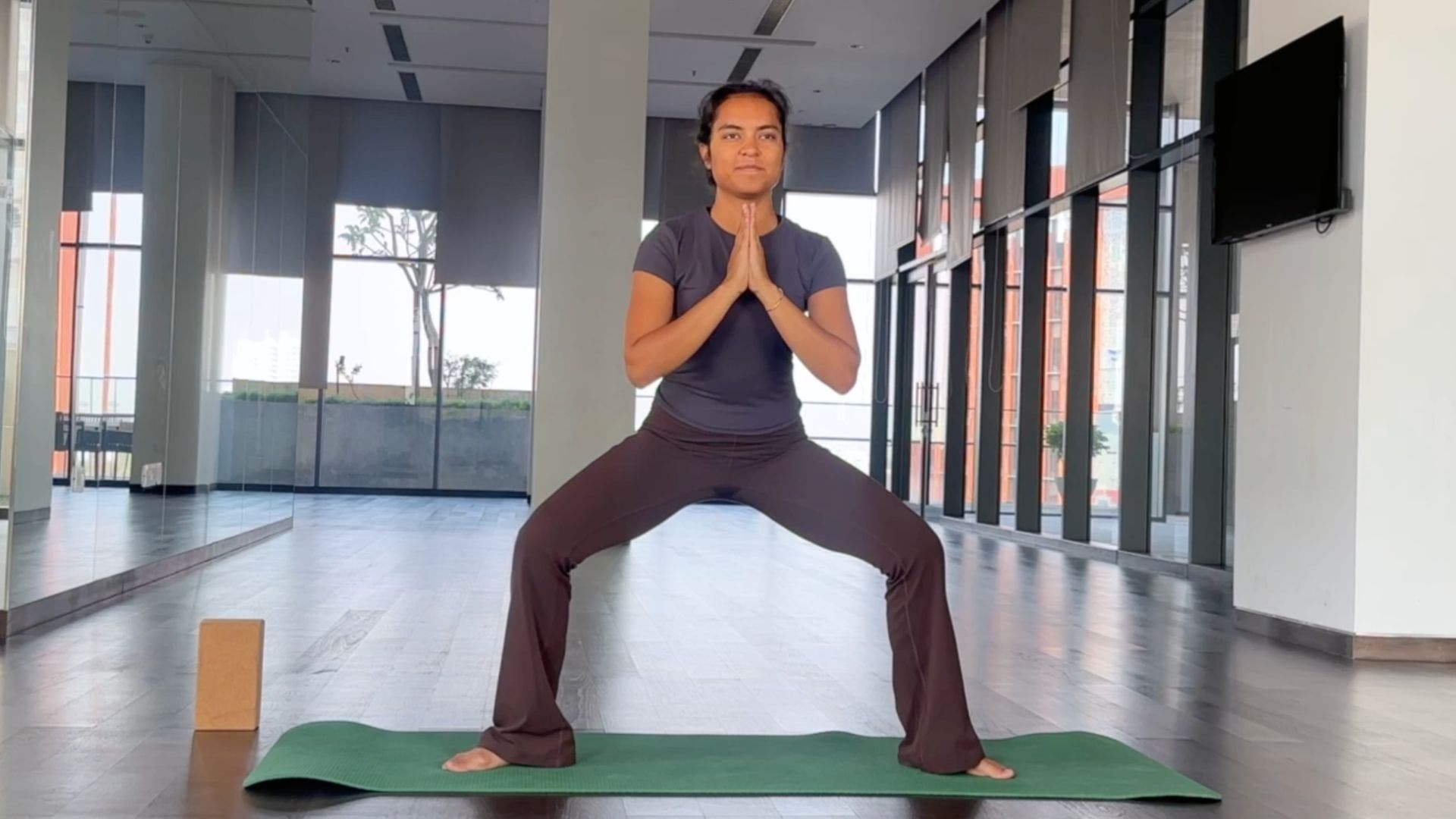
2. Goddess Pose
Step your feet wide, turn your toes out slightly, and bend your knees so they track over your toes. Reach the crown of your head toward the ceiling and press your feet into the mat. Stay here for 3-5 breaths.
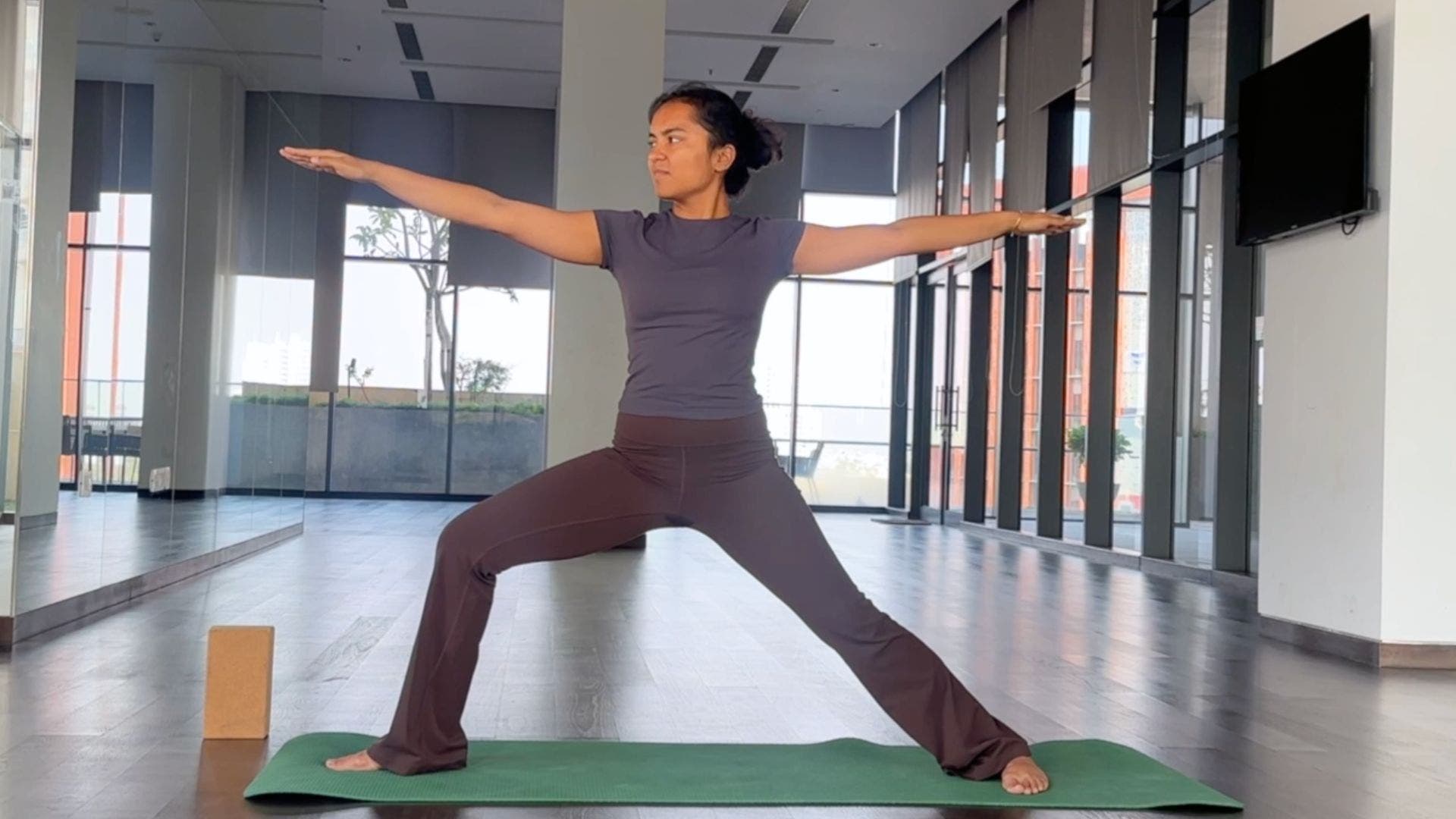
3. Warrior 2 (Virabhadrasana II)
Step your feet wide. Turn your right toes toward the front of the mat and angle your left toes in slightly. Bend your right knee, tracking it over your middle toes. Reach your arms straight out to the sides in a T shape and gaze over your right hand in Warrior 2. Stay here for 3-5 breaths. Repeat on the other side.
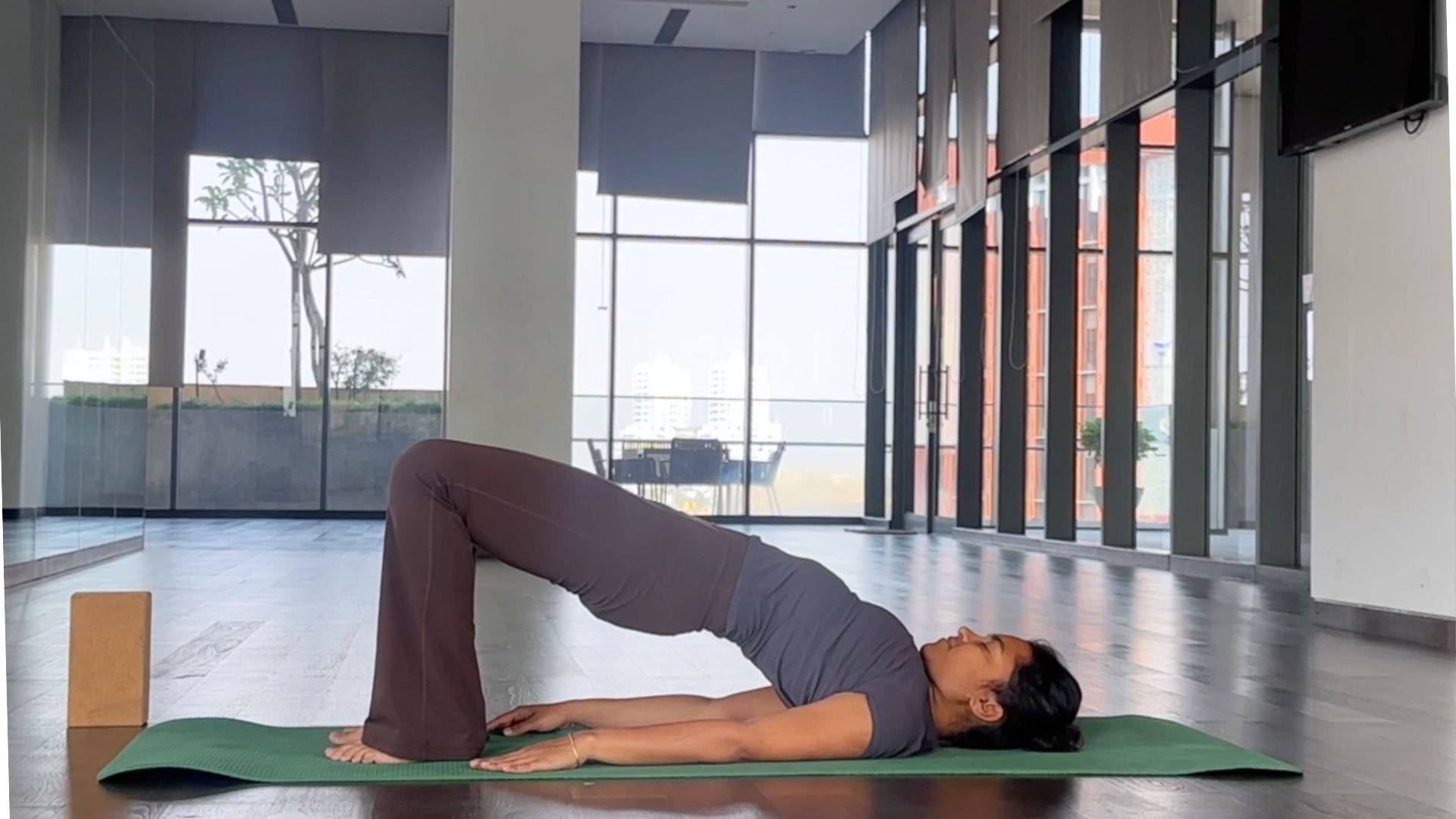
4. Bridge Pose (Setu Bandhasana)
Lie on your back with your knees bent and your feet hip-width apart. Press your feet into the mat and lift your hips in Bridge Pose. Imagine reaching your tailbone toward your knees. Stay here for 3-5 breaths, then slowly lower your hips to the mat.
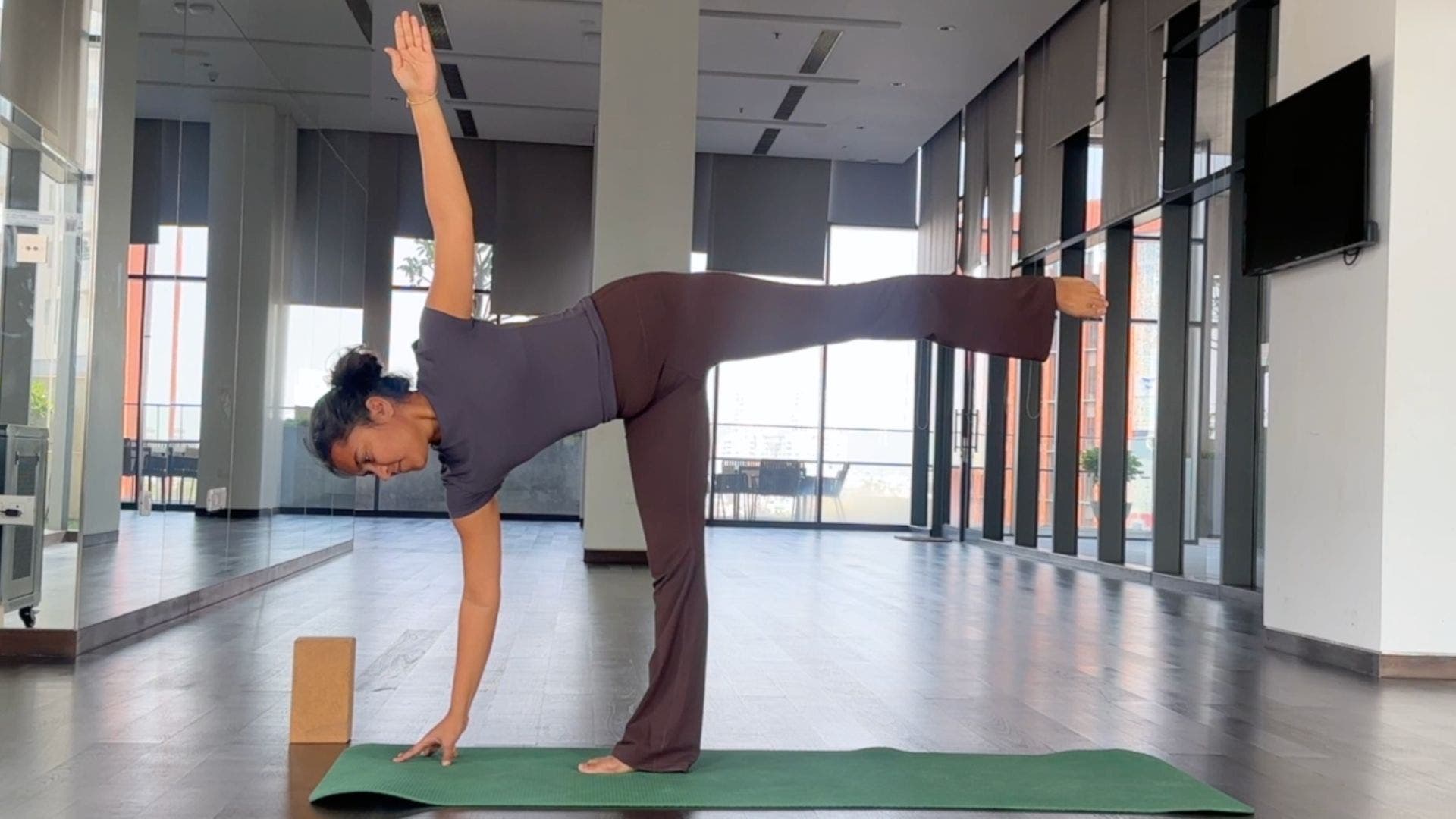
5. Half Moon (Ardha Chandrasana)
From High Lunge with your right leg forward, bring your right hand to a block a couple inches in front of your right foot. Shift your weight into your right leg and lift your back leg off the mat. Turn your chest and hips to face the left side of the room and move your right leg toward straight (keeping a micro-bend) in Half Moon Pose. Stay here for 3-5 breaths.
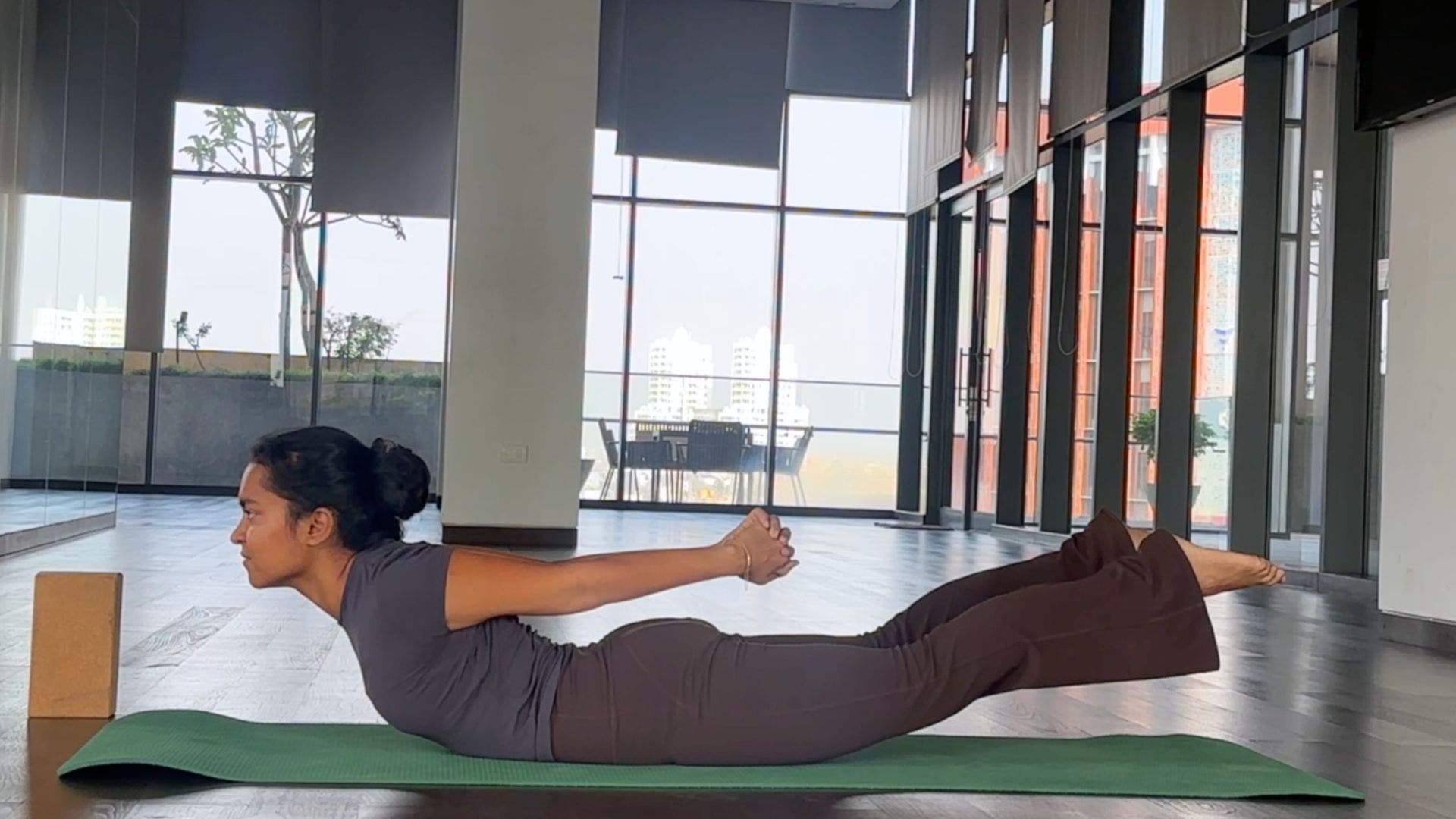
6. Locust Pose (Salabhasana)
Lie on your belly with your arms by your sides or interlaced behind you. Inhale and lift your chest and legs slightly, keeping the back of your neck long. Engage your glutes gently and lengthen through your toes in Locust Pose. Lower slowly. Stay here for 3-5 breaths.
“Engage your glutes” isn’t just a cue—it’s a strategy. By practicing strengthening yoga poses over time, you’ll feel the difference between gripping and supportive effort. With consistent effort, that quiet glute support changes the feel of your entire practice—on the mat and in everyday movement.