Published February 25, 2026 01:37PM
Yoga Journal’s archives series is a curated collection of articles originally published in past issues beginning in 1975. This article first appeared in the November-December 1990 issue of Yoga Journal.
Wheel Pose, also known as Upward-Facing Bow Pose (Urdhva Dhanurasana) is a deep backbend. To access it, we have to go beyond the superficial physical action of opening the spine and confront the deepest levels of fear and holding in the nervous system.
In doing this, we are able to locate the real restrictions to openness. Then, we must discover a way to heal these inner wounds so openness can become easy and natural.
Wheel Pose and Opening Up
As we open to our own pain, denial, and repression, we find that they directly relate to the release of tension deep in our nervous system. At the core of the body, in the solar plexus, is what Geeta lyengar, daughter of B.K.S. Iyengar, refers to as the “center of the fear complex.” We have all experienced the knotting up of the stomach and intestines that accompanies anxiety and fear.
As we seek to open this area physically, we must confront the sources of our fear.
This kind of opening, which is required for total freedom in Wheel Pose, is an ongoing process that is developed and refined in all aspects of life. The practice of the asana makes a powerful, unique contribution to this process, by honoring the wisdom of the physical plane and allowing the student to connect tangibly to the unfolding of consciousness as it manifests in the nervous system. In Wheel Pose, this unfolding eventually must take place in the fear complex and center spine.
How To Practice Wheel
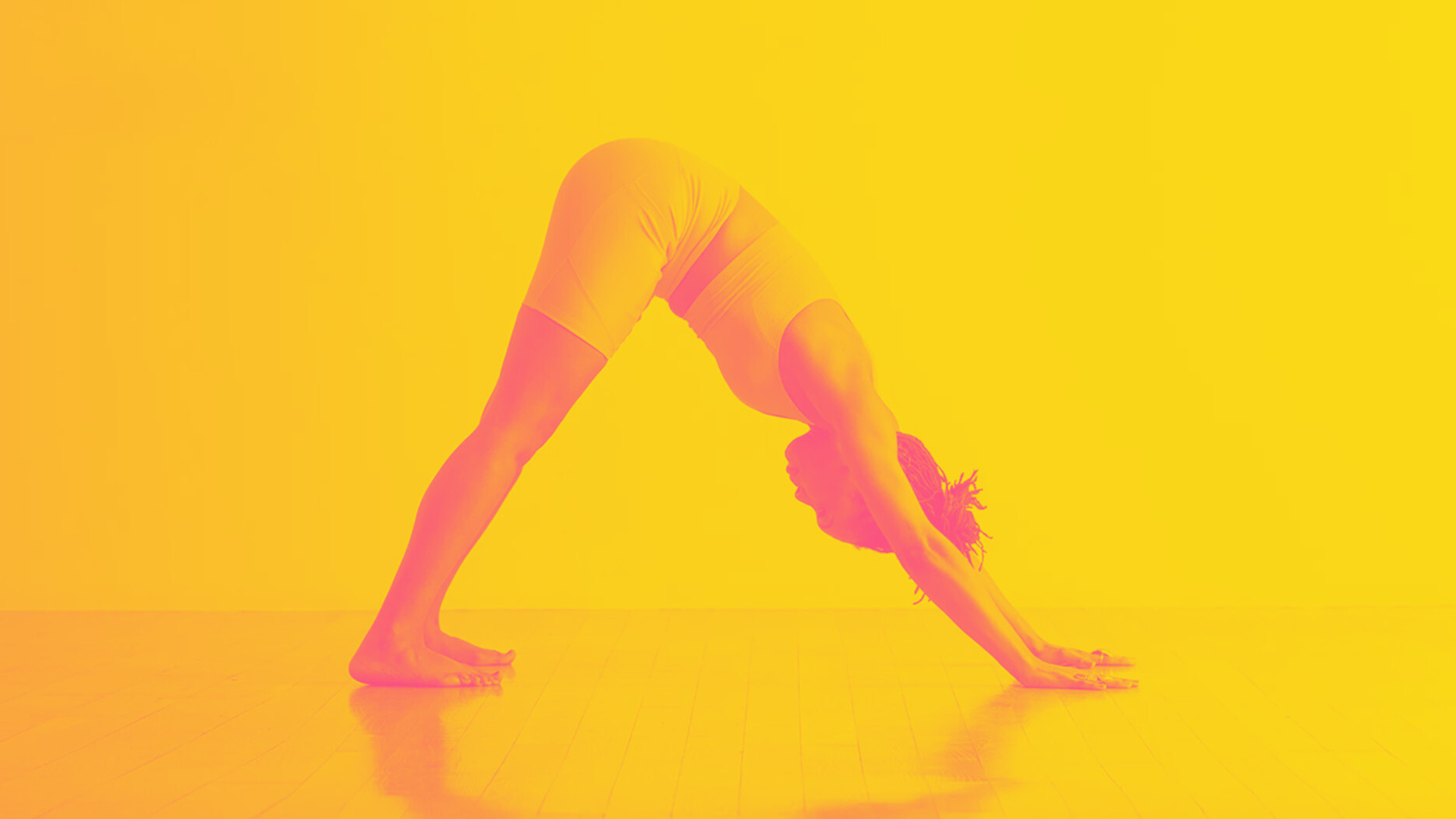
An intermediate pose, Wheel Pose is not recommended for most beginning students. The openness and awareness required in the shoulders and upper body can be learned through the practice of Downward-Facing Dog (Adho Mukha Svanasana); the openness of the hips and groins can be developed through the standing poses and simple groin openers; and the lengthening of the spinal column can be learned in Mountain Pose (Tadasana), some of the inversions, and beginning backbends such as Upward-Facing Dog (Urdhva Mukha Svanasana).
When enough strength and flexibility in the armpits and groins have been attained, you can begin the practice of the pose. Lie on your back. Bend the knees and bring the feet toward the buttocks, keeping them parallel or slightly turned inwards. Place the hands on the floor just below the shoulders, fingers pointing toward the feet with the elbows shoulder-width apart. Musclebound students should minimize strain by widening the distance between the hands and feet to lessen the intensity of the arch.
Activate the pelvis and legs, strongly extend the buttocks and coccyx toward the heels, and lift the pelvis off the floor. Stabilize the hands and elbows and use the shoulderblades to lift the chest until the top of the head rests on the floor. Wait a breath or two.
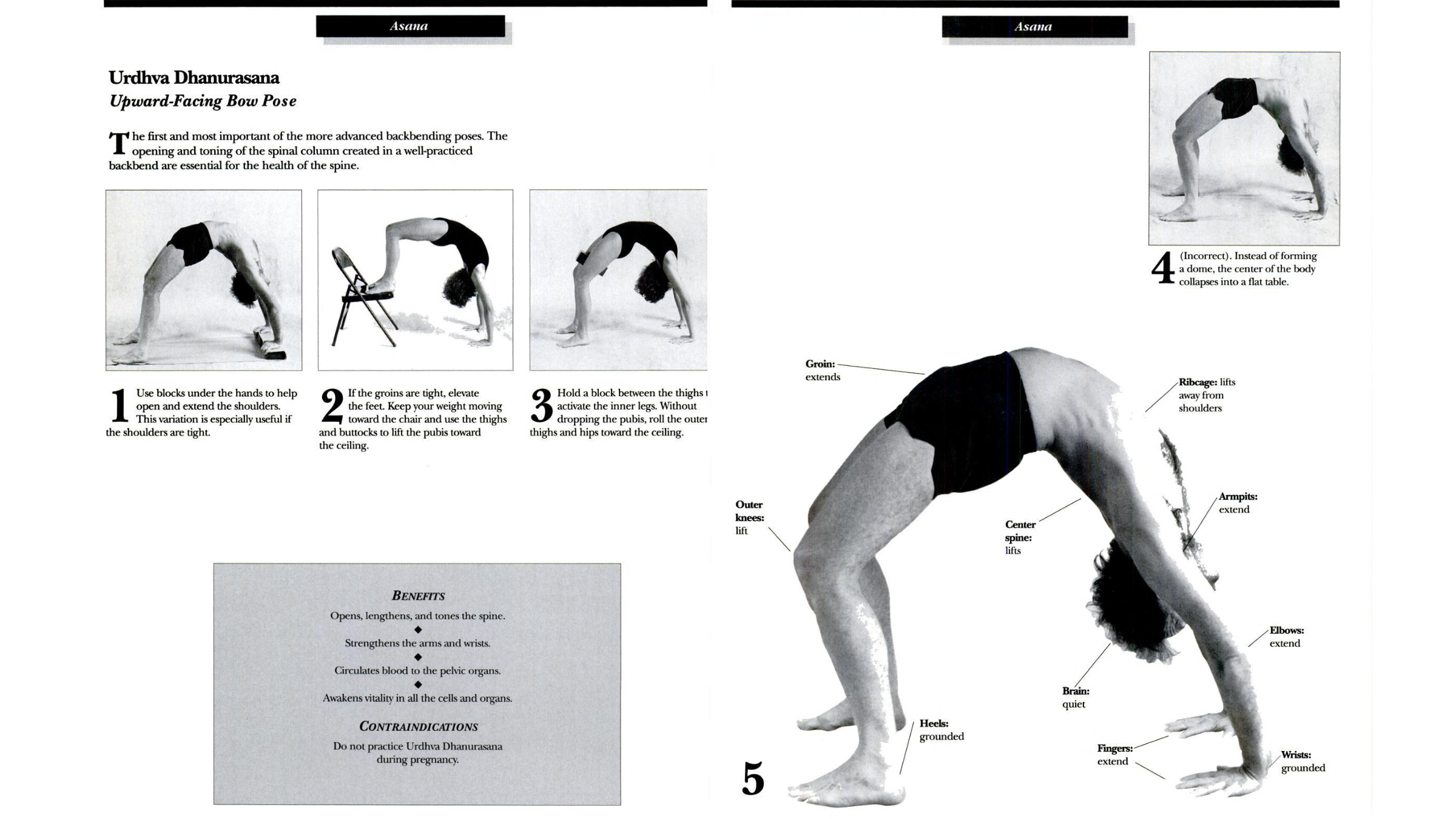
Then, pressing strongly and evenly into the legs and arms, lift the pelvis, rib cage, and spine into the completed position (Figure 5). The leg muscles must work powerfully, but use them to lift the pelvis, not to push the weight onto the arms. To release lower back compression, lift the heels, widen the sacrum, and lift the outer pelvis. Maintain this height and width as you lower the heels.
To come down, slowly relax the grip of the muscles to release the body to the floor.
Keep the lumbar and cervical spine lengthening as you come down. Rest for several breaths. Repeat five to 10 times. The first few times, hold the pose for only one or two breaths. When the body is warm, you can stay in the pose for longer periods. Do not stay in Wheel if it hurts and you cannot adjust your body to alleviate the pain.
Many students have restricted mobility, making the completed position painful or impossible. To overcome restrictions in the shoulders, elevate the hands onto blocks (Figure 1). Place the blocks against the wall for support, using as much height as necessary, and extend the rib cage away from the shoulders. Lengthen through the armpits as much as possible, without jamming the thoracic vertebrae into the body.
Similarly, elevating the feet on a chair can help with tightness in the groins and pelvis (Figure 2). Elevating the feet reduces the strain in the lumbar region, permitting the correct action of the coccyx, buttocks, and groins. This variation challenges the arms, which must work strongly to create enough lift.
To lighten the load on the arms, keep the pelvis close to the chair when pressing up from the floor. As you lift up, move the pelvis, coccyx, and torso toward the chair and lift the weight vertically with the legs and buttocks. (Using the legs to push the pelvis away from the chair, which drives the weight of the body onto the arms, is a bad habit that will make this lift difficult.) Use the extra freedom in the groins to further lengthen out of the shoulder joints.
Because tight groins limit the opening of the anterior spine, beginners often compromise by turning the feet out and allowing the legs to splay. These habits will create two obvious problems. First, the posterior sacral region will be compressed from both sides.
Second, the adductor groins (the upper inner thighs) will be pulled up away from the hamstrings (where they belong) and will fuse with the front groins, locking the pelvic floor and disturbing the breath. To correct these problems, use a block between the thighs to hold the adductors in and down (Figure 3). Grip the block firmly and roll it toward the floor, without losing the extension of the anterior spine or the grounding action of the buttocks, coccyx, and heels.
In the completed position, the arms and legs gradually (sometimes over a period of years move toward vertical. The armpits and groins must extend maximally. The center spine can only begin to open when the arms feel connected with the lower torso and the legs feel connected with the upper torso. In Figure 4, the legs and pelvis are lifting and the armpits are extending somewhat, but there is no connection between the upper and lower torso.
So the center body sinks and locks, giving the pose a table-like flatness across the abdomen. In Figure 5, the anterior spine opens more, the diaphragm releases, and a rounded dome shape begins to appear. To create this dome, the posterior muscles in the midspine must be activated and drawn down toward the coccyx and heels. The psoas must release and lengthen into the arms. Inhale the diaphragm down into the pelvis, maintaining the height and length of the spine as you exhale and the diaphragm releases.
Refining and Deepening Wheel Pose
In all backbends, we tend to overwork those parts of the spine that normally are in a backbend (the inward curves in the lumbar and cervical sections) and avoid opening those areas of the spine that do not have a natural backbend (the outward curves of the thorax and sacrococcygeal areas). The first of these problem areas we can examine in Wheel Pose is the sacrolumbar spine, where the lower back meets the sacrum.
In Wheel, the postural prana (the natural movement of the muscular energy) should flow up the front of the spine and down the back. But in this pose, the posterior portion of the sacrum and coccyx often cannot maintain the downward movement because of weakness in the gluteus maximus and hamstrings; and the anterior portion, restricted by tight front groins and iliopsoas muscles, cannot release upward and open. Thus, the pelvic spine remains tight and closed, the lumbar spine overarches, the back muscles harden, and pain rather than opening results.
To solve this problem, the gluteus maximus, hamstrings, and legs must work strongly to widen and elongate the posterior sacral coccyx region, extending it toward the heel bones. The groin and anterior spinal muscles must release and lengthen upwards.
These synchronous actions allow the back-bending curve to be distributed evenly along the vertebrae. (To tighten the posterior muscles without releasing the anterior muscles upward leads to further compression and back pain.)
Another difficult region is the cervical-thoracic junction, where the neck meets the upper back. As in the sacrolumbar region, the cervical spine tends to overarch and the thoracic spine tends to remain tight and closed. If not corrected, this habit will lead to headaches and neck problems. In this area, the shoulder girdle and arms must contribute to the correct action. In Wheel Pose, the full extension of the arms begins from the shoulder girdle (the collarbones and shoulder blades).
The inner shoulder blades must release away from the neck (following the downward action of the back body) and stabilize by pressing firmly into the back ribs. The collarbones should widen away from the sternum. From the achromioclavicular joint (where the collarbones connect with the shoulders) the arms should extend into the ground.
When the arms are stable and grounded, the rib cage can lift away from the shoulders, and the upper vertebrae can release and extend, opening the cervical region safely. This action can be learned in the Downward-Facing Dog Pose and refined and strengthened in the Full Arm Balance to facilitate the practice of Wheel.
Building the Dome
The thoracolumbar junction is the area of the center spine and the fear complex. B.K.S. Iyengar refers to the opening of this region through backbending asanas as “building the dome.”
Building the dome is not easy. The spinal vertebrae in the center of the torso are extremely difficult to access with conscious intelligence. It is easy for us to move the upper spine using the arms, and that movement helps us feel that area more easily. Likewise, the pelvis and legs help us move and feel the lower spinal column. But the center spine cannot be reached by such direct leverage.
In addition, the diaphragm (the large respiratory muscle) attaches at the center spine, carrying psychological baggage in the form of physical tension. Our thoughts and emotions immediately affect our breathing.
To open this region and build the dome, several simultaneous actions must take place.
The posterior erector muscles in the mid-spine must continue the correct downward action, receiving the movement from the shoulder blades and upper body and feeding it into the coccyx and heels. The upward release of the psoas on the anterior vertebrae must continue from the inner groins and pelvis, through the upper lumbar and lower thoracic spine, and into the arms.
Although it attaches to the anterior spine, and although the anterior spinal muscles release upwards into and through the thoracic cavity, the diaphragm moves downward toward the pelvis with each inhalation. The pelvic floor must breathe along with the diaphragm. The correct action through the groins and sacrococcygeal spine allows the pelvic floor and respiratory diaphragm to move in synchrony.
The building of the dome releases the diaphragm from its confusion with other muscle fibres of the mid anterior spine, allowing the vertebrae in the lumbar-thoracic junction to release and breathe. Thus the nerves emerging from the vertebrae are soothed and deeper areas can be awakened.
As this happens, deeply held fear and tension will inevitably be released. There are many sources of fear in our lives, but they all manifest similarly in the nervous system: The breath and the organs of the midbody constrict, and the muscles in this region tighten.
As we liberate the breath and the muscles of the midbody, we must be prepared to work with this fear.
Sometimes the source of the fear is obvious, such as confronting a new and difficult situation. When learning Wheel, for example, there is a real possibility of being hurt. But by preparing the body ahead of time with more basic poses, using props for support, and approaching the pose with patience and persistence, you can overcome this fear.
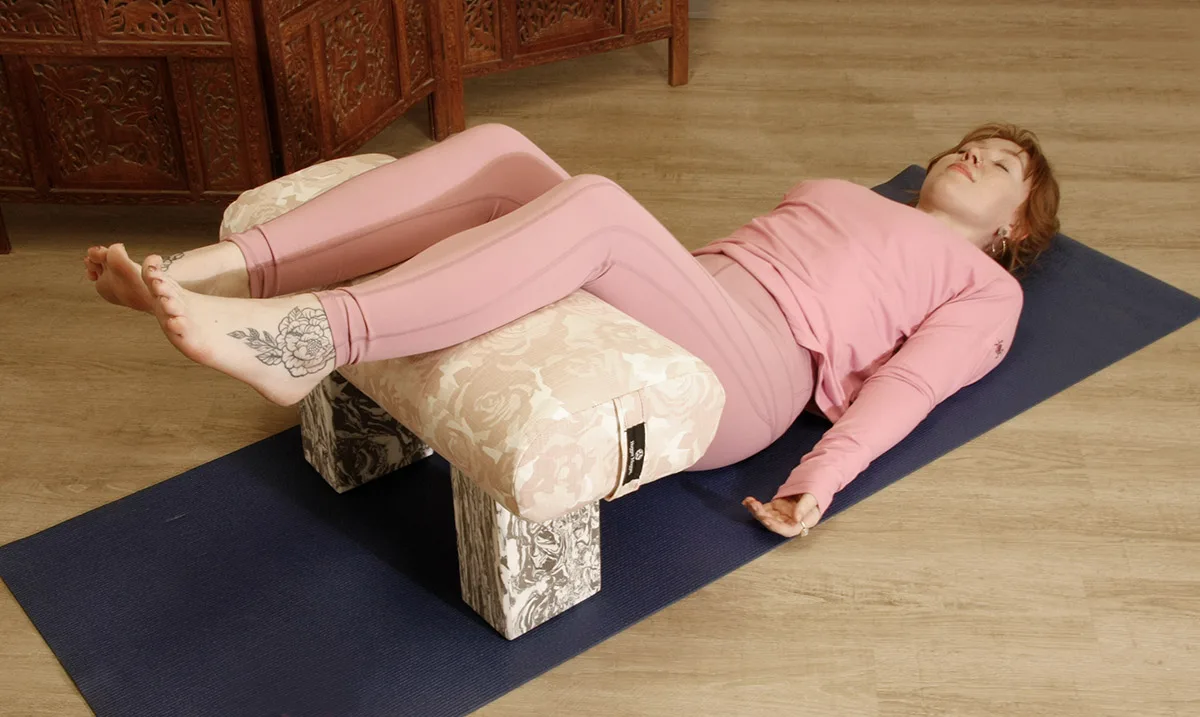
At other times the fear comes from the deeper levels of the unconscious. Much more self-awareness and self-analysis are necessary to work with these fears. Many of the supported abdominal opening positions, such as Reclining Bound Angle Pose (Supta Baddha Konasana), Reclining Hero Pose (Supta Virasana), or a simple supported backbend over a bolster, will give support to the body and allow these deeper fears to come to the surface more slowly, so they can be examined. You may experience flashes of emotion and insight, linking the physical blocks to past events.
The energy that is thus released in the asana can be used to further examine one’s own consciousness. Stuck in the physical plane, our culture denies our psychological and emotional pain, and we escape into intense activity to hide from our own reality.
Some of us escape into conspicuous consumption. Others escape into a spiritual practice—whether it be meditation or an intense hatha yoga practice—that never examines our underlying psychological drives and motivations. We are now evolving the tools and insights necessary to transform these more subtle blockages into constructive growth. It is important for Western spiritual practitioners to participate in this very important phase in our development.