Published March 11, 2026 03:09PM
For many of us, existing in the modern world comes with an inherent desire to slow down. This is probably why the vagus nerve—the main nerve of the parasympathetic nervous system—is cropping up all over the digital landscape as a turnkey entryway to a calmer existence. Which is true! Kind of.
“The vagus nerve has become a popular wellness concept because people intuitively understand that stress lives in the body,” says psychologist Terri Bacow, PhD. “But it’s important not to oversimplify.”
“Resetting” the vagus nerve is a clicky approach that seems to promise a quick fix to your chronic stress, making accessing a calmer state seem like a hackable feat. But if you want to meaningfully improve your emotional resiliency and stress recovery, experts suggest that small, body-based practices repeated regularly are your best bet.
What Is the Vagus Nerve?
“Vagus” comes from the Latin word for “wandering,” which makes sense given the scope of the neural pathway’s influence.
The nerve is one of the main lines of communication between your body and your brain, according to functional neurologist David Traster, PhD, DC, MS, DACNB. “It begins deep in the brainstem and runs down through the neck into the chest and abdomen, branching out to the heart, lungs, stomach, intestines, liver, pancreas, and more,” he explains. “No other cranial nerve travels this far or influences so many organs.”
Consider the vagus nerve your calming superhighway—one that directly influences how your body responds to stress. Bacow notes that when the nerve is functioning well, you recover more quickly, feel emotionally steadier, and move more easily out of fight-or-flight mode. When it’s underactive, the opposite occurs. “People may feel chronically wired, anxious, or exhausted,” she says.
As the nerve touches so many systems, the benefits of proper functioning don’t stop with a chill demeanor. Traster explains that improved digestion, more stable heart rate and blood pressure, and improved recovery after exertion and illness all result from a well-tuned vagus nerve.
So it makes sense that everyone is seeking ways to ensure that our vagus nerve is well cared for. But as with most things that are worthwhile, bolstering the vagus nerve is a marathon, not a sprint—and certainly not an on-and-off toggle.
The Vagus Nerve Reset
You’re a human being, not a computer. As such, experts insist there is no reset button for your vagus nerve.
“The vagus nerve isn’t a magic switch and it’s not something you can ‘hack’ overnight,” says Traster in response to the trending quest to “stimulate,” “tone,” or “reset” the vagus nerve. Instead, supporting your vagus nerve is all about helping the body and mind downshift from stress mode to a more regulated state. And that process requires patience.
Think about it: the sense of urgency and over-activation that spun you up into a stressful state is not what’s going to help you slow down. The undoing should be slow and steady. Allowing a calmer inner world comes down to committing to new habits and ways of being.
Experts explain that since the vagus nerve reflects the overall health of your nervous system, change depends on stress levels, sleep, relationships, and overall physical health. “When people focus less on ‘fixing’ the nerve and more on creating conditions where the nervous system feels safe and supported, that’s when the biggest benefits tend to show up,” says Traster.
In most cases, that means exploring self-guided practices that activate parasympathetic nervous system. “Consistency (and repetition) matter more than intensity,” says Bacow. “Nervous system regulation that happens over time is most meaningful.”
6 Ways to Support Your Vagus Nerve
The following activities work because they send signals through the vagus nerve to the body that you are safe enough to relax, explains Traster.
1. Get More Rest
Rest is one of the best ways to care for your body and mind, both in general and by way of your vagus nerve. The sleep equation is twofold: getting more sleep can aid in the functionality of your vagus nerve, and a functional vagus nerve is likely to improve your quality of sleep.
When in doubt, lie down.
2. Hum, Chant, or Sing
Humming (also known as bee breath or Bhramari Pranayama), is proven to activate the parasympathetic nervous system. If humming isn’t your thing, chanting a mantra is an ancient means of stilling your thoughts in ways that quiet reactivity in your body and mind. Singing can also improve both breathing patterns and emotional regulation.
3. Chill Out—Literally
Cold exposure, whether that looks like splashing your face with chilly water or ending your shower with a cold spray, activates your vagus nerve and reduces physiological stress. Additionally, research shows that introducing cold water during stressful moments improves your recovery from that stress.
4. Quiet Your Mind
Meditation and mindfulness are proven to calm the mind and body. Do what works for you: sit in classic meditation, take a mindful moment in nature, try a sensory deprivation tank, or get grounded through glimmers. Whatever it takes to root your mind in the present moment.
5. Move Your Body
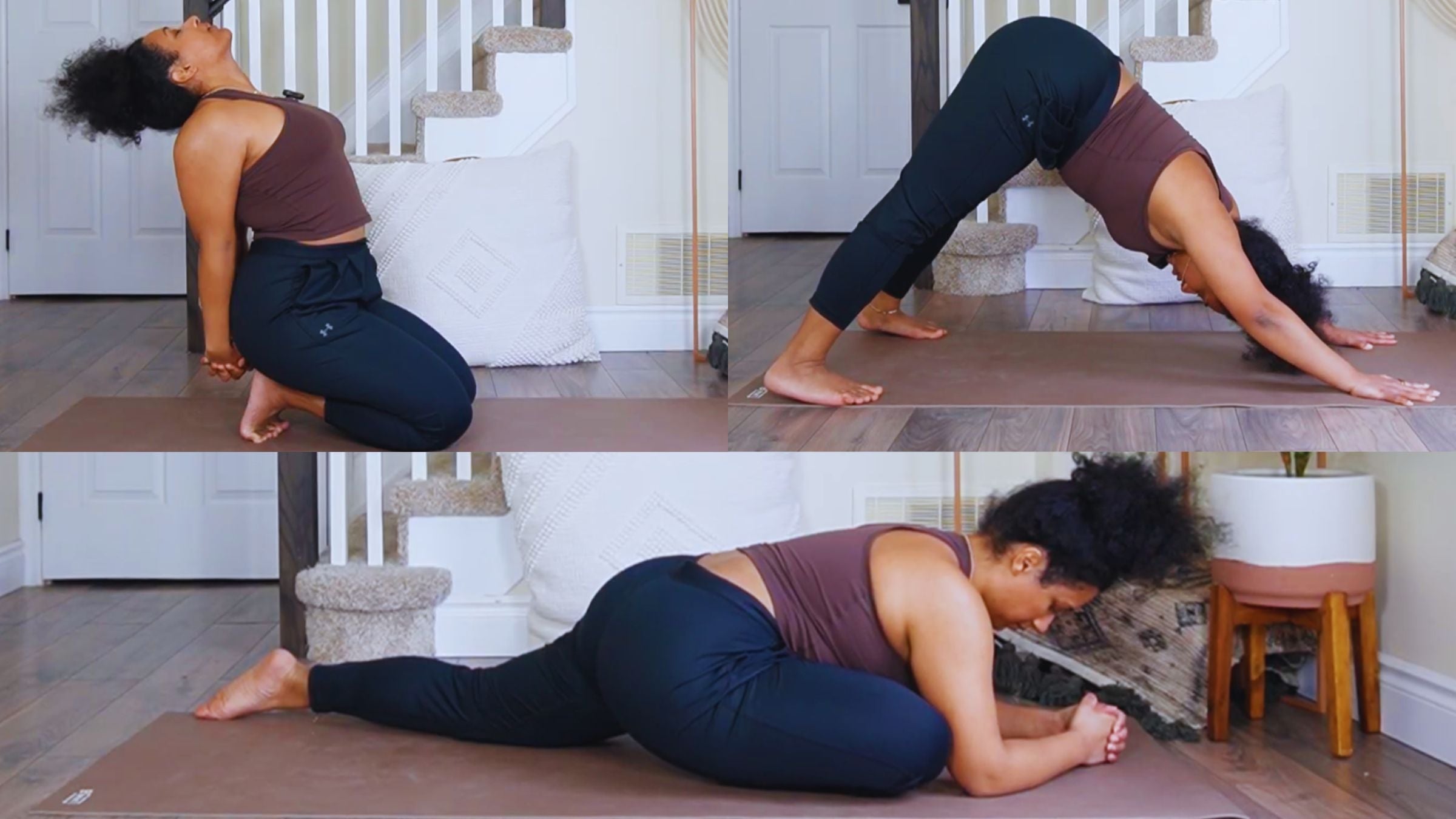
Heading to a yoga class, the gym, or a favorite walking trail supports all of your internal systems, reducing stress and boosting well-being. This includes your parasympathetic nervous system and, thus, your vagus nerve.
6. Breathe
Bacow considers diaphragmatic breathing to be the single most important thing you can do to care for your vagus nerve. “Taking deep, slow breaths instantly activates the parasympathetic nervous system and puts the body into a state of calm,” she says. This makes sense given that your breath is directly linked to your physiology, emotions, and mental state.
Perhaps this is the closest to a simple vagus reset that you’ll get: inhale, exhale. Repeat.