After toe-tapping and finger-fidgeting in Savasana, I found something new to ease my nerves.
(Photo: Canva | Laura Harold)
Published March 19, 2026 10:10AM
I started practicing yoga about 20 years ago simply out of curiosity. As a recent college grad and former Division I college cheerleader, I thrived in a setting where I was multi-tasking loads of coursework and intense team practices. It was transitioning to doing less that I found challenging. In other words, I’m as Type A as they come.
Vinyasa yoga made me feel as if I was pulling the pieces of my personality together. Things were fast-paced and sometimes messy as I moved through Plank, Lunge, Chair, and Half Moon. At the same time, yoga slowed me down. As my body came into spinal twists and Pigeon Pose, I felt a grounding energy on the mat that I couldn’t find anywhere else.
Still, I cycled through my mental to-do list during Sun Salutations and tapped my toes and fidgeted my fingers in Savasana. The difference was that yoga made me more aware of it.
Along the way, I became curious—was there another yoga modality besides vinyasa that could calm my Type A tendencies even more? Years later, I found my answer.
After signing up for a 200-hour yoga teacher training (YTT) and then backing out (after all, I thought, should someone as fidgety as me be teaching stillness??), I eventually took YTT and graduated. I was content teaching in-person and virtual vinyasa classes until one of my friends, also one of my students, told me she broke her foot. She said that she needed to take a hiatus from yoga. I could tell from the sound of her voice that she was not okay missing out. As someone whose life revolved around yoga, I understood her concern. So I got to work.
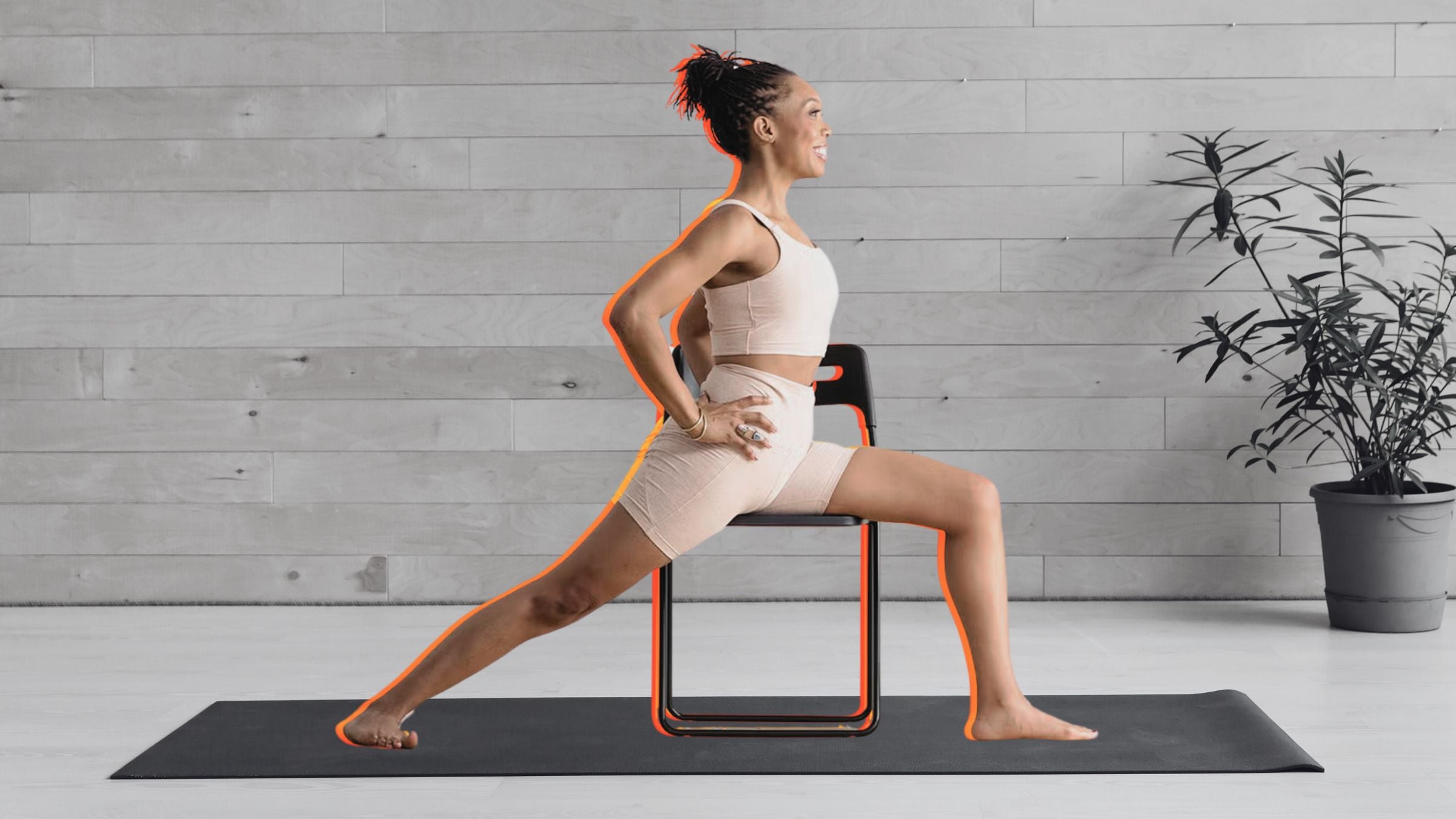
I spent hours in my home gym with a chair, figuring out how I could tailor traditional standing yoga poses to it. I also found myself researching foot injuries to make sure I was more in-tune with how to offer the chair as an option for my friend (and any others who needed it). For about six months in my virtual yoga classes, I offered chair variations for every pose I cued.
At first, I was completely nervous teaching traditional poses with chair variations at the same time. But I developed my own system. First, I’d cue a pose without the chair. Then I’d demonstrate with the chair. The more we practiced, the more familiar all of us got with adapting the poses.
I’ll admit, I originally thought using a chair during yoga was mostly for older adults. But while practicing Warrior 2 in a chair during my virtual class, I was surprised that the support from the prop allowed me to lower my hips, bend my front knee more, and deepen the stretch more than when standing. I also came to love a standing balance sequence utilizing the chair—Tree, Dancer, and Warrior 3—as support. The chair let me focus on how I felt in the pose and less on “nailing” what it looked like.
I also felt my perfectionist tendencies dissipate while using a chair more so than in other yoga classes. It was as if the support of the chair unburdened my body and mind at the same time, easing what anxieties I had.
After practicing and learning how to teach yoga poses with a chair for six months, I started teaching my virtual class from the studio. My classes typically start seated with neck and shoulder stretches, working our way down to the hips and lower body. I absolutely love seeing my mom, mother-in-law, and students who usually do more fast-paced practices pull up a chair on a weekly basis.
I’ve also learned to bring my chair yoga practice into my life when I feel overwhelmed, using an office chair (with the wheels locked), a dining room chair, a metal folding chair, even a beach chair at various times. The chairs all serve the same purpose—providing stability for when I need extra support, especially during times when my Type A personality needs to come down notch to Type B. I’ve learned that all of us could use extra support.