Published December 23, 2025 10:52AM
You’re lying in bed, staring into the darkness, and suddenly an urgent work email pops into your head, unbidden. Or maybe it’s that shampoo you forgot to add to your shopping list, or the need to fill up your gas tank in the morning. Your lower back is twinging and your shoulders are tensing in response to your thoughts of all the things you need to do, or already did, or didn’t do. It’s a pretty universal experience. Despite being totally exhausted, you’re unable to drop into sleep.
“When it comes to sleep, the nervous system has to believe it’s safe to relax,” says Alicia Dugar Stephenson, yoga teacher trainer and yoga professor at Rice University. “I tell my students all the time, if you climb into bed with tight shoulders, a locked-up lower back, or your hips gripping for dear life, your body is not going to relax just because you want it to.”
You might be wondering how, exactly, you regulate the nervous system enough so that a restful night of sleep is possible? The answer is yoga.
How Yoga Helps With Sleep
The underlying philosophy of yoga is to use poses to calm the mind, so that you can experience your true nature. After all, the Yoga Sutras of Patanjali defines the practice as the stilling of the changing states of mind. That’s exactly the key to getting a good night’s sleep, according to Jivana Heyman, founder of Accessible Yoga. “Otherwise, you might lie in bed ruminating on the past or stressing about the future,” he says.
Yoga can chase away your cluttered thoughts through a combination of movement, breathing, and focused attention, preparing you for sleep. Research even supports this. Studies have found that yoga can help people with insomnia fall asleep faster, sleep longer, wake up less during the night, and overall sleep more efficiently.
Yoga Before Bed: 9 Best Yoga Stretches to Help You Wind Down
The following yoga poses and breathing techniques can help ease your body toward a state of stillness so that you can drift into a restful night’s sleep.
If you choose to practice yoga in bed (which is totally doable!), move any blankets out of the way, but keep your pillows nearby to use as props.
You may find the bed isn’t supportive enough for all poses. “The soft surface [of the bed] lacks the resistance of practicing on the floor with a yoga mat,” says Heyman. In that case, you might practice most of the poses on your yoga mat before transitioning into bed for Savasana, meditation, and breathing techniques.
1. Simple Stretches
“[These] gentle movements are a great way to release stress in your joints and prepare the body to rest,” says Heyman. Work your way mindfully from the bottom of your body up.
- Ankle rolls: Make gentle circles with your ankle joints in both directions.
- Windshield wipers: Lie on your back with your knees bent and your feet flat on the bed or mat. Inhale and lower your knees to one side. Exhale and lower them to the other side. Repeat 3-5 times.
- Wrist rotations: Gently rotate your wrists in both directions.
- Fists: Inhale and open your hands, spreading your fingers wide. Exhale and close to soft fists. Repeat a few times.
- Shoulder shrugs: Inhale to lift and squeeze your shoulders toward your ears. Exhale and lower your shoulders, drawing them away from your ears. Repeat 3-5 times.
- Neck rolls: Slowly roll your head from one side to the other.
2. Self-Hug or Happy Baby (Ananda Balasana)
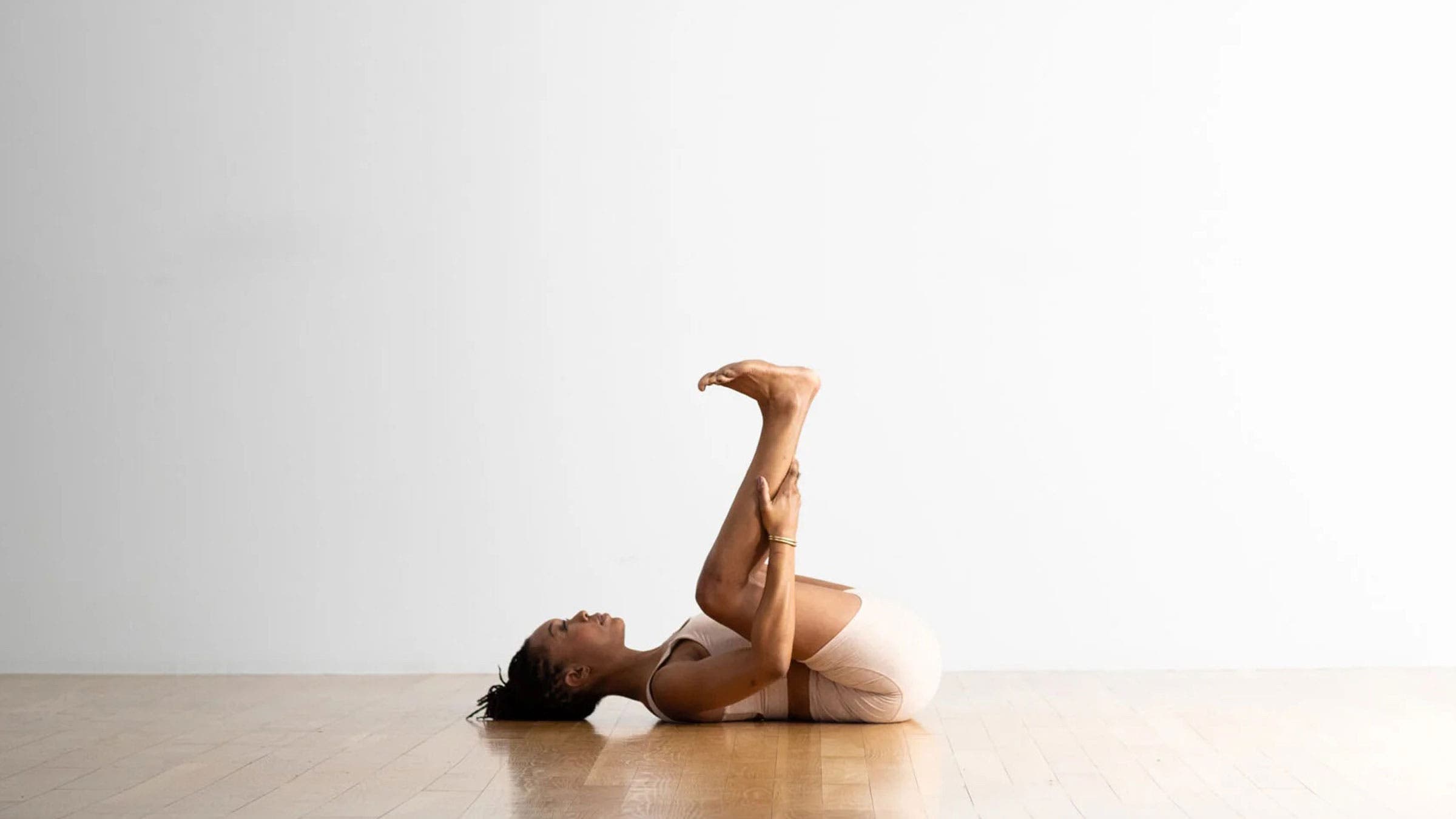
Open your hips, relieve shoulder tension, lengthen your lower back, and foster a feeling of groundedness in Happy Baby Pose. Stephenson recommends starting with a simple “self-hug” stretch and progressing from there. “This [pose] is a great way to self-soothe when hugs from someone else may not be available,” she points out.
How to: Lie on your back with your legs bent and your feet flat on the bed or mat. Wrap your arms around your chest, giving yourself a hug. Stay here or, if it’s comfortable, hug your knees toward your chest.
To come into Happy Baby, clasp the backs of your thighs, ankles, or the sides of your feet with your hands, draw your knees toward your armpits, and point your heels toward the ceiling. Breathe here.
3. Legs Up the Wall (Viparita Karani)
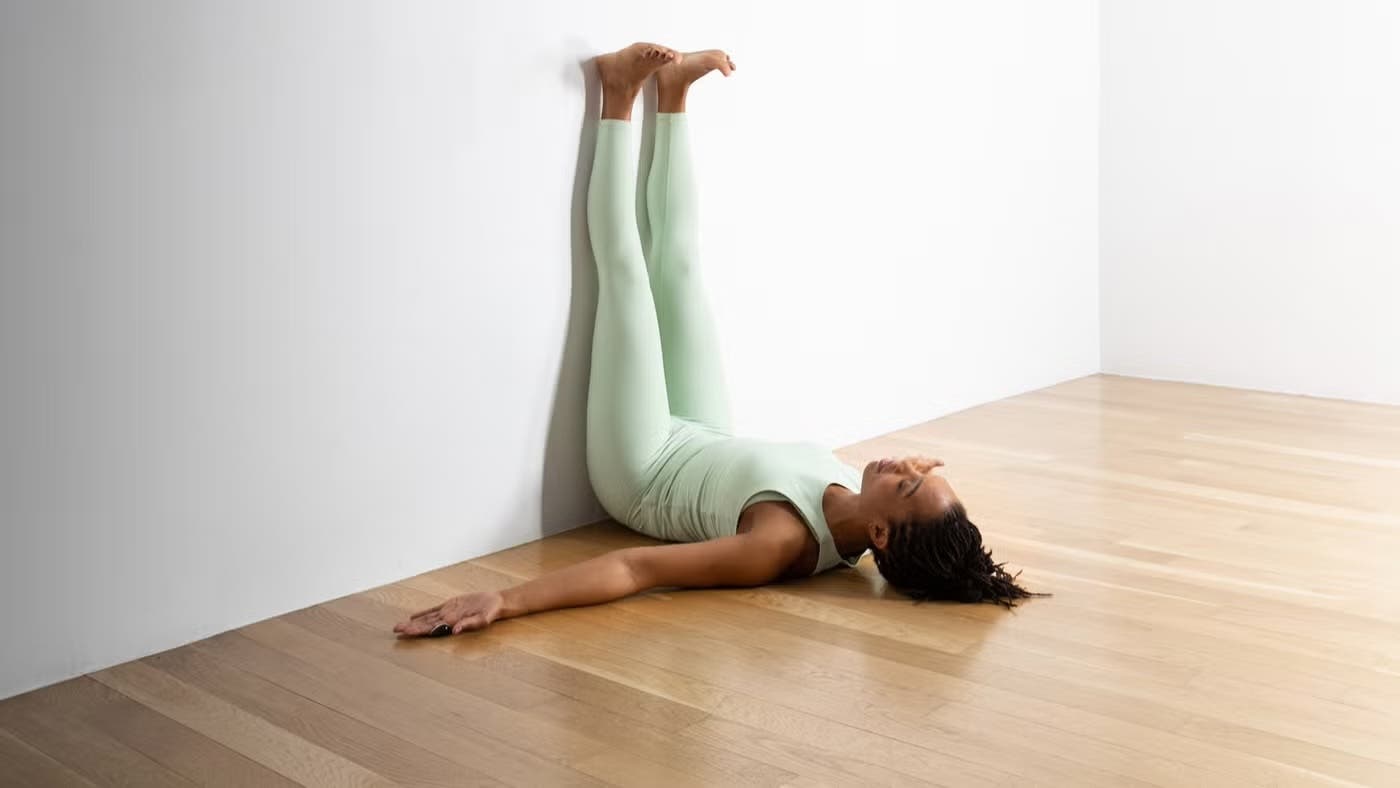
After being on your feet all day, inverting your legs can usher in a sense of relaxation and calmness and improve circulation. Stephenson recommends practicing this pose for two to 20 minutes, depending on your comfort level. “If you have low back aches or sciatica pain, [this pose] can help relieve pressure and pain before bed.”
How to: Sit on the mat or bed close to a wall. Lie on your back and swing your legs against the wall, hip-distance apart, and relax. If the position feels too intense, you can move your bottom farther away from the wall. Or you can bend your knees and elevate your legs on a chair or cushion instead of the wall.
4. Rag Doll
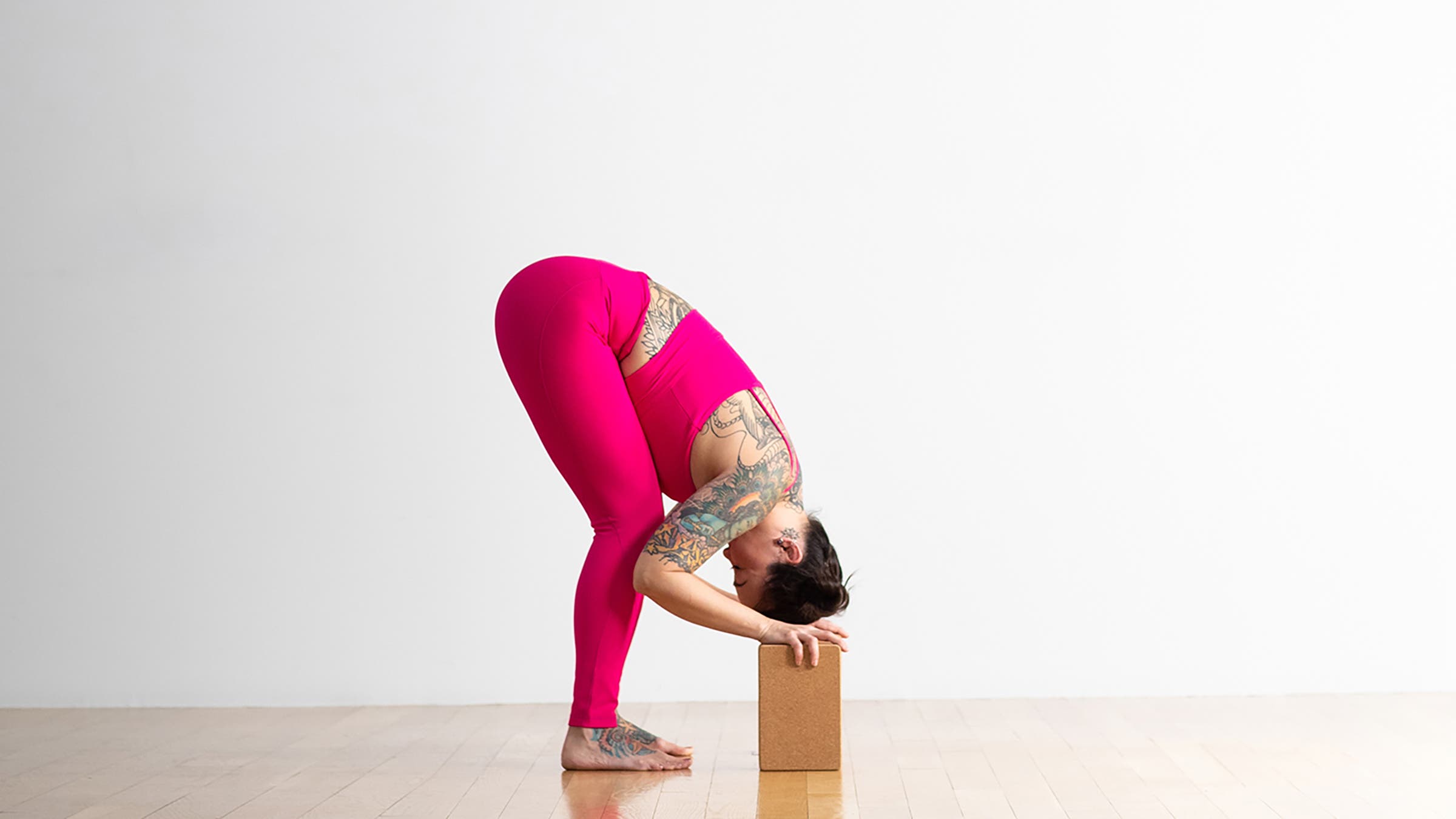
A variation of Standing Forward Bend, this pose uses gravity to improve blood flow and stimulate the vagus nerve, which in turn tells your body “if it’s safe to shift out of fight-flight-freeze responses of stress, and into rest and digest,” explains Stephenson. This can help put you into a more relaxed state before bed.
Similar to other inversions, Rag Doll isn’t recommended for people with vertigo or high blood pressure. Instead, try slow neck rolls to help relieve tension in your neck and upper back.
How to: Stand on the mat. Hinge forward from your hips, reaching your chest toward your thighs and releasing the crown of your head toward the floor. Bend your knees as much as you need and let your arms dangle or gently clasp opposite elbows. Or you can bring your hands to blocks for mores support. Gently sway side to side. Breathe here.
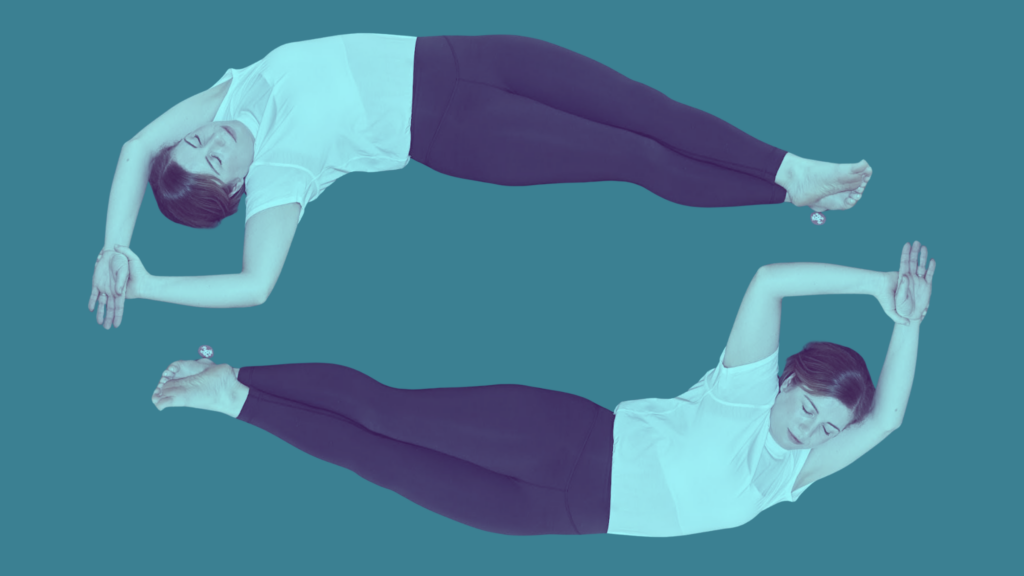
5. Reclined Twist (Jathara Parivartanasana)
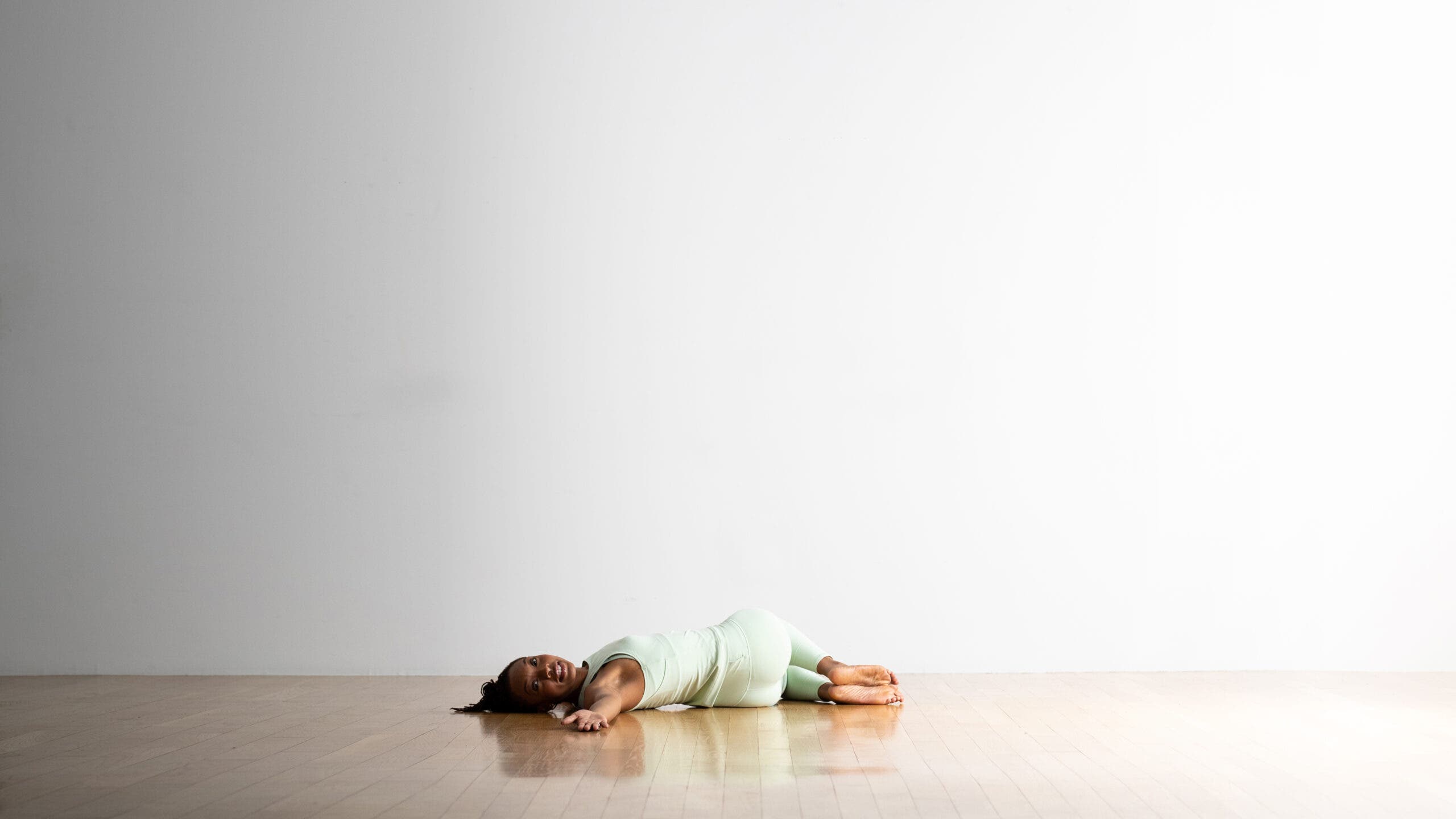
Settling tension in your core, where anxiety manifests for many people, can help set you up for sleep. “Twists have an overall calming effect on the nervous system and help to keep your spine flexible,” says Heyman. Using pillows as props helps make the pose extra restorative, she adds.
How to: Lie on your back and bring your knees toward your chest. Slowly lower your legs to the right side, keeping your upper back and shoulders on the mat or bed. For more support, place a pillow or folded blanket between your legs and/or underneath your bottom leg. Extend your left arm straight out to the side at shoulder height and turn your gaze upward toward the ceiling or left toward your fingertips. Breathe here for up to a minute, then repeat on the other side.
6. Child’s Pose (Balasana)
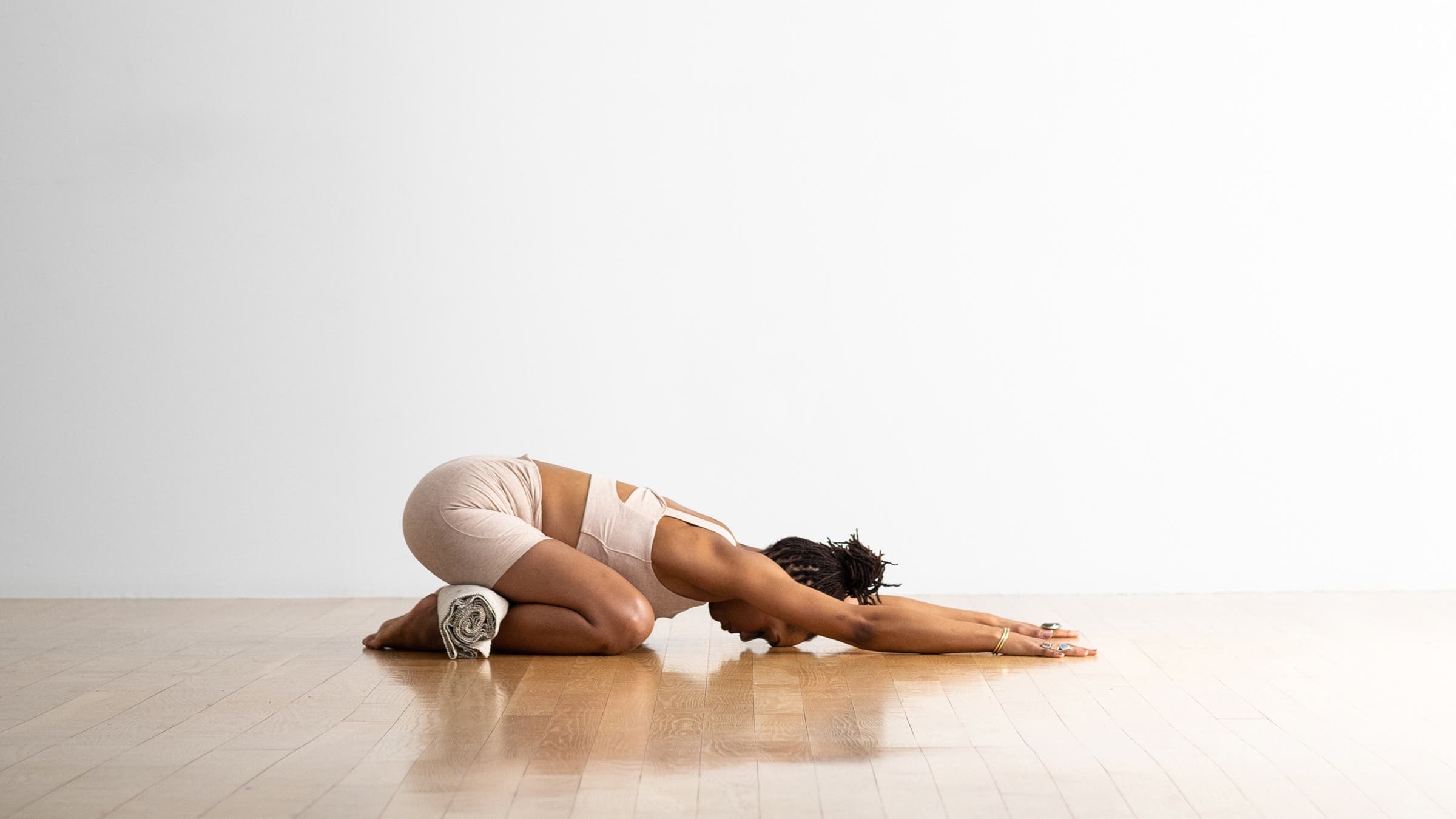
You’re probably familiar with this classic posture that often serves as a respite during a yoga sequence. You can also use it to ground yourself before bed. “Child’s Pose is an especially calming pose, as long as it’s comfortable,” says Heyman. “The gentle pressure on the forehead is especially soothing.”
How to: Come to your hands and knees and take your knees at least hip-width apart. (If you’re practicing on your bed instead of a yoga mat, you can let your toes hang off the edge of the mattress to help prevent foot cramps.) Sit your hips toward your heels, walk your fingertips forward, and lower your chest and forehead to the mat or bed. Relax your shoulders and let yourself feel supported by the mat or bed.
Heyman recommends placing a pillow underneath your thighs, chest, and/or head so that you feel supported and can breathe comfortably.

7. Corpse Pose (Savasana)
Unlike your typical yoga class where you’ve got to roll up your mat and continue with your day after Savasana, this practice allows you the option of staying here and drifting off to sleep, if that feels right for you. “[This pose] is designed for relaxation and letting go,” says Heyman.
While in this position, you can play a guided meditation, silently repeat mantras or affirmations to yourself, or do a toe-to-head body scan to wind down.
How to: Lie on your back and get comfortable, placing a pillow underneath your head and/or your knees. Breathe here.
8. Breathing Techniques (Pranayama)
Dedicating a few minutes to practicing pranayama, or breathwork, before bed can calm and focus the mind. Heyman and Stephenson recommend the following pranayama techniques:
- Victorious or Whispering Breath (Ujjayi): Inhale and exhale through your nose, making a soft whispering sound in your throat as you exhale. Heyman compares this to the sound you make when fogging a mirror or cleaning your glasses but with your mouth closed.
- Four-Part Breath (Box Breathing): Inhale for 4 counts, hold your breath for 4 counts, exhale for 4 counts, and hold for 4counts. Then repeat. “This breath technique is so calming to the nervous system when practiced consistently, that Navy Seals use it in life or death situations to keep themselves calm,” says Stephenson.
- Sigh Breaths with Vibration: Let out a sigh through your mouth or nose, loud enough to feel a humming in your throat and face on the exhalation. The addition of this vibration can soothe your body and mind.
9. Positive Affirmations
Practicing positive self-talk in those final moments before sleep can make a big difference in your sleep quality. Try simple bedtime affirmations, such as:
- I did well today.
- I am safe.
- I am loved.
- I deserve good things.
- I am valuable.
- I am at peace.
- I am living my truth.