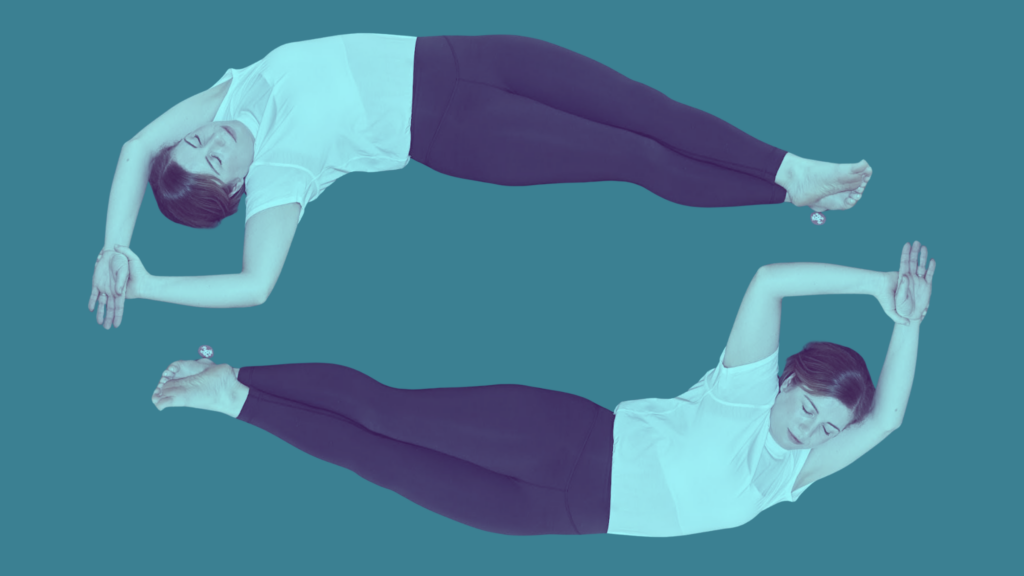
What does it mean to truly inhabit your body? To be fully present in the here and now, to feel every heartbeat, every breath, and every sensation that arises within you? This is the essence of Somatic Yoga—a practice that integrates mindfulness, movement, and awareness to promote physical and emotional healing. Even if this style is not your cup of tea, incorporating some of its principles and practices into your asana practice can yield great benefits.
Disclosure: This post may contain affiliate links. If a purchase is made through these links, we may earn a commission at no extra cost to you. Your kind support helps us create more mindful articles!
What is Somatics?
The word Somatic is derived from the Greek word “sōma,” meaning body. This term is often used to distinguish physical aspects from mental or psychological ones[1][2][3]. Somatics refers to a group of alternative medicine approaches and movement modalities that help individuals increase their bodily awareness through movement and relaxation. The goal is to enhance physical and emotional well-being by listening to the body’s signals and making conscious changes in movement and posture[1].
What is Somatic Yoga?
Somatic yoga is a newer form of yoga that blends traditional yoga poses with somatic movement and awareness techniques. Rooted in the understanding that our bodies store memories and emotions, a somatic approach to asanas creates a deeper awareness of bodily sensations to help release, process, integrate, and heal.
This approach differs from traditional yoga as it emphasizes the internal experience of movement rather than the alignment, strength and flexibility needed to achieving a specific posture. In somatic yoga, flow and awareness are prioritized over form. Practitioners are encouraged to listen to their bodies, exploring how each gentle, mindful movement feels rather than how it looks.
A somatic yoga practice is more intuitive and centered on self-awareness and physical recovery, whereas traditional yoga classes often focus on physical fitness, flexibility, and vitality, and often incorporate principles of yogic philosophy.
Core Principles of Somatic Yoga
- Interoception
The awareness of your body’s internal sensations, such as heart rate, breathing, pain, or muscular activity, is known as interoception. By tuning into these internal signals, practitioners can develop a greater understanding of their physical and emotional states, allowing for more informed responses to stressors and discomfort.[4][6][8]. - Exteroception
The awareness of external sensations such as touch, temperature, vibrations and sound is referred to as exteroception. This awareness helps practitioners integrate and harmonize their internal experiences with their external environment while grounding them in the present moment.[4]. - Proprioception
The awareness of the body’s motion, balance, and position in space is proprioception. Somatic yoga exercises enhance proprioception through slow, gentle movements and guided awareness. Strengthening your sense of spatial awareness enhances coordination and balance and helps perceive patterns of tension and holding, which improves fluidity of movement, body mechanics and posture [4][5][7]. - Embodied Awareness
Being present in the moment strengthens the connection between one’s physical and emotional states. Techniques such as mindfulness, breathwork, and body scanning are used to explore sensations, feelings, and thoughts without judgment.[5][6]. - Sensory-Motor Learning
This principle emphasizes that movement should be informed by the sensations felt in the body. Through intentional, mindful practice, individuals learn to associate their movements with the corresponding sensory experiences, enhancing motor control and body awareness. This feedback loop facilitates a deeper understanding of how emotions and physical sensations are interconnected, allowing practitioners to refine their movement skills, improve coordination, and enhance overall body awareness[5]. - Mind-Body Integration
Understanding how physical experiences are intertwined with emotional and mental states allows one to see how past traumas, stress, or emotional distress manifest physically. Strengthening the mind-body connection creates a safe framework to explore and release these patterns.[5][6][8]. - Bottom-Up Processing
Somatic yoga employs bottom-up processing, which starts with the body’s sensory and nervous systems to affect change in the brain. This approach addresses physical sensations and reactions first, influencing mental and emotional states subsequently. This method is particularly effective in releasing stored tension and regulating the nervous system[5]. - Slow, Mindful Movements
Somatic yoga classes are characterized by slow, gentle, and exploratory exercises. Unlike more dynamic yoga practices, somatic yoga encourages practitioners to deeply feel and integrate each movement, fostering a greater sense of embodiment and self-awareness. These movements help release muscular tension, improve flexibility, and promote relaxation[3][4][5]. - Focus on Internal Experience
The practice emphasizes the internal experience of flow, motion, and breath, rather than the external alignment of poses. Practitioners are guided to tune into the sensations, energetic flows, and subtle shifts occurring within their bodies as they move. This approach helps in developing a heightened sense of body awareness and emotional integration[3][4][5].
Techniques and Practices of Somatic Yoga
- Pandiculation: A key technique in a somatic movement practice is pandiculation, which involves conscious tightening and releasing of muscle groups to re-educate the neuromuscular system and release tension[9][10].
- Sensory Motor Retraining: Somatic yoga uses sensory motor retraining to improve muscular efficiency and functional patterns in the body. This includes practices like Cat-Cow, Pelvic Tilts, and specific joint rotations that encourage exploration of range of motion without strain[9][10].
- Breathwork and Meditation: Shallow breathing contributes to stress and anxiety, and perpetuates a fight-or-flight mode in the nervous system. Somatic practices often include deep, conscious breathing and meditation techniques to shift into a rest-and-renew response that promotes body awareness, relaxation, and overall well-being[9].
- Visualization: Guided imagery and visualization techniques can be used to enhance the therapeutic benefits of Somatic Yoga. Guided imagery can enhance relaxation techniques, such as deep breathing and progressive relaxation. Visualization exercises can prime the nervous system, facilitating a deeper sense of calm and awareness during practice. Before performing a specific asana, practitioners can visualize themselves executing the action smoothly and effortlessly. This method, known as graded motor imagery, helps individuals with physical pain or limited mobility retrain their brains to associate movement with comfort rather than discomfort[11].
Final thoughts
If the principles and techniques of a somatic yoga practice have sparked your curiosity, consider taking a class or incorporating some of these concepts into your daily practice. Incorporating Somatic Yoga into your life doesn’t require a significant time commitment. Even a few minutes a day dedicated to mindful movement or breathwork can yield profound benefits.